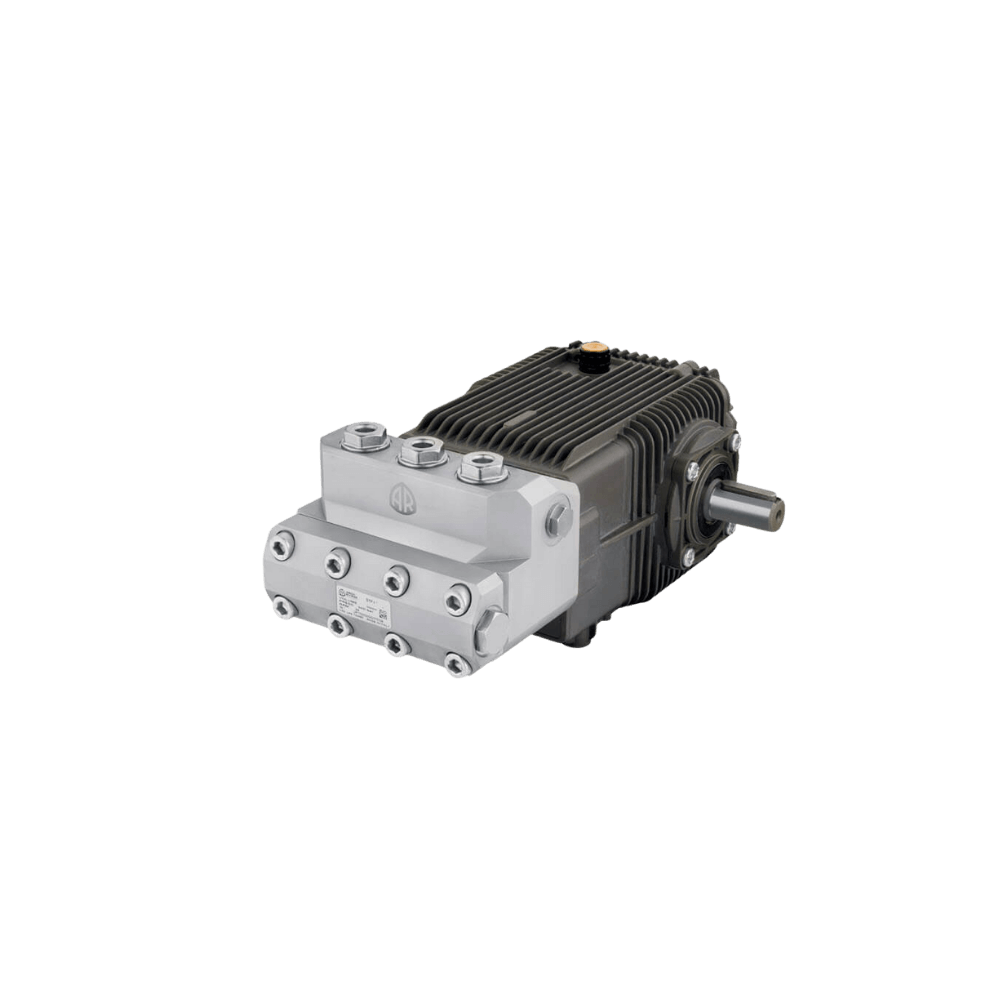
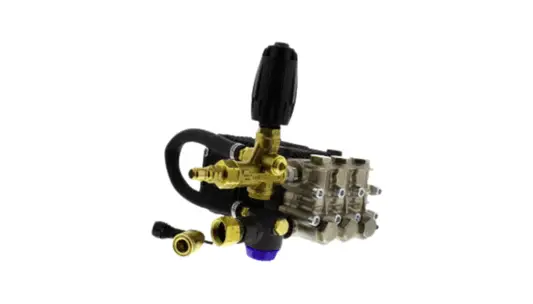
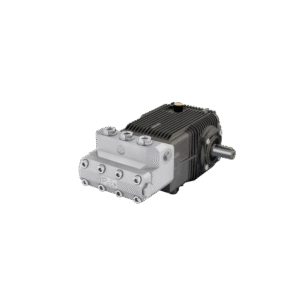
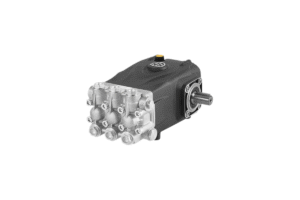
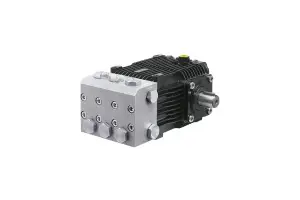
The RTX series is AR’s mid-range industrial line, and it is the one we sell the most of for a simple reason: it covers the widest span of flow and pressure of any of their industrial series, and it does it in a smaller package than the alternatives.
The RTX Series range
| Model | GPM | Max PSI | RPM | Notes |
|---|---|---|---|---|
| RTX30 | 7.9 | 4,350 | 1450 | 30 mm shaft |
| RTX50 | 13 | 4,350 | 1450 | 30 mm solid |
| RTX60 | 15.8 | 4,350 | 1450 | 30 mm keyed |
| RTX70 | 18.5 | 3,000 | 1450 | 30 mm shaft |
| RTX85 | 22.5 | 3,000 | 1450 | 30 mm shaft |
| RTX100 | 26.4 | 1,450 | 1800 | 30 mm keyway |
| RTX150 | 39.6 | 1,450 | 1450 | 30 mm keyway |
Look at the pattern. The series trades pressure for flow as you go up the model numbers, and the power draw stays in roughly the same band the whole way. RTX50 at 13 GPM and 4,350 PSI needs about 39 brake horsepower. RTX150 at 39.6 GPM and 1,450 PSI needs about the same. You are choosing what shape you want your 40 horsepower to take.
The formula, if you want to run it yourself: GPM × PSI ÷ 1460 = BHP at the pump shaft. Size the motor 10 to 20 percent above.
RTX pump variants
The RTX line has more configuration options than the rest of AR’s industrial catalog, which is usually what decides the model once flow and pressure are settled.
- Left-hand shaft. RTX85-SX and RTX100-SX. Same pump, opposite rotation. This is a layout problem, not a performance one, and it is a lot easier to order the right shaft than to rebuild the drive.
- Hot water. RTX-HW85.150N, rated to 185°F. Standard pumps are not, and running hot water through a cold-water pump cooks the seals.
- Stainless head. RTX-SS100.100N, for chlorides, caustics and food plant chemistry that eats brass.
- Hydraulic direct drive. The DD versions come as a hydraulic motor and pump assembly for truck-mounted and remote installations.
What is inside an RTX pump
The construction is standard AR industrial practice and it is worth knowing what the terms mean rather than just reading the list.
- Bronze connecting rods. Bronze runs against steel with low friction and carries heat away from the journal. It is also the part that wears rather than the crankshaft, which is the cheaper thing to replace.
- One-piece ceramic plungers. Solid ceramic, not ceramic-coated. Hard enough that grit does not score them, which is what makes seal kits last. They are brittle, so freezing and cavitation will crack them.
- Nickel-plated brass head. The plating is the corrosion barrier. It is good for most industrial chemistry but it is not stainless. If your chemicals attack brass, buy the SS variant, do not hope the plating holds.
- Double gasket sealing. Two seals in series on the plunger, with a drain between. If the primary fails, the leak goes to the drain instead of into the crankcase. This is why you find water on the floor before you find it in the oil.
- Oversized tapered roller bearings. Tapered rollers take both radial and thrust load, which matters on a belt-driven pump where side pull is constant.
- Rear oil drain and optional sight glass. Service access without pulling the pump off the frame.
- Plugs on the intake and delivery valves. You can pull and inspect valves without splitting the pump. On a pump that gets worked daily this is the difference between a twenty-minute job and an afternoon.
Where RTX pumps fit
RTX makes sense for modular industrial units, mobile rigs, wash bays, OEM builds and anywhere maintenance access is tight. It is not the highest flow line AR makes and it is not the highest pressure. If you need more than 40 GPM, look at the RTD series. If you need more than 4,350 PSI, look at SHP. There is a side-by-side comparison of all three if you are still deciding.
One thing to be clear about: at 1450 to 1800 RPM, these are belt-drive or gear-reduction pumps. None of them bolt to a 3400 RPM gas engine. Plan the drive when you plan the pump.
Need help picking a model or working out the drive? Email sales@wshpwr.com or call 505-305-7800.