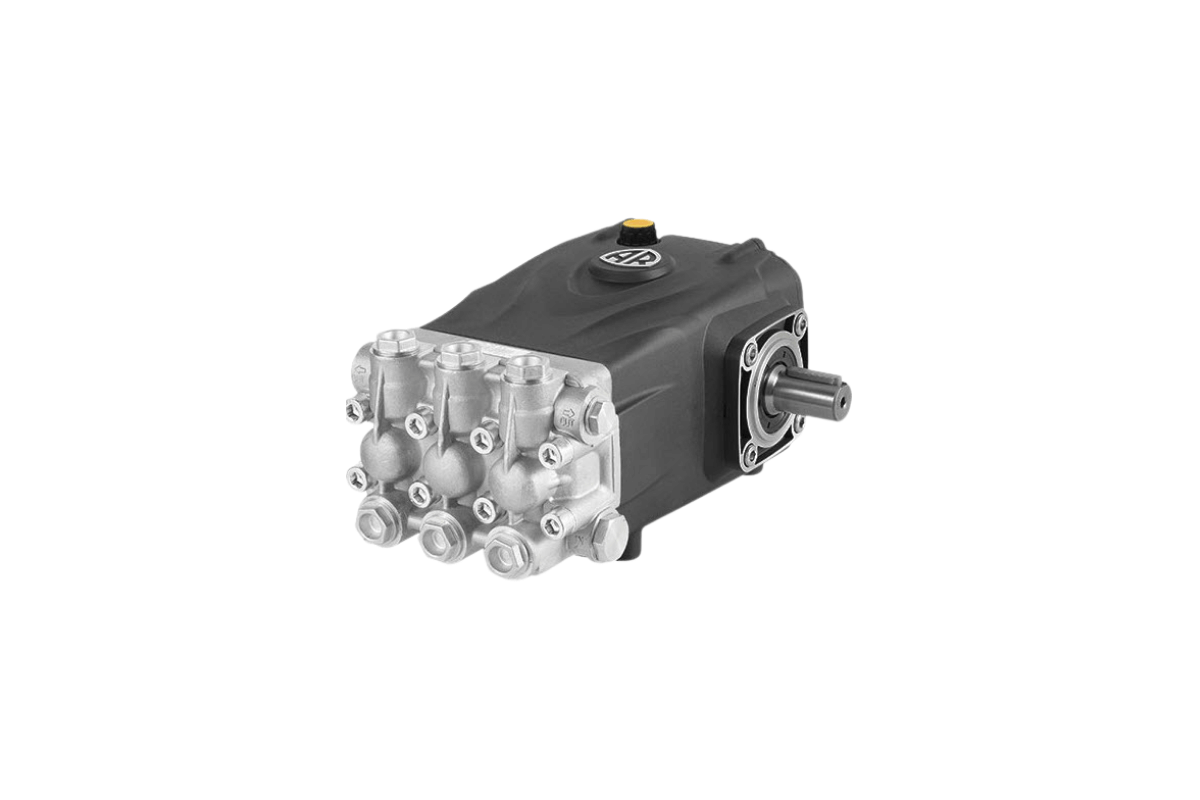
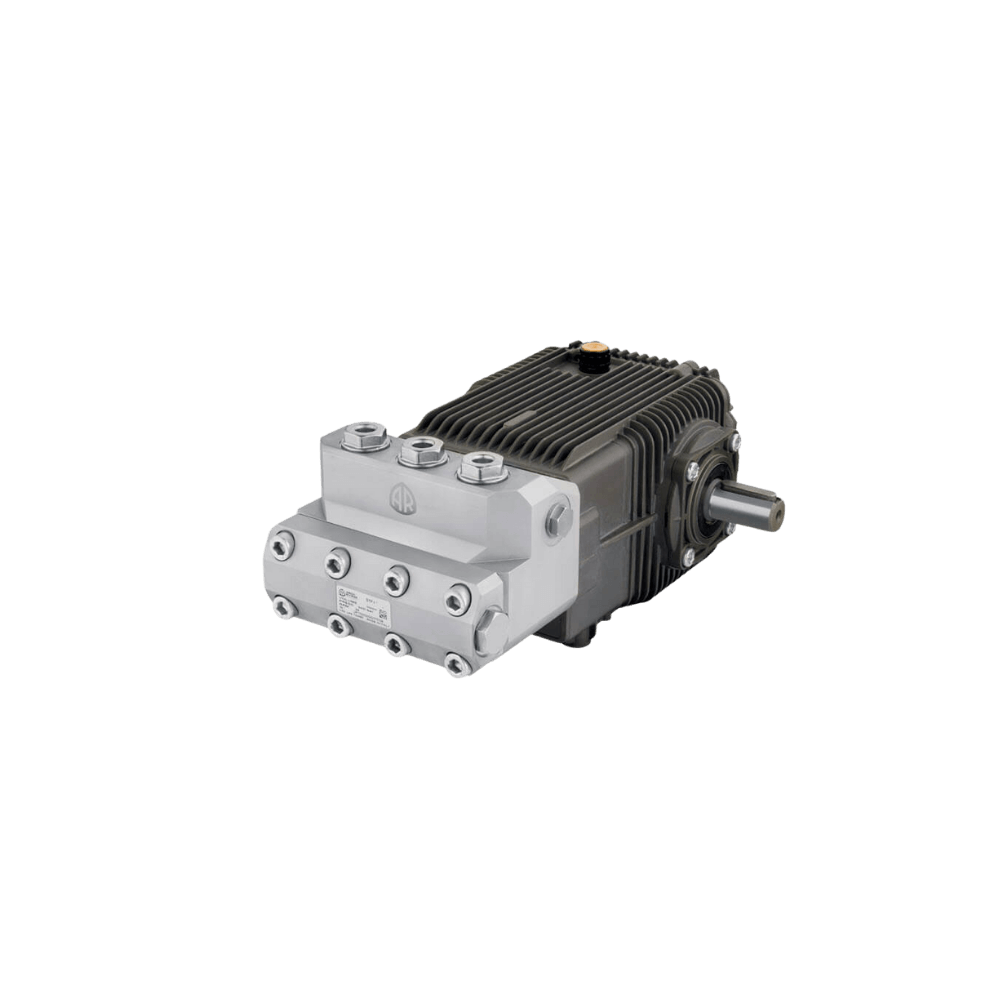
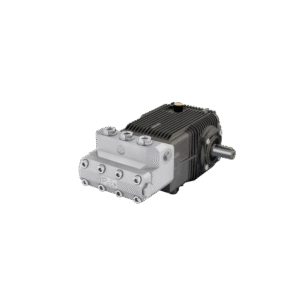
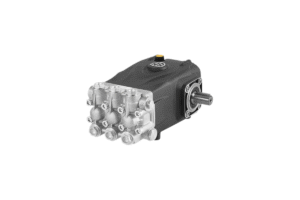
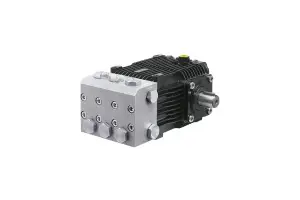
Honda GX390 pump packages are what most contractor rigs are built around, and the reason is arithmetic rather than brand loyalty. At roughly 11.7 HP gross it sits exactly where 4 GPM at 4,000 PSI lands, and that combination is the most capability you can get before the water supply and the hose both become the problem instead.
So the question is not which package is best. It is which shape of 11 horsepower your work needs.
All four are 1 in hollow shaft, direct drive at 3,400 RPM, and all four are rebuildable triplex pumps rather than the sealed axial cam pump in a consumer machine.
Read the EBHP column, not the PSI column
EBHP is GPM times PSI divided by 1,460, and it is the brake horsepower the pump needs at its shaft. Three of the four packages above need essentially the same 11 HP. They are not more and less capable. They are the same power budget spent differently.
A GX390 rated around 11.7 HP gross delivers less than that continuously once you allow for heat, altitude and a dirty air filter. So 11.0 EBHP is not comfortable headroom, it is the ceiling. That is worth knowing before you decide the 3,600 PSI package is the lesser option, because the 1.1 HP it gives back is the difference between a machine that holds its rating all afternoon and one that sags by three o’clock.
The 4,000 PSI package or the 5 GPM one
This is the actual decision, and it comes down to whether your work is bonded or spread.
Take 4.0 GPM at 4,000 PSI when you are removing something that is stuck: dried concrete slurry, baked grease, failed coating, gum. Pressure breaks the bond and you need enough of it.
Take 5.0 GPM at 3,200 PSI when you are covering ground: a 20 in surface cleaner, rinsing soap off a trailer, flatwork by the square foot. Flow carries the soil away and flow is what makes a surface cleaner spin at working speed. At 3 GPM a 20 in head crawls.
If you bill by the job rather than the hour, the second one usually pays better.
Where the GX390 runs out
Worth saying plainly, because it is a common way to waste money. The RKV55G40-VRT3PKG at 5.5 GPM and 4,000 PSI needs 15.1 EBHP. That is not a GX390 package. It will start, it will make pressure with the trigger closed, and it will sag the moment you open a nozzle.
If you want that output, the engine decision comes first and it is a bigger engine class.
Your water supply is the other ceiling
A domestic hose bib delivers roughly 4 to 6 GPM, and less through 100 ft of hose. At 4 GPM you are already near what a garden hose can feed. At 5 GPM you are past it for most taps.
Time how long your source takes to fill a five gallon bucket and double it if you timed thirty seconds. That is your real GPM. If it is under what the pump wants, the pump cavitates, which sounds like gravel and destroys valve seats while you work. Above 4 GPM, plan on a tank and a short full-bore feed line rather than hoping.
Check the shaft before you order
1 in hollow, horizontal, SAE J609a bolt pattern. Measure it rather than going by engine displacement, because the same badge ships with more than one shaft across model years and markets, and some GX390 variants carry an internal 2:1 gear reduction that needs an entirely different pump.
This is the single most common reason a pump arrives and does not fit.
Buy the package rather than the bare pump
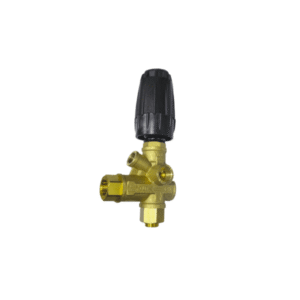
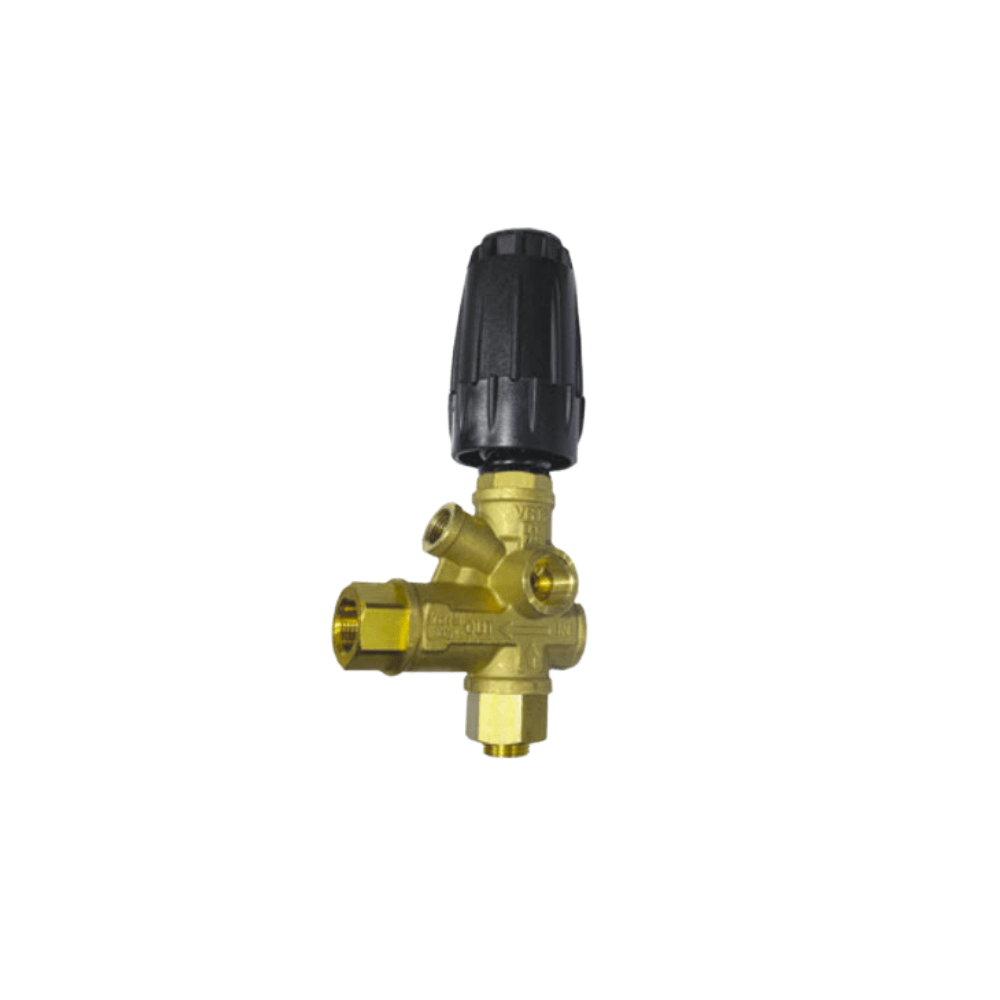
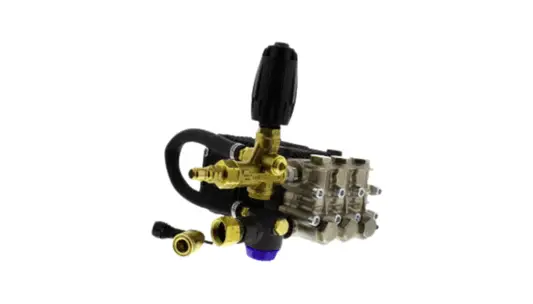
The unloader is the part that matters here. It has to be sized to the pump’s flow, and an unloader matched to the wrong flow is the commonest reason a home-built rig never reaches its rated pressure. It is also difficult to diagnose after the fact, because nothing is broken.
The packages ship with that already matched, plus the thermal relief valve, the inlet screen and the fittings. Buying those separately costs more and takes longer than the build.
Keeping it
At 3,400 RPM a direct-drive pump makes roughly three times the strokes per hour of a belt-driven industrial pump, so the maintenance schedule matters more, not less.
Water on and air purged before the engine starts. Trigger open, no nozzle, until the stream is steady.
Do not idle in bypass. Past a minute or two, shut it off.
The Honda GX200 is a small engine, and the mistake people make with Honda GX200 pump packages is buying a
Manage Consent
To provide the best experiences, we use technologies like cookies to store and/or access device information. Consenting to these technologies will allow us to process data such as browsing behavior or unique IDs on this site. Not consenting or withdrawing consent, may adversely affect certain features and functions.
Functional
Always active
The technical storage or access is strictly necessary for the legitimate purpose of enabling the use of a specific service explicitly requested by the subscriber or user, or for the sole purpose of carrying out the transmission of a communication over an electronic communications network.
Preferences
The technical storage or access is necessary for the legitimate purpose of storing preferences that are not requested by the subscriber or user.
Statistics
The technical storage or access that is used exclusively for statistical purposes.The technical storage or access that is used exclusively for anonymous statistical purposes. Without a subpoena, voluntary compliance on the part of your Internet Service Provider, or additional records from a third party, information stored or retrieved for this purpose alone cannot usually be used to identify you.
Marketing
The technical storage or access is required to create user profiles to send advertising, or to track the user on a website or across several websites for similar marketing purposes.