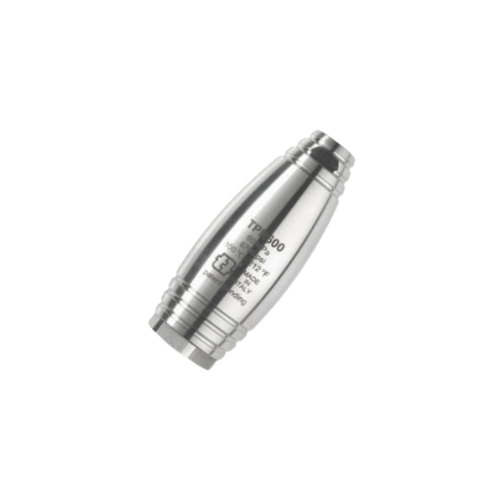
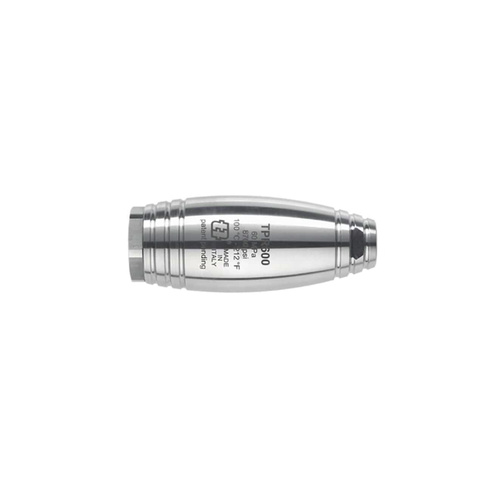
TPR600-055-P Stainless Steel Rotating Nozzle 8700 PSI
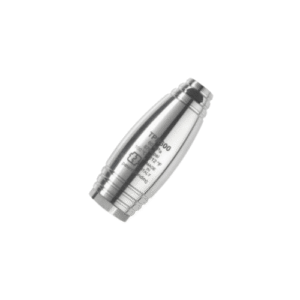
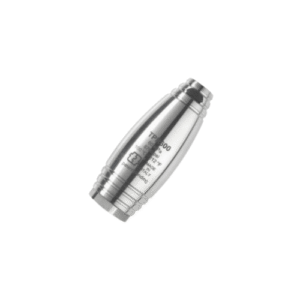
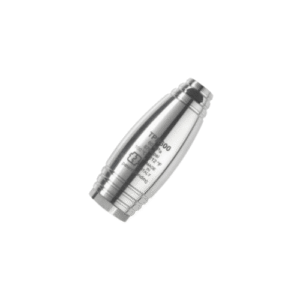
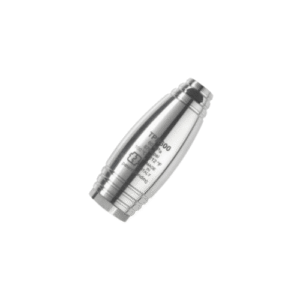
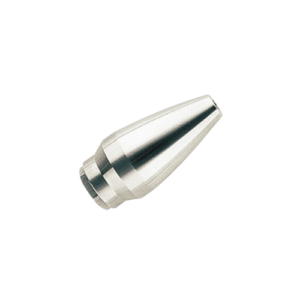
The Annovi Reverberi TPR600-055-P Rotating Nozzle is a high-flow, stainless-steel turbo nozzle
with a full protective rubber cover, engineered for extreme-duty 600-bar cleaning applications.
Rated for working pressures up to 8,700 PSI (600 bar) and water temperatures up to
212°F (100°C), this “-P” version combines the raw power of a 5.5 orifice
size with added impact protection and improved handling. It is ideal for operators running large-flow
600-bar pump systems that must clear heavy contamination quickly while working around painted equipment, truck
bodies, tanks, and structural steel where accidental contact is common.
At the heart of the TPR600-055-P is a precision rotor assembly that converts a concentrated 0° jet into a
fast-spinning 20° cone pattern. Instead of striking a single static point, the high-energy
jet sweeps a tight circular path, hitting the surface many times per second. This turbo action dramatically
increases cleaning efficiency compared to a fixed 0° nozzle or standard fan tip, especially on thick layers
of scale, rust, coatings, concrete residue, and industrial buildup. The larger 5.5 orifice supports higher
flow, making this model a strong choice for large-area work on decks, pads, tanks, and heavy equipment where
both impact and productivity matter.
Key Features of TPR600-055-P
- 600-bar / 8,700-PSI rating: Designed for serious industrial, marine, and construction
environments where full-rated pressure is used on a regular basis.
- 5.5 orifice size: High-flow nozzle size that increases coverage and cleaning speed while
still delivering aggressive mechanical cutting action.
- 20° rotating cone pattern: Transforms a 0° stream into a high-speed rotating cone,
boosting impact frequency and reducing streaking or striping on the surface.
- Protective rubber cover (“-P”): Molded shroud around the stainless body that
absorbs impacts, protects painted or coated surfaces, and improves grip in wet or oily conditions.
- Stainless-steel core body: Corrosion-resistant housing built to withstand chemicals, salt
mist, humidity, and rough handling.
- Wear-resistant internals: Hardened nozzle and seat materials help maintain pattern
quality and rotation consistency under high-velocity, high-duty operation.
- Hot-water capable: Rated for water temperatures up to 212°F (100°C), allowing
operators to combine heat and impact for faster removal of oils, grease, and organic residues.
- Standard 1/4″ female inlet: Professional connection that integrates easily with
600-bar guns, lances, swivels, and quick-coupler adapters.
Construction & Design Advantages
- Impact-absorbing rubber shroud: The molded cover cushions accidental contact with steel
decks, truck bodies, tank walls, and structural members, helping prevent damage to both nozzle and surface.
- Improved ergonomics & grip: The rubber exterior provides a secure, non-slip surface
that is easier to control with wet or gloved hands, reducing operator fatigue on long shifts.
- Balanced rotor assembly: Precision internal components are engineered for smooth,
consistent rotation at operating pressure, minimizing vibration and improving spray stability.
- Compact, protected profile: A short overall length and fully shrouded head make it easier
to maneuver in confined spaces such as tank interiors, beneath platforms, or around complex machinery.
- Vertical-start behavior: Internal rotor and check-valve geometry help reduce start-up
hammer when the trigger is pulled, protecting both nozzle internals and upstream components.
- Built for harsh environments: Ideal for outdoor, coastal, refinery, and plant locations
where corrosion, impact hazards, and abrasive contamination are everyday realities.
Typical Applications
- Shipyards & marine maintenance: Removing coatings, marine growth, rust, and scale
from hull plating, decks, ramps, and ballast tanks where large surface areas must be cleaned quickly.
- Industrial plant cleaning: Stripping baked-on residues, scale, and chemical deposits
from tanks, vessels, platforms, structural steel, and containment zones.
- Concrete & construction: Deep-cleaning slabs, parking decks, loading docks, tilt-wall
panels, and equipment encrusted with concrete residue, mud, or overspray.
- Hydro-excavation & vacuum trucks: Washing debris tanks, booms, suction tools, and hose
reels, where the rubber cover helps prevent metal-to-metal contact with truck bodies and tanks.
- Fleet & heavy equipment washing: Removing compacted mud, hydraulic oil, road film,
and petroleum residues from dump trucks, vac trucks, loaders, excavators, and refuse vehicles.
- Refineries & heavy industry: Cleaning exchanger shells, pipe racks, structural supports,
and process equipment in environments with hydrocarbons, soot, and corrosive atmospheres.
Performance & Sizing Guidelines
- Flow pairing: The 5.5 orifice is typically matched to higher-GPM 600-bar pumps; consult
nozzle charts or pump curves to confirm the final GPM/PSI combination for your system.
- Minimum operating pressure: Turbo nozzles generally require around 2,000–2,200 PSI to
rotate properly; below this threshold, the jet behaves more like a straight 0° stream.
- Coverage vs. impact: Compared to smaller orifices, the 5.5 size provides a wider cleaning
path and higher throughput while still delivering strong mechanical cutting power.
- System rating requirements: All hoses, lances, guns, swivels, and fittings must be rated
to at least 8,700 PSI and 212°F for safe operation.
- Operator technique: Maintain a consistent stand-off distance and steady travel speed to
produce an even finish, reduce striping, and maximize nozzle life.
Best Practices for Use & Maintenance
TPR600-055-P Stainless Steel Rotating Nozzle 8700 PSI
- Flush the system before use: Purge lines with a standard fan nozzle to remove rust, scale,
and debris that could damage the rotor or nozzle seat.
- Bring pressure up gradually: Avoid snapping the trigger wide open; smooth pressurization
reduces mechanical stress on both nozzle and pump.
- Monitor spray behavior: Changes in cone shape, sound, rotation speed, or vibration are
early warnings of wear, blockage, or cavitation—inspect and replace nozzle if needed.
- Rinse after chemical exposure: After detergents or process chemicals are used upstream,
flush with clean water to protect stainless and rubber components from residue.
- Store protected: When not in use, keep the nozzle capped or in a dedicated holder or case
to prevent orifice damage and contamination inside the rubber shroud.
Only logged in customers who have purchased this product may leave a review.



Reviews
There are no reviews yet.