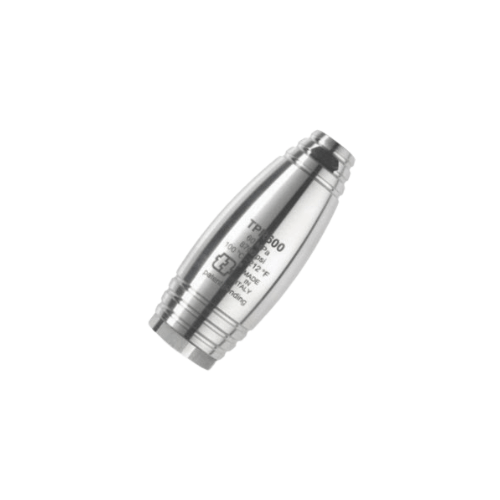
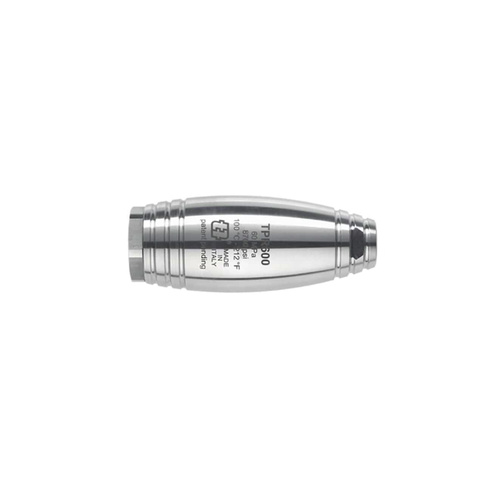
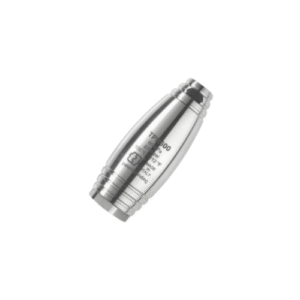
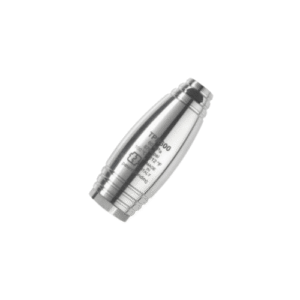
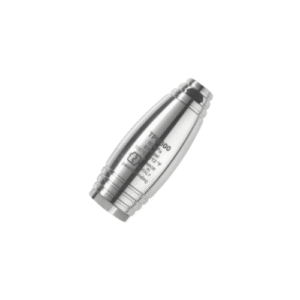
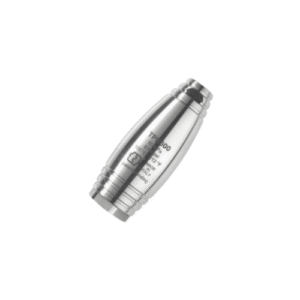
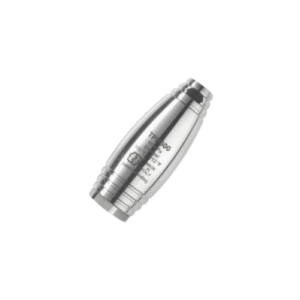
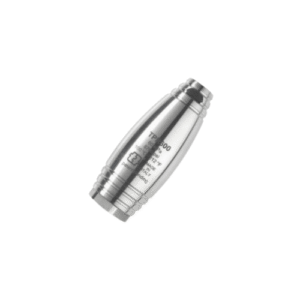
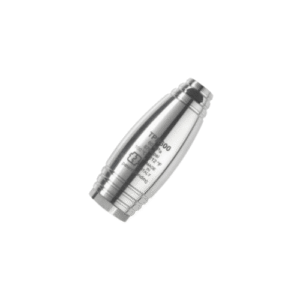
TPR600-03-P Stainless Steel Rotating Nozzle 8700 PSI
The Annovi Reverberi TPR600-03-P Rotating Nozzle is a professional-grade, stainless-steel
turbo nozzle with an integrated protective rubber cover, engineered for demanding 600-bar
(8,700 PSI) pressure-washing applications. Rated for working pressures up to
8,700 PSI (600 bar) and water temperatures up to 212°F (100°C),
this nozzle is built for heavy, continuous-duty service in industrial plants, shipyards, fleet maintenance
facilities, and hydro-excavation support fleets. The 3.0 orifice size delivers a strong
balance of impact, efficiency, and control, making it ideal for medium-flow 600-bar pump systems where both
cutting power and cleaning speed are priorities.
At its core, the TPR600-03-P uses a precision rotating assembly that transforms a concentrated 0° jet
into a fast-spinning 20° cone pattern. Instead of striking the surface at a single fixed
point, the jet continuously sweeps a tight circular path, multiplying the number of high-energy impacts on
the work area. This turbo action dramatically increases cleaning efficiency compared to a static straight
tip, helping operators strip coatings, rust, scale, and heavy residue in fewer passes. The “-P” rubber cover
further enhances the design by absorbing impacts, protecting painted or delicate surfaces, and improving
operator grip in wet, soapy, or oily environments.
Key Features for TPR600-03-P
- 8,700 PSI (600 bar) rating: Built for serious high-pressure systems used in industrial,
marine, and heavy-construction cleaning where full-rated pressure is a daily requirement.
- 3.0 orifice size: Medium nozzle size tailored to mid-range GPM at 600 bar, delivering
aggressive impact with good productivity and coverage.
- Rotating 20° spray cone: Converts a 0° pencil stream into a tight rotating cone,
increasing impact frequency and reducing striping or streaking compared to a fixed jet.
- Protective rubber cover (“-P” series): Molded shroud around the stainless
body that cushions accidental impacts, protects painted or plated surfaces, and improves handling.
- Stainless-steel body: Corrosion-resistant housing designed to withstand chemicals,
saltwater mist, humidity, and the mechanical abuse common in industrial wash environments.
- Hardened nozzle and seat: Wear-resistant internal components maintain spray pattern,
rotation quality, and operating pressure over long, continuous-duty cycles.
- High-temperature capable: Rated for water temperatures up to
212°F (100°C), ideal for hot-water systems used to cut grease, oils, and organic
buildup more quickly.
- Standard 1/4″ female inlet: Professional thread connection for easy integration with
600-bar guns, lances, and quick-coupler adapters.
Construction & Design Advantages of TPR600-03-P
- Impact-absorbing rubber shroud: The protective cover softens contact with tanks, decks,
pipe racks, vehicle bodies, and structural members, helping prevent damage to both the nozzle and the
work surface.
- Improved grip & ergonomics: The rubber exterior provides a secure, non-slip grip in
wet or gloved conditions, enhancing operator comfort and control during long shifts.
- Compact, protected profile: Short overall length and fully shrouded head make the nozzle
easier to maneuver in tight spaces such as inside tanks, under platforms, or around piping and equipment.
- Precision rotor assembly: Balanced rotating group maintains smooth, consistent rotation
at operating pressure, minimizing vibration and providing a stable spray cone.
- Vertical-start behavior: Internal rotor and check-valve geometry help reduce start-up
hammer when the trigger is pulled, protecting the nozzle insert and upstream components.
- Durable in harsh conditions: Stainless and rubber construction is optimized for outdoor,
coastal, refinery, and plant environments where corrosion and impact hazards are common.
TPR600-03-P Typical Applications
- Shipyards & marine maintenance: Removing marine growth, rust, failed coatings, and
scale from hull plating, decks, ramps, and ballast tanks where accidental contact with steel surfaces is
frequent.
- Industrial plant cleaning: Stripping paints, oxides, baked-on product, and chemical
deposits from tanks, vessels, process equipment, catwalks, and containment walls.
- Concrete & construction work: Deep cleaning slabs, ramps, tilt-wall panels, forms,
and precast components before sealing, overlays, or structural repair.
- Hydro-excavation & vacuum trucks: Washing debris tanks, booms, tools, and hose reels
between jobs while minimizing damage to painted truck bodies and tank interiors.
- Fleet & heavy equipment wash: Removing compacted mud, grease, and road film from dump
trucks, vac trucks, loaders, excavators, sweepers, and refuse vehicles.
- Municipal & public works: Cleaning bridges, culverts, piers, water-treatment
structures, and other infrastructure where high impact and controlled coverage are required.
Performance & Sizing Guidelines
TPR600-03-P Stainless Steel Rotating Nozzle 8700 PSI
- Flow pairing: The 3.0 orifice is typically matched to mid-flow 600-bar pumps; consult
nozzle sizing charts or pump curves to confirm the actual GPM and PSI at your operating point.
- Minimum operating pressure: Turbo nozzles generally require around 2,000–2,200 PSI to
rotate correctly; below this threshold, the jet behaves more like a straight 0° stream.
- Impact vs. coverage: The 3.0 size offers a strong balance—enough flow to cover surfaces
efficiently while still delivering concentrated mechanical cutting action.
- System rating requirements: All hoses, guns, lances, swivels, and fittings must be rated
for at least 8,700 PSI and 212°F to ensure safe operation.
- Operator technique: Maintain a steady stand-off distance and consistent travel speed to
achieve an even, streak-free finish and maximize nozzle service life.
TPR600-03-P Best Practices for Use & Maintenance
- Flush before installation: Purge lines with a standard fan nozzle to remove rust, scale,
or debris that could damage the rotating group or nozzle seat.
- Ramp pressure gradually: Avoid snapping the trigger fully open; gradual pressurization
reduces mechanical shock to the nozzle and upstream components.
- Monitor spray pattern & sound: Changes in cone shape, rotation speed, vibration, or
noise are signs of wear or contamination—inspect and replace the nozzle if performance declines.
- Rinse after chemical use: After detergents or process chemicals are used upstream, flush
with clean water to protect stainless surfaces and the rubber housing.
- Store capped or in a holder: When not in service, keep the nozzle protected to prevent
orifice damage and contamination inside the rubber shroud.
Only logged in customers who have purchased this product may leave a review.



Reviews
There are no reviews yet.