HYD-RTD160.130N | RTD Solid Shaft Pump | 40 GPM 1850 PSI | Maximum-Volume Industrial
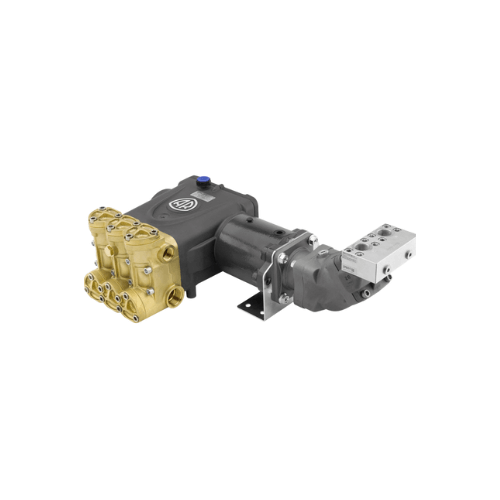
HYD-RTD160.130N is the RTD family’s maximum volume on the shaft integrators specify by name: 40 GPM (160 L/min) at up to 1850 PSI (130 bar) from the 1000 RPM, 418-series industrial frame, in the N-version build with the 35mm solid shaft. Where the platform’s coupled-drive sibling leaves the interface to be confirmed at order, the HYD-RTD160.130N commits to it up front — and that commitment is the product. A solid 35mm shaft is a known dimension the whole drive industry stocks against: flex couplers off the shelf, taper-lock bushings from any bearing house, sheaves for belt layouts, bell-housing adapters by catalog number. The integrator drawing a system today can order every drive component today, and the build schedule never waits on an interface question.
The water it delivers is the family’s biggest number with genuine authority behind it: forty gallons a minute at 130 bar — flood-class pace that still scours, feeding big-main flushing, hold and tank washout, and high-throughput plant washdown where the pass must carry debris and cut residue at once. On the HYD-RTD160.130N that capability arrives as pure rotating machinery, ready to join whatever architecture the power system already speaks.
HYD-RTD160.130N Specifications
- SKU: HYD-RTD160.130N
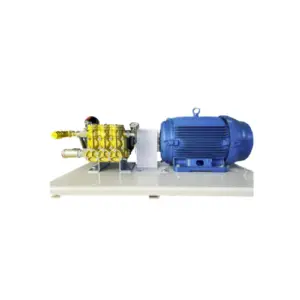
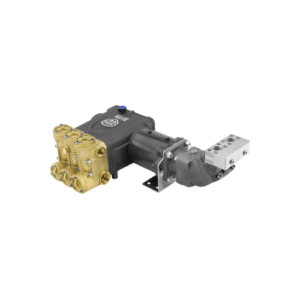
- Configuration: Solid-shaft industrial pump — N version, 35mm solid shaft for coupled or belt drive
- Pump: Annovi Reverberi RTD 160-130 (418-series industrial frame)
- Flow Rate: 40 GPM (160 L/min), per AR North America
- Maximum Discharge Pressure: 1850 PSI (130 bar)
- Rated Speed: 1000 RPM — never overspeed
- Power Requirement: 55 HP (41 kW) at full duty, per AR North America
- Shaft: 35mm solid (N version)
- Head Material: Brass with stainless wet-end components
- Plungers: Ceramic
- Weight: Industrial 418-frame class — approximately 128 lbs
- Maximum Fluid Temperature: 140°F
How Much Hydraulic Flow and Pressure Do I Need?
Full duty asks roughly 65 hydraulic horsepower delivered continuously — and here is that number the way your machine’s spec sheet states it: oil GPM × oil PSI ÷ 1,714 must reach about 65. Circuits that qualify: 38 GPM at 3,000 PSI, 32 GPM at 3,500 PSI, or 43 GPM at 2,600 PSI — dedicated truck power systems and purpose-built power units; auxiliary circuits do not reach this class. Circuits that fall short: 30 GPM at 3,000 PSI delivers only ~53 HP and will not hold full duty. The 35mm shaft then takes the drive through your chosen architecture: a bent-axis piston or big gear hydraulic motor across a flex coupling or bell housing, an electric motor geared to 1000 RPM on a common base, or an engine through reduction — with belt layouts available where the installation demands offset. Relieve within the motor’s rating, filter returns at 10–25 microns, engineer cooling for shift-length duty, and call WSHPWR with your circuit’s numbers — we will confirm the match, and the motor, before you order.
The Known-Interface Advantage
Drive engineering runs on dimensions, and the HYD-RTD160.130N hands the engineer the one that matters on day one. Coupler halves bore to 35mm from stock; alignment tooling, guards, and bases design against a published figure; the spare-parts shelf stocks one hub size across every N-shaft pump in the fleet. That standardization compounds over a system’s life: a motor upgrade five years in re-uses the pump-side hub, a pump swap re-uses the whole drive, and no service event ever waits on a proprietary interface. For OEMs and fleet builders producing the same rig repeatedly, the N shaft is how the drive drawing gets frozen once and built forever.
Volume With Muscle, Committed
The duty point carries the same honest fork as its coupled sibling: pure-rinse operations can shop the 100-bar flood class and save the horsepower, while crews whose water must break material loose *and* carry it away buy the 130-bar authority — packed grit in mains, bonded residue on tank steel, caked buildup on plant floors all release at the energy this pump delivers and the flood class does not. At forty gallons, that muscle arrives everywhere at once.
Installation & Operation Notes
Mount horizontally on structure worthy of the frame, bore and fit the coupling to the 35mm shaft per its manufacturer’s specification, align to tolerance, guard the drive, and verify rotation at commissioning. Suction engineering decides service life at this flow: flooded, filtered, generously oversized inlet plumbing with buffer-tank feed as standard practice. Fit an unloader and safety relief rated for the working pressure, size nozzles and flush heads to the 40 GPM duty point, hold 1000 RPM without exception, and winterize thoroughly between cold-weather shifts.
Quality Assurance & Maintenance
Every HYD-RTD160.130N is factory-tested for flow rate, pressure stability, and vibration before shipment. Maintenance follows the industrial RTD routine — scheduled crankcase oil service, seal inspection, periodic valve checks with AR’s 418-platform repair kits — on the intervals the slow frame and moderate pressure jointly stretch, with the coupled architecture letting pump and motor service independently.
HYD-RTD160.130N Key Features & Applications
- 40 GPM at 1850 PSI on the 1000 RPM industrial frame — the RTD maximum, per AR North America.
- 35mm solid N shaft: the known interface every coupler, bushing, and sheave catalog stocks against.
- Needs ~65 hydraulic HP — 38 GPM at 3,000 PSI class circuits; the page’s supply math speaks your machine’s language.
- Freeze the drive drawing once: OEM and fleet builds standardize on the N shaft across the family.
- 130-bar muscle over the flood class — the pass that floods also scours.
- Ideal for OEM jetting and washout rigs, common-base electric installs, engine-driven systems through reduction, belt layouts, and fleet builds standardizing the solid-shaft architecture.
Only logged in customers who have purchased this product may leave a review.



Reviews
There are no reviews yet.