HYD-RTD160.130 | Hydraulic Drive Kit | 40 GPM 1850 PSI | RTD Volume Flagship
HYD-RTD160.130 is the volume flagship of AR’s RTD industrial family: 40 GPM (160 L/min) at up to 1850 PSI (130 bar) on the 1000 RPM, 418-series frame — the most water the RTD platform moves, carried at a working pressure with real authority behind it. That last part is the distinction worth buying deliberately: where the pure flood-class pumps deliver their gallons at 100 bar, the HYD-RTD160.130 delivers the same forty at 130 — enough extra jet energy to scour while it floods, which is exactly the combination line flushing, hold washing, and heavy rinse work keep asking for.
The trades that live here know the difference. Sewer and storm crews flushing big mains want volume to carry debris *and* pressure enough to break it loose from the invert; barge and tank crews want the compartment flooded *and* the residue cut from the walls in the same pass; plant washdown wants fire-line pace that still lifts what a garden-pressure stream leaves behind. Forty gallons with muscle — delivered by the coupled-drive configuration that lets your power system’s architecture decide the motor, with the solid-shaft N version standing beside it in the catalog for builds that specify the shaft.
HYD-RTD160.130 Specifications
- SKU: HYD-RTD160.130
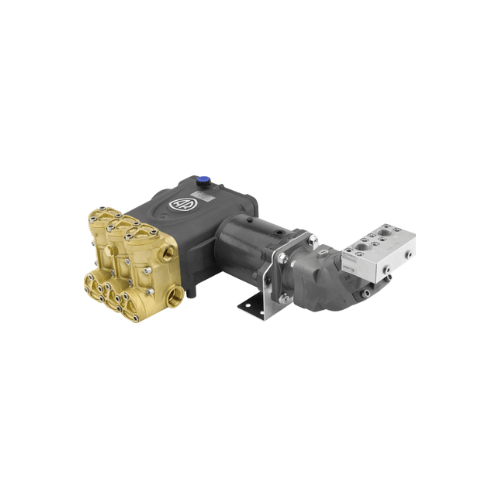
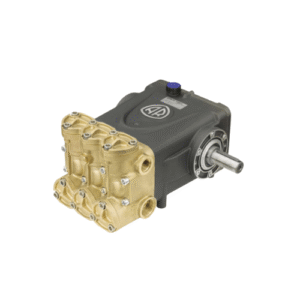
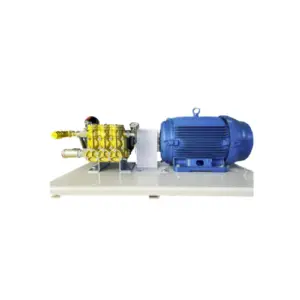
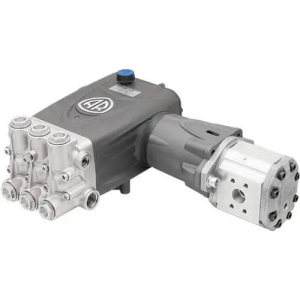
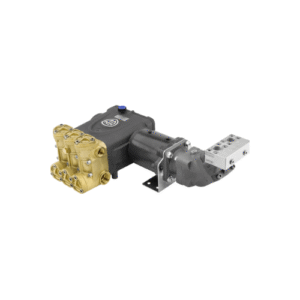
- Configuration: Coupled-drive industrial pump — drive interface confirmed at order; solid-shaft N version available separately
- Pump: Annovi Reverberi RTD 160-130 (418-series industrial frame)
- Flow Rate: 40 GPM (160 L/min), per AR North America
- Maximum Discharge Pressure: 1850 PSI (130 bar)
- Rated Speed: 1000 RPM — never overspeed
- Power Requirement: 55 HP (41 kW) at full duty, per AR North America
- Head Material: Brass with stainless wet-end components
- Plungers: Ceramic
- Weight: Industrial 418-frame class — approximately 128 lbs
- Maximum Fluid Temperature: 140°F
How Much Hydraulic Flow and Pressure Do I Need?
Full duty asks roughly 65 hydraulic horsepower delivered continuously — and here is that number the way your machine’s spec sheet states it: oil GPM × oil PSI ÷ 1,714 must reach about 65. Circuits that qualify: 38 GPM at 3,000 PSI, 32 GPM at 3,500 PSI, or 43 GPM at 2,600 PSI — dedicated truck power systems and purpose-built power units; auxiliary circuits do not reach this class. Circuits that fall short: 30 GPM at 3,000 PSI delivers only ~53 HP and will not hold full duty. The coupled architecture then takes the drive your system dictates — a bent-axis piston or big gear hydraulic motor through a flex coupling or bell housing (the big-displacement classes WSHPWR stocks), an electric motor geared to 1000 RPM on a common base, or an engine through reduction. Relieve within the motor’s rating, filter returns at 10–25 microns, engineer cooling for shift-length duty, and call WSHPWR with your circuit’s numbers — we will confirm the match, and the motor, before you order.
Volume With Muscle
Between the HYD-RTD160.130 and the 100-bar flood class sits a real selection line, and it runs through the material being moved. Loose soils, wash residue, and film rinse at 100 bar all day — the flood pumps own that work at the lightest supply bill. But packed grit in a main, greasy residue bonded to tank steel, and caked buildup on plant floors have a release threshold the extra 30 bar crosses: the same forty gallons arrive with a third more jet energy, and the pass that flooded now scours. Crews that clean *and* carry in one operation buy this pump; crews that purely rinse can save the horsepower and shop the flood class — the honest fork, stated plainly.
The 1000 RPM Frame at Full Volume
Forty gallons a minute at 1000 RPM means the 418-series frame makes its maximum output on a third fewer plunger strokes per gallon than compact-frame speeds — and moderate 130-bar loading keeps each stroke at the friendly end of the family curve. The combination posts one of the gentlest wear profiles in the industrial line on the pump doing its biggest-volume work: seals, valves, and packings all age on stretched clocks, valve access stays serviceable in place, and AR’s 418-platform repair kits keep the path standard.
Installation & Operation Notes
Mount horizontally on structure worthy of the frame, align the coupling to specification, guard the drive, and verify rotation at commissioning. At 40 GPM, suction is the whole game: flooded, filtered, generously oversized inlet plumbing with buffer-tank feed as standard industrial practice — maximum-volume pumps are the ones restricted inlets cavitate fastest. Fit an unloader and safety relief rated for the working pressure, size nozzles and flush heads to the 40 GPM duty point, hold 1000 RPM without exception, and winterize thoroughly between cold-weather shifts.
Quality Assurance & Maintenance
Every HYD-RTD160.130 is factory-tested for flow rate, pressure stability, and vibration before shipment. Maintenance follows the industrial RTD routine — scheduled crankcase oil service, seal inspection, periodic valve checks — on the intervals the slow frame and moderate pressure jointly stretch, and the coupled architecture lets pump and motor service independently so neither bills for the other’s downtime.
HYD-RTD160.130 Key Features & Applications
- 40 GPM at 1850 PSI on the 1000 RPM industrial frame — the RTD family’s maximum volume, per AR North America.
- Needs ~65 hydraulic HP: 38 GPM at 3,000 PSI class circuits qualify — the supply math in your machine’s terms.
- 130-bar muscle over the flood class: the pass that floods also scours.
- Coupled-drive configuration — your motor, your architecture; solid-shaft N version available.
- Gentlest wear profile in the industrial line at maximum-volume duty.
- Ideal for big-main sewer and storm flushing, barge and tank washout with residue cutting, high-throughput plant washdown, and dedicated-power-unit builds sized to the RTD ceiling.
Only logged in customers who have purchased this product may leave a review.



Reviews
There are no reviews yet.