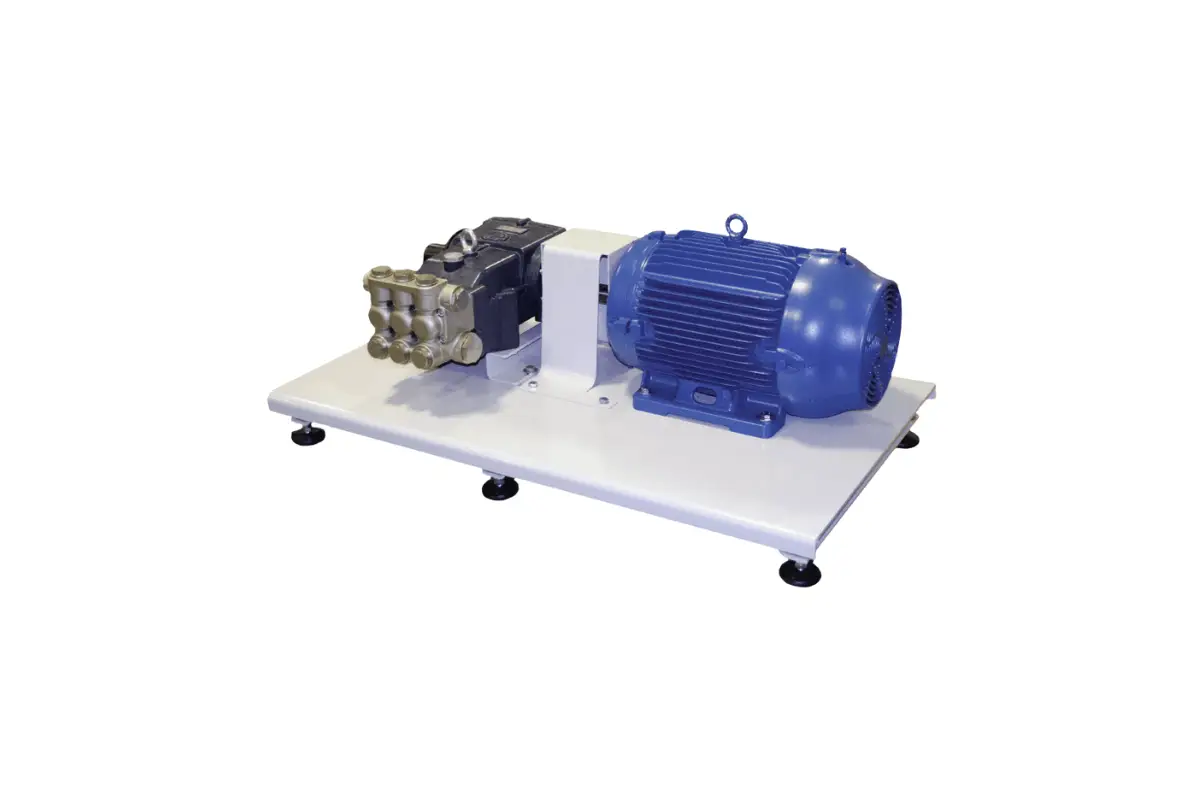
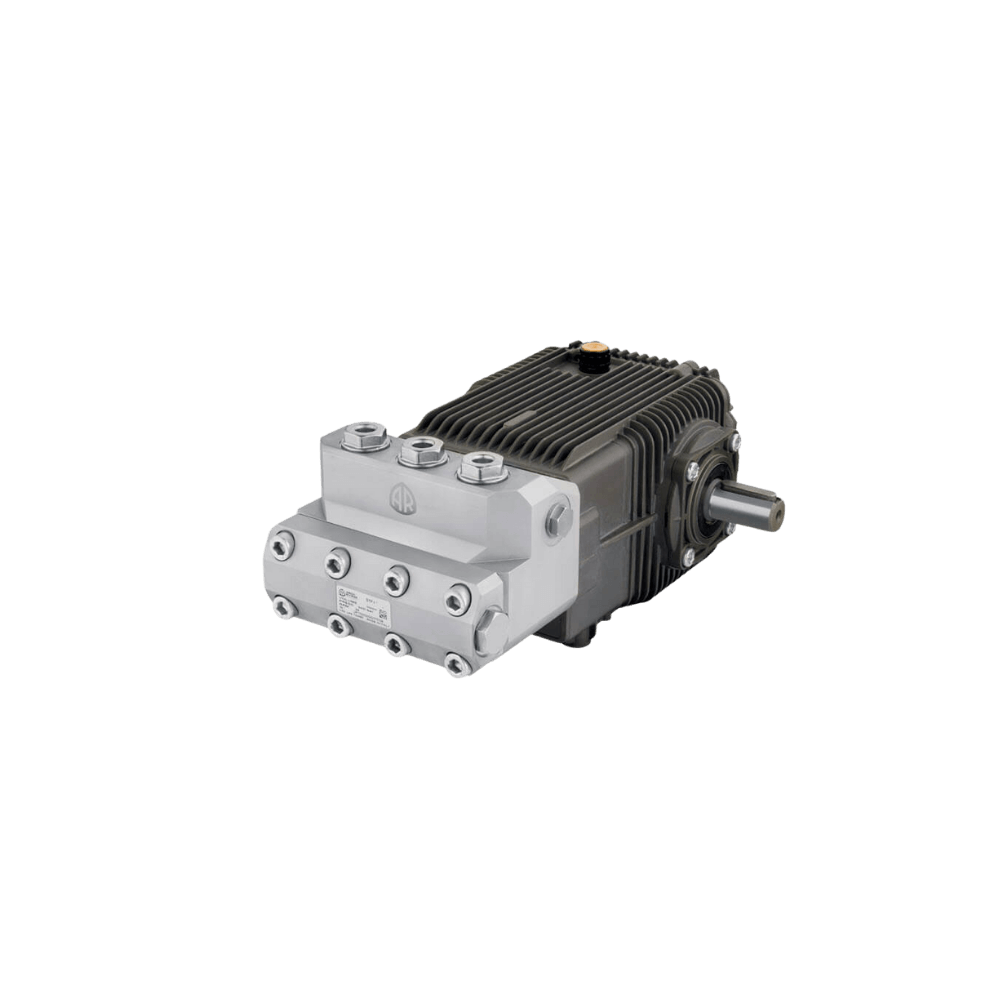
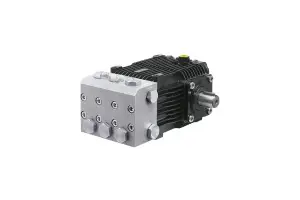
An electric skid unit is a pump, motor, coupling, plumbing and VFD already matched, aligned and tested on a welded steel base. You bolt it down, wire it in, plumb the inlet and discharge, and it runs. The alternative is sourcing five components, discovering your coupling is undersized for the torque, and rebuilding the thing twice before it holds pressure.
The industrial skid range comes in 30, 40 and 50 HP, and spans 6 to 40 GPM and 1,500 to 8,700 PSI. The model number tells you exactly what you are getting.
Reading the model number
8P5G5000-30HP-V is 8.5 GPM at 5,000 PSI on a 30 HP motor, with a VFD. The “P” is the decimal point, “G” separates flow from pressure, and “V” means the variable frequency drive is included. Once you know that, the whole catalog reads itself.
Notice what horsepower actually buys. It does not buy pressure on its own, and it does not buy flow on its own. It buys the product of the two. A 30 HP skid can give you 6 GPM at 7,250 PSI or 14 GPM at 3,000 PSI, and those are roughly the same amount of work. Decide which half of that trade you need before you pick a tier.
The top of the range
The 7P9G8700-50HP-V is the pressure ceiling: 7.9 GPM at 8,700 PSI. At that pressure water cuts coating, scale and concrete. Every component downstream, hose, gun, lance, fittings, has to carry the same rating with margin, and the operator needs training that a 3,000 PSI machine does not require. This is not a bigger version of a contractor washer.
At the other end, 40G1500-50HP-V moves 40 GPM at 1,500 PSI. Same motor, completely different job: tank flushing, bay washdown, and manifolds running several tools at once.
What the VFD is for
The variable frequency drive is standard on these, and it is not just a soft starter.
Soft start. A 50 HP motor across the line pulls enormous inrush and slams the coupling. Ramped start protects the drivetrain and the building’s electrical service.
Closed-loop pressure. Paired with a transducer, the drive holds a setpoint as tools open and close rather than letting the unloader absorb every swing.
Energy. Running at 70 percent speed for a rinse task costs meaningfully less than running full speed and dumping the difference through bypass.
Profiles. Hydrostatic testing needs controlled ramps and holds. A surface cleaner needs steady flow. Stored profiles let one machine do both.
Protection. Fault logging, motor temperature inputs, low-suction interlock and dry-run prevention.
Installing an electric skid unit
Electric skid unit suction and inlet
Size the inlet plumbing to the pump, not to the hose you have on the shelf. Short, straight, full bore, full-flow valves, minimal fittings. At 20 to 40 GPM the inlet is the constraint on almost every installation that underperforms. If you are feeding heated or reclaim water, oversize it further to stay clear of NPSH problems.
Filtration for electric skid units
Oversized in-line inlet filter plus a strainer at the tank. On a 50 HP machine a handful of grit through the valves is a rebuild, not an inconvenience.
Electric skid unit bypass
Regulator close to the pump, bypass returned to tank rather than to the inlet, thermal relief valve fitted for idle periods. On hot water this is not optional.
Electric skid unit electrical requirements
Confirm voltage and phase, commonly 460V three phase. Specify enclosure rating for the environment, NEMA 12 indoors or 4X for washdown. Confirm E-stop placement, lockout points, and UL-508A panel build where your inspector requires it. Size feeders and breakers from the motor nameplate FLA plus the VFD and control load, not from the horsepower number.
Electric skid unit safety
Primary relief valve always. On ultra high pressure builds add a burst disc as a secondary. Glycerin-filled gauge at the pump head in addition to the VFD display, low-water cutoff, over-temperature interlock, and containment where chemicals are in play.
Keeping an electric skid unit running
Oil at about 50 hours first, then on AR’s interval. Milky oil is water past the seals; stop and fix it.
Seals and valves replaced on hours, not on failure. Hot water and chemicals shorten the interval.
Coupling inspected quarterly. Spider inserts and keys are where vibration starts, and vibration is what kills bearings.
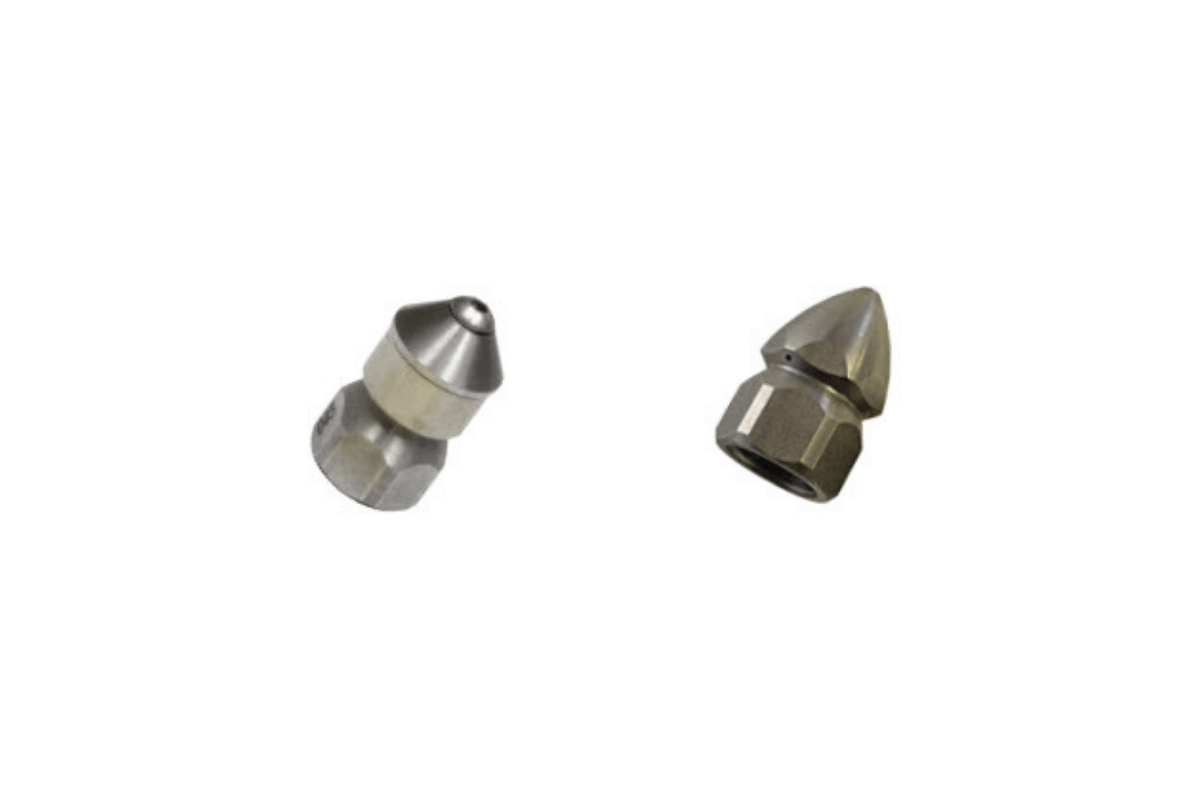
Nozzles checked for wear. A worn orifice passes more flow at lower pressure, so output fades gradually and people blame the pump.
Strainers cleaned on a schedule. Cavitation is the fastest route to an early rebuild.
Keep valve kits, water seal kits, oil seals, support rings, O-rings and pump oil on the shelf. On a machine this size the parts cost is trivial next to a shift of downtime.
Picking an electric skid unit
Send four things: target PSI and GPM, the tooling you will run, inlet water temperature, and duty cycle. Those four determine the pump head, motor, and VFD profile, and there is a specific model in the range for almost every combination. Send the details and you will get a model number back rather than a category.
The Honda GX200 is a small engine, and the mistake people make with Honda GX200 pump packages is buying a
Manage Consent
To provide the best experiences, we use technologies like cookies to store and/or access device information. Consenting to these technologies will allow us to process data such as browsing behavior or unique IDs on this site. Not consenting or withdrawing consent, may adversely affect certain features and functions.
Functional
Always active
The technical storage or access is strictly necessary for the legitimate purpose of enabling the use of a specific service explicitly requested by the subscriber or user, or for the sole purpose of carrying out the transmission of a communication over an electronic communications network.
Preferences
The technical storage or access is necessary for the legitimate purpose of storing preferences that are not requested by the subscriber or user.
Statistics
The technical storage or access that is used exclusively for statistical purposes.The technical storage or access that is used exclusively for anonymous statistical purposes. Without a subpoena, voluntary compliance on the part of your Internet Service Provider, or additional records from a third party, information stored or retrieved for this purpose alone cannot usually be used to identify you.
Marketing
The technical storage or access is required to create user profiles to send advertising, or to track the user on a website or across several websites for similar marketing purposes.