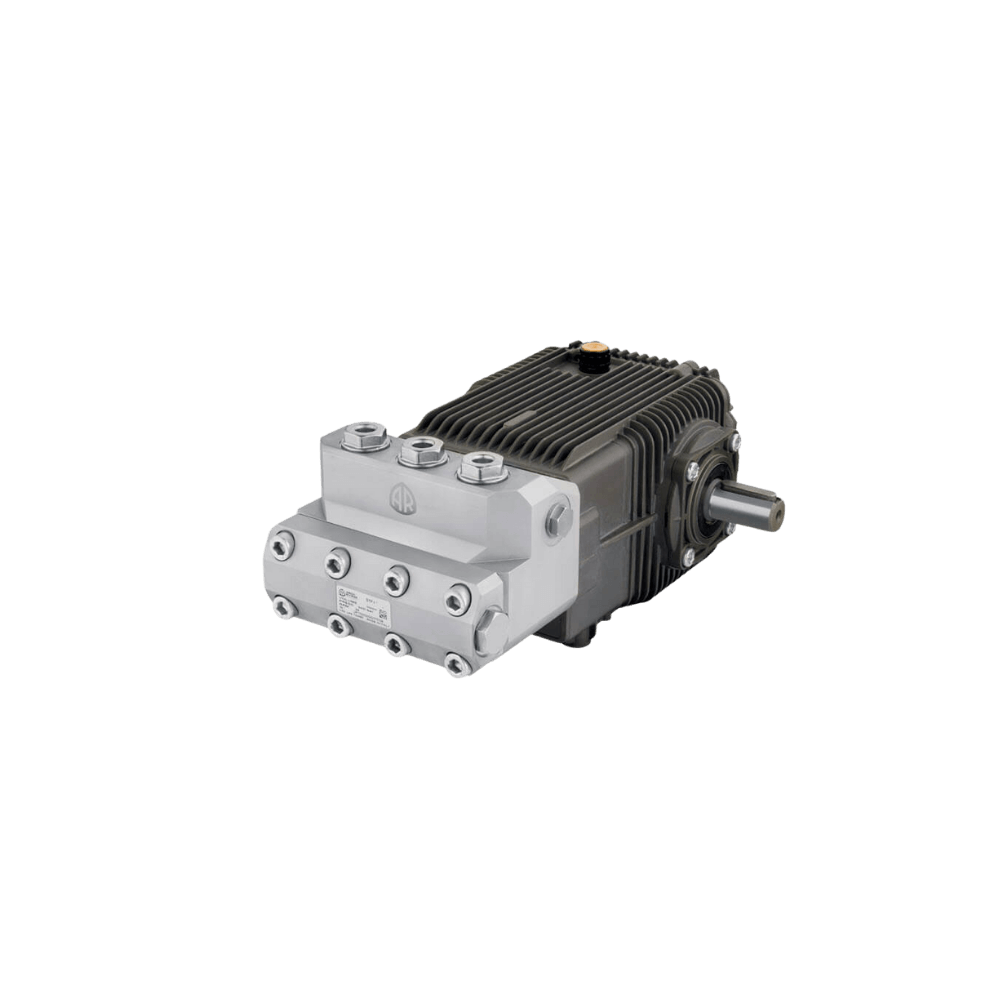
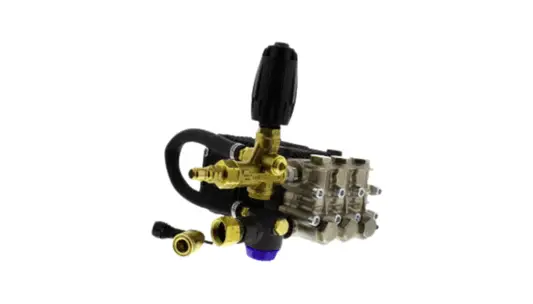
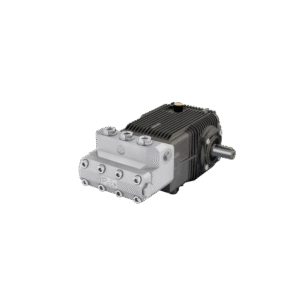
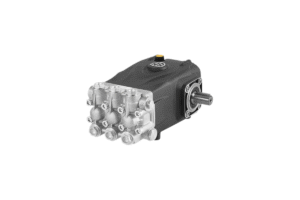
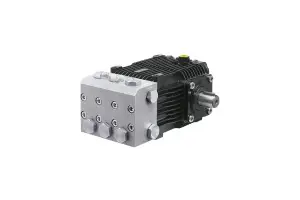
The RTD is AR’s largest pump family. An RTD hydraulic drive pump pairs it with a piston-type hydraulic motor, which is what you want on a vac truck, a jetter or any machine that already carries a serious hydraulic system.
Piston motors rather than gear motors is the notable part: smoother power delivery and better efficiency at the flows these pumps need.
The RTD hydraulic drive pump models
| Model | Water side | Hydraulic side |
|---|---|---|
| HYD-RTD100.200 | 25.0 GPM @ 2,900 PSI | 95 L/min @ 3,500 PSI |
| HYD-RTD130.160 | 32.0 GPM @ 2,300 PSI | 95 L/min @ 3,770 PSI |
| HYD-RTD160.130 | 40.0 GPM @ 1,850 PSI | 95 L/min @ 3,770 PSI |
There are also direct-drive and heavy-duty variants: HYD-RTD80-300HN-DD at 21 GPM / 4,350 PSI, HYD-RTD130.200HNB-DD at 34 GPM / 2,900 PSI. Stainless and high-temperature versions of the 80.300 are also available at 21 GPM / 4,350 PSI.
So the family spans 21 to 40 GPM and 1,850 to 4,350 PSI, which is a wider range than the three headline models suggest.
Read the hydraulic column first
All three of the models above want 95 L/min at 3,500 to 3,770 PSI. That is a substantial hydraulic circuit, well beyond what a light-duty system provides.
Before choosing a model, measure what your machine actually delivers at working temperature. Hydraulic output falls as oil heats and as pumps wear, so the brochure figure from when the truck was new is not the number to design around. An underfed motor turns the pump slowly, output drops, and everyone assumes the water pump is at fault.
How RTD hydraulic drive pumps are built
- Head: brass, with nickel-plated on the HN versions
- Connecting rods: bronze, for the torque that comes with low-speed operation
- Motor: integrated piston motor on an F55 flange
- Speed: 1,000 RPM
- Hydraulic connections: 1-1/16 in to 12 UNF
- Water ports: 1-1/2 in inlet, 1 in outlet
Note the inlet size. A 1-1/2 in inlet on a 40 GPM pump is not a suggestion: the supply line has to match it or the pump cavitates, and cavitation on an RTD is an expensive noise.
Where RTD hydraulic drive pumps are used
- Municipal: sewer cleaning, hydro-excavation, jetting fleets
- Industrial: tank washing, mill cleaning, vessel descaling
- Mining and quarrying: slurry cleaning, equipment washdown, dust suppression
- Oil and gas: offshore platforms, wellhead cleaning, refinery maintenance
- Construction: hydro-demolition, surface prep, infrastructure cleaning
The common thread is a truck or machine that already has hydraulics. If yours does not, an electric or engine-driven RTD will cost less for the same output.
Servicing RTD hydraulic drive pumps
- Watch the hydraulic circuit first. Motor flow and pressure out of spec shows up in the hydraulics before it shows up in the pump.
- Check crankcase oil regularly. At this size the oil is carrying heat as much as lubricating.
- Replace seals, pistons and valves on hours rather than after failure.
- Inspect the large hydraulic fittings for leaks and wear. They see vibration constantly on a mobile installation.
- Filter both the water and the hydraulic fluid. Contamination on either side ends up costing the same money.
Browse the hydraulic pump and motor range, or send your circuit’s flow and pressure and you will get a model your machine can actually drive.