Stainless pumps cost more than brass and most jobs do not need one. The jobs that do are specific, and what decides it is chemistry rather than pressure or temperature.
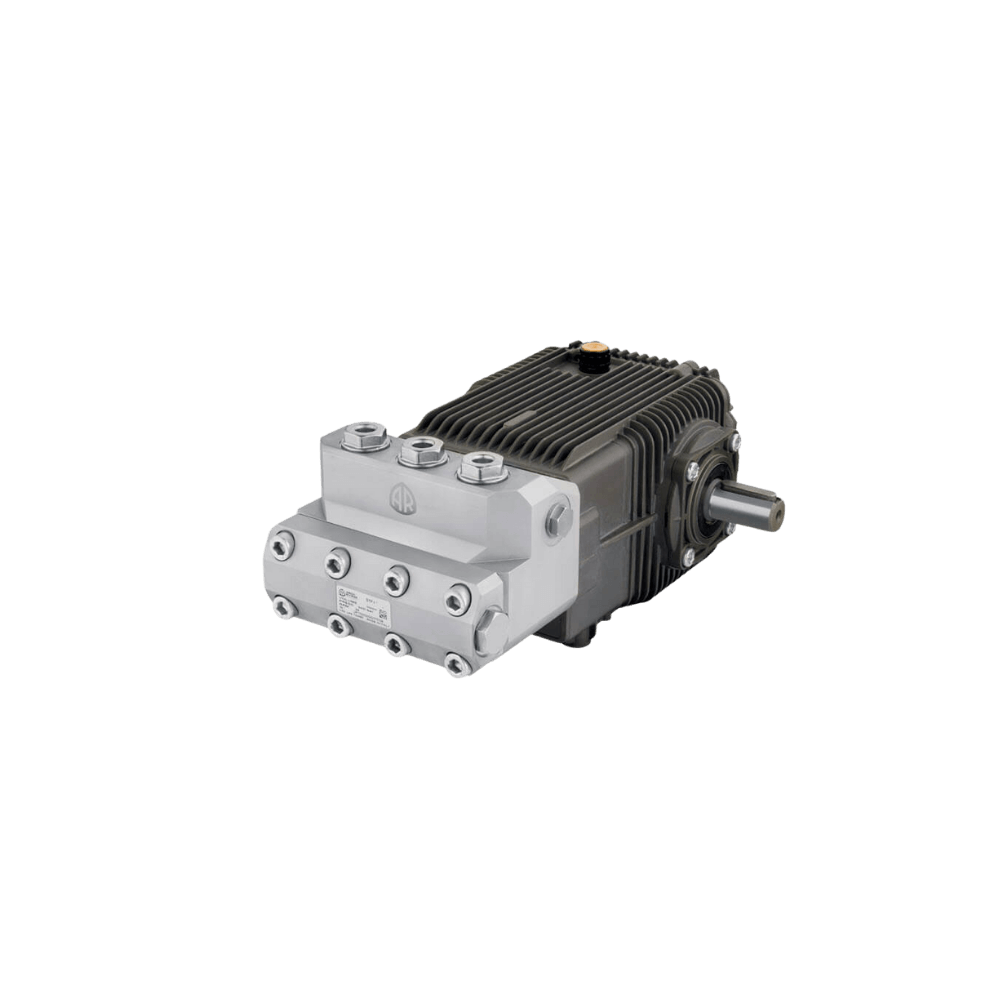
AR’s stainless range runs 76 models across a dozen families, from half a gallon a minute up to 21 GPM, and the hard part is not deciding whether you need stainless. It is working out which family fits the frame you already have.
First, whether you need it at all
Brass handles plain water and ordinary detergent indefinitely. It fails against three things:
Chlorides. Bleach, sanitizers, salt water and reclaimed water. Chlorides attack brass through dezincification, where the zinc leaches out and leaves porous copper behind. The part keeps its shape and loses its strength, which is why that failure often arrives without warning.
Caustics. The high-pH cleaners used on grease and protein in food plants.
Quaternary ammonium compounds. Standard sanitizers, and specifically hard on brass over time.
If none of that runs through your pump, brass will outlast the machine around it and stainless buys you nothing.
The stainless pumps, grouped by what they are shaped like
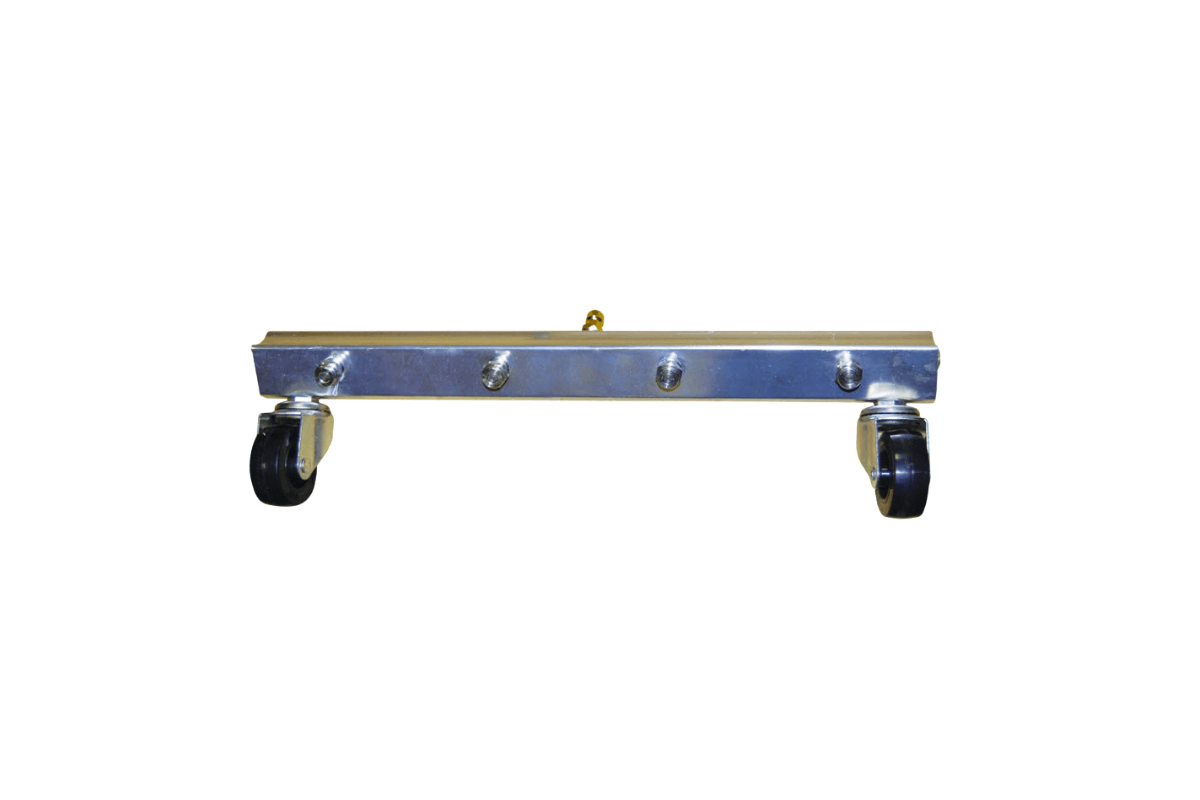
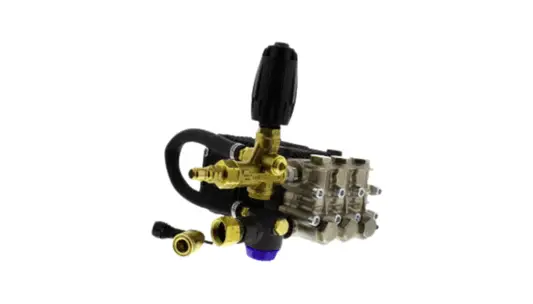
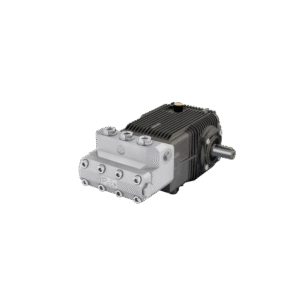
Flow and pressure narrow the list, but mounting usually decides it. These are grouped by the job they are built around.
Two more families exist for the case where heat and chemistry arrive together, covered below.
Stainless is not one material
The grade matters and the listing tells you which one.
316L contains molybdenum, and molybdenum is what provides chloride resistance. This is the grade for bleach, sanitizers, salt water and marine work. The XWLSS50.20NB at 13.2 GPM and 3,000 PSI has a 316L head.
420 is a hardenable martensitic stainless, used where food-contact approval and strength matter more than maximum chloride resistance. The RTDSS80-300N uses it.
If a listing says stainless without naming the grade, ask before you assume it is 316L.
Heat is a separate specification
The most common mistake in this whole category. A stainless head handles chemistry. It says nothing about temperature, because temperature is set by the seals.
You can buy a stainless-head pump with seals that will not survive hot water. If you run hot sanitation, you need both, and they are two separate lines on the order. The families that carry both are XHWA-SS, stainless head with PTFE seals from 1 to 3.5 GPM, and RHWA-SS at 6 GPM and 3,000 PSI.
Reading a stainless part number
Worth a warning, because in this range the model number misleads more often than it helps.
AR rerated the solid shaft RKA-SS pumps to 3,000 PSI without renaming them, and did not rerate the flange versions. So RKASS4.2G15N is 4.2 GPM at 3,000 PSI while RKASS42G15E-F33 is 4.2 GPM at 1,500, and both are current. The G15 in the name tells you nothing about which. The XMA-SS family has the same problem from the other direction: XMASS3G15E-F33 carries G15 and is rated 2,000 PSI, and XMASS25G25E-F17 carries G25 and is rated 1,500.
Flow and the shaft and flange suffixes decode reliably. Pressure does not. Read it off the listing for the exact model, every time, before you size a motor around it.
What is actually inside
Head: AISI stainless, 316L or 420 depending on model
Plungers: ceramic. Hard enough that grit does not score them, which is what makes the seals last, and brittle enough that freezing and cavitation crack them
Connecting rods: bronze on the larger frames, aluminium on the compact ones
Crankcase: anodized aluminium, with a sight glass so you can read the oil without opening anything
Sealing: two seals in series with a drain between them, so a failed primary seal leaks to the floor rather than into the oil
That last one is why you find water under a pump before you find it in the sight glass, and it is worth knowing which sign you are looking at.
Sizing the motor
EBHP is GPM times PSI divided by 1,460, and it is the brake horsepower the pump needs at its shaft. Add 10 to 20 percent and round up to a standard frame.
The spread across this range is wide. A 3 GPM, 1,000 PSI XMA-SS needs 2.1 EBHP and runs off a 3 HP motor. The 21 GPM RTD-SS at 4,350 PSI needs 62.6, which is a 75 HP installation and three-phase service. Settle the electrical side before you choose the pump, because it constrains the choice more often than the cleaning requirement does.
Do not mix metals
If you buy a stainless head and thread brass quick connects into it, you have built a galvanic couple. The brass becomes the anode and corrodes faster than it would have alone.
Match the material through the whole wetted path: stainless couplers, stainless swivel, stainless hardware, all the way to the gun. This is the commonest way a stainless upgrade gets wasted and it is entirely avoidable.
Where these go
Food and beverage: dairies, breweries, bottling, meatpacking, USDA-regulated washdown
Pharmaceutical: CIP loops and controlled chemical environments
Marine and offshore: salt fog, deck cleaning, hull maintenance
Chemical processing: solvents and corrosive cleaning agents
Wastewater and recycling: continuous exposure to aggressive liquids
In each of those the pump is chosen for what it survives rather than what it delivers. Three GPM at 1,000 PSI rinses a food-contact surface perfectly well. What it has to do is keep doing that after two years of sanitizer.
Keeping one
Flush with clean water after every chemical run. Stainless resists chemistry, it does not ignore it, and residue sitting in the head overnight does damage that running never would.
Watch the seal drain for weeping. That is the early warning on the seal set.
Keep the oil interval. The head material has no bearing on the crankcase.
Winterize. Stainless does not stop water expanding when it freezes, and ceramic plungers are brittle.
The Honda GX200 is a small engine, and the mistake people make with Honda GX200 pump packages is buying a
Manage Consent
To provide the best experiences, we use technologies like cookies to store and/or access device information. Consenting to these technologies will allow us to process data such as browsing behavior or unique IDs on this site. Not consenting or withdrawing consent, may adversely affect certain features and functions.
Functional
Always active
The technical storage or access is strictly necessary for the legitimate purpose of enabling the use of a specific service explicitly requested by the subscriber or user, or for the sole purpose of carrying out the transmission of a communication over an electronic communications network.
Preferences
The technical storage or access is necessary for the legitimate purpose of storing preferences that are not requested by the subscriber or user.
Statistics
The technical storage or access that is used exclusively for statistical purposes.The technical storage or access that is used exclusively for anonymous statistical purposes. Without a subpoena, voluntary compliance on the part of your Internet Service Provider, or additional records from a third party, information stored or retrieved for this purpose alone cannot usually be used to identify you.
Marketing
The technical storage or access is required to create user profiles to send advertising, or to track the user on a website or across several websites for similar marketing purposes.