HYD-XWA8G35-F38 | Hydraulic Pump with F38 Flange | 8 GPM 3500 PSI | XWA Series
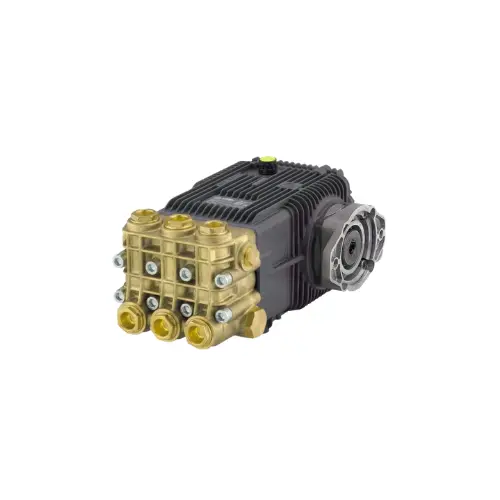
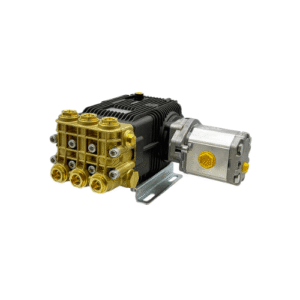
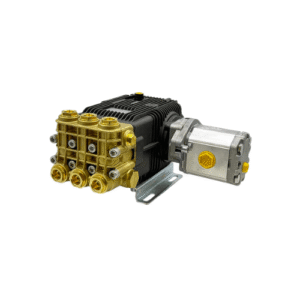
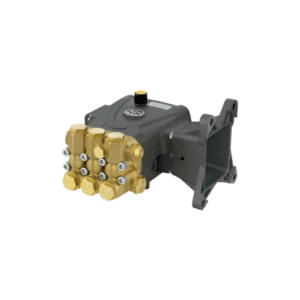
HYD-XWA8G35-F38 brings the professional washing industry’s flagship duty point to hydraulic drive: an Annovi Reverberi XWA-series triplex plunger pump rated at 8 GPM and 3500 PSI at 1450 RPM, supplied with the F38 close-couple flange for direct hydraulic motor mounting. Ask any full-time washing contractor what a serious rig runs and the answer is 8 at 3500 — enough flow to rinse at production pace, enough pressure to strip what soaking won’t, the balance the trade converged on. This pump delivers that spec without the belt-drive gas engine it usually rides behind.
That makes the HYD-XWA8G35-F38 the wet end for hydraulically powered contractor systems: fleet washing trucks built on chassis hydraulics, municipal and utility wash rigs, high-duty skid builds, and OEM equipment where the 8/3500 performance target was set before the drive was chosen. It is also the strongest duty point available on the F38 interface — buyers stepping past it move to the splined-shaft RTX class and its heavier hydraulic appetite.
HYD-XWA8G35-F38 Specifications
- SKU: HYD-XWA8G35-F38
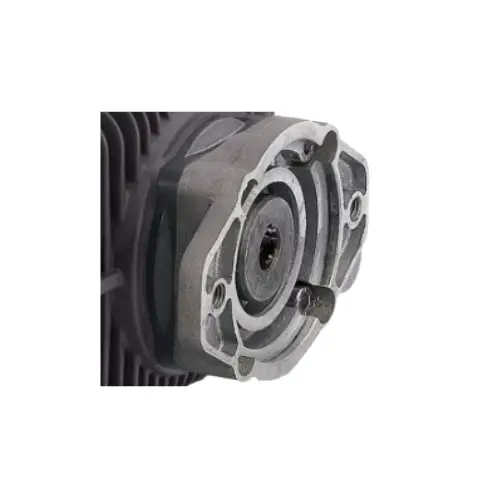
- Configuration: Pump with F38 hydraulic flange — mounts your hydraulic motor via SAE A 82.55 two-bolt close-couple
- Pump: Annovi Reverberi XWA series triplex plunger pump (194-series industrial frame)
- Flow Rate: 8 GPM (30 L/min)
- Maximum Discharge Pressure: 3500 PSI (241 bar)
- Rated Speed: 1450 RPM — never overspeed
- Power Requirement: Approximately 19 HP at full duty
- Drive Interface: F38 close-couple flange (SAE A 82.55, two-bolt), included
- Inlet Port: 3/4″ F
- Discharge Port: 3/8″ F
- Maximum Fluid Temperature: 140°F
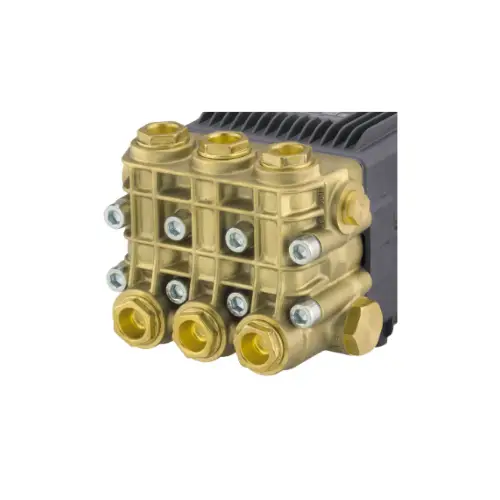
- Pump Head: Brass, with one-piece ceramic plungers
- Weight: Approximately 36 lbs (pump with flange)
Hydraulic Supply Requirements
Plan on roughly 23 to 24 hydraulic horsepower delivered continuously for full 8 GPM at 3500 PSI output — the top of the F38 class, wanting a strong truck hydraulic system, high-flow machine auxiliary, or dedicated power unit rather than a compact circuit. Depending on the motor displacement selected, that power arrives as roughly 10 to 19 GPM of oil at correspondingly higher or lower pressure; size the motor to reach 1450 RPM at your available flow via RPM ≈ 231 × hydraulic GPM ÷ displacement (in³), verify torque at working pressure, and cap the circuit with a relief protecting the motor’s rating. Return oil runs short and filtered to tank, with cooling sized for contractor hours, not bursts. This is the one F38 pump where the motor match genuinely matters — call WSHPWR with your circuit’s flow and pressure and we will spec the pairing before you order.
The Contractor Duty Point, Hydraulically Driven
The 8/3500 class earned its status on results: house washing, flatwork, and fleet washing all run measurably faster at 8 GPM than at the 4–5.5 GPM tiers, while 3500 PSI keeps surface-prep authority the high-flow washdown pumps give up. Contractors have historically paid for that spec with big gas engines, belt drives, and the maintenance both bring. Built into a hydraulic system, the HYD-XWA8G35-F38 delivers identical water performance with none of it — no engine on the skid, no belts to tension, no winter carburetor, output steady regardless of chassis engine speed, and a drive that outlasts the trucks it rides on.
F38 Close-Couple Advantages
The included F38 flange locates the hydraulic motor directly on the pump centerline — SAE A 82.55 two-bolt, no coupler, no belt, no field alignment. Side loading on bearings and seals stays minimal, the installed footprint is the smallest an 8 GPM drive gets, and motor or pump dismounts independently at the flange when service calls. For shops already running F38-mounted AR drives, this pump joins the fleet with hardware and habits they own.
194-Series Construction
The XWA rides AR’s 194-series industrial frame: brass head, one-piece ceramic plungers for heat dissipation and abrasion resistance, a die-cast crankcase with oil monitoring, and valve access through the head for inspection without dismounting the HYD-XWA8G35-F38 from its skid. AR repair kits keep the long-term service path standard.
Installation & Operation Notes
Mount horizontally and confirm motor rotation at commissioning. Feed the 3/4″ inlet from a flooded, filtered supply — 8 GPM at contractor duty cycles punishes marginal suction plumbing, and buffer-tank feed is standard practice at this class. Pair the discharge with an unloader set against working pressure, keep downstream components rated for 3500 PSI with margin, size nozzles to the 8 GPM duty point, hold 1450 RPM as the ceiling, and winterize the truck-mounted unit before the first freeze — it is the most exposed pump in the operation.
Quality Assurance & Maintenance
Every HYD-XWA8G35-F38 ships factory-tested for flow rate, pressure stability, and vibration. Maintenance follows AR’s standard schedule — crankcase oil changes, seal inspection, periodic valve checks with AR repair kits — with contractor-hour duty rewarding oil-change discipline the way any professional pump does.
HYD-XWA8G35-F38 Key Features & Applications
- 8 GPM at 3500 PSI, 1450 RPM — the professional washing trade’s flagship duty point, hydraulically driven.
- F38 close-couple flange included — the strongest duty available on the SAE A two-bolt interface.
- Requires approximately 23–24 hydraulic HP; motor pairing specified to your circuit by WSHPWR.
- No engine, belts, or fuel on the skid — output independent of chassis engine speed.
- Brass head, ceramic plungers, and standard AR repair kits on the 194-series industrial frame.
- Ideal for fleet washing trucks on chassis hydraulics, contractor wash rigs, municipal and utility wash systems, and OEM builds targeting the 8/3500 spec.
Full pressure (3500 PSI at 8.0 GPM) needs about 19 HP of hydraulic input.
Only logged in customers who have purchased this product may leave a review.



Reviews
There are no reviews yet.