A direct-drive pump bolts to the engine crankshaft. No belts, no pulleys, no gearbox, no alignment to get wrong. On a skid or a trailer that is the difference between a rig you can build in an afternoon and one that needs a fabricator.
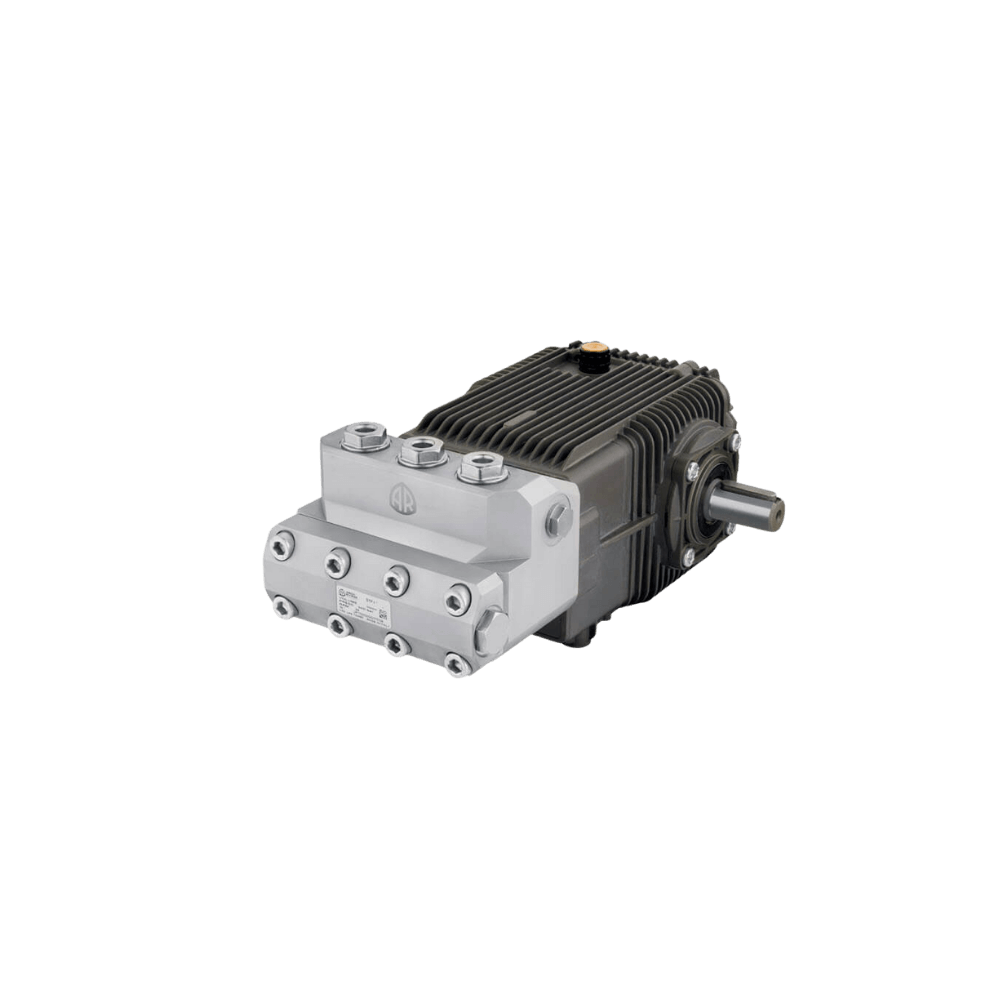
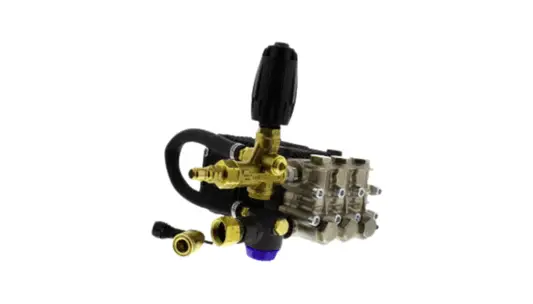
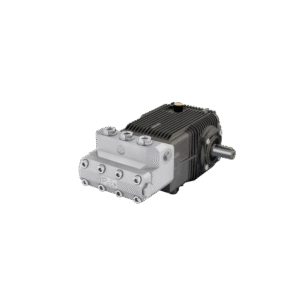
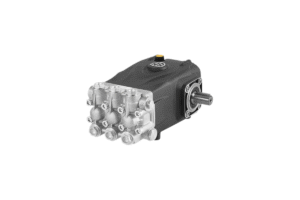
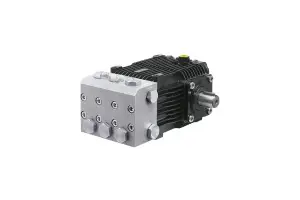
The RKV series is AR’s direct-drive line for 1 in gas engine shafts, running 3.5 to 5.5 GPM at up to 4,000 PSI.
All run at 3,400 RPM on a 1 in hollow shaft with an F24 flange. Brass head, ceramic plungers, thermal relief, and every wear part available as a kit.
RKV pump package versions
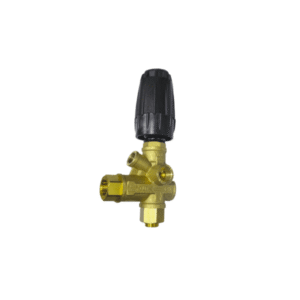
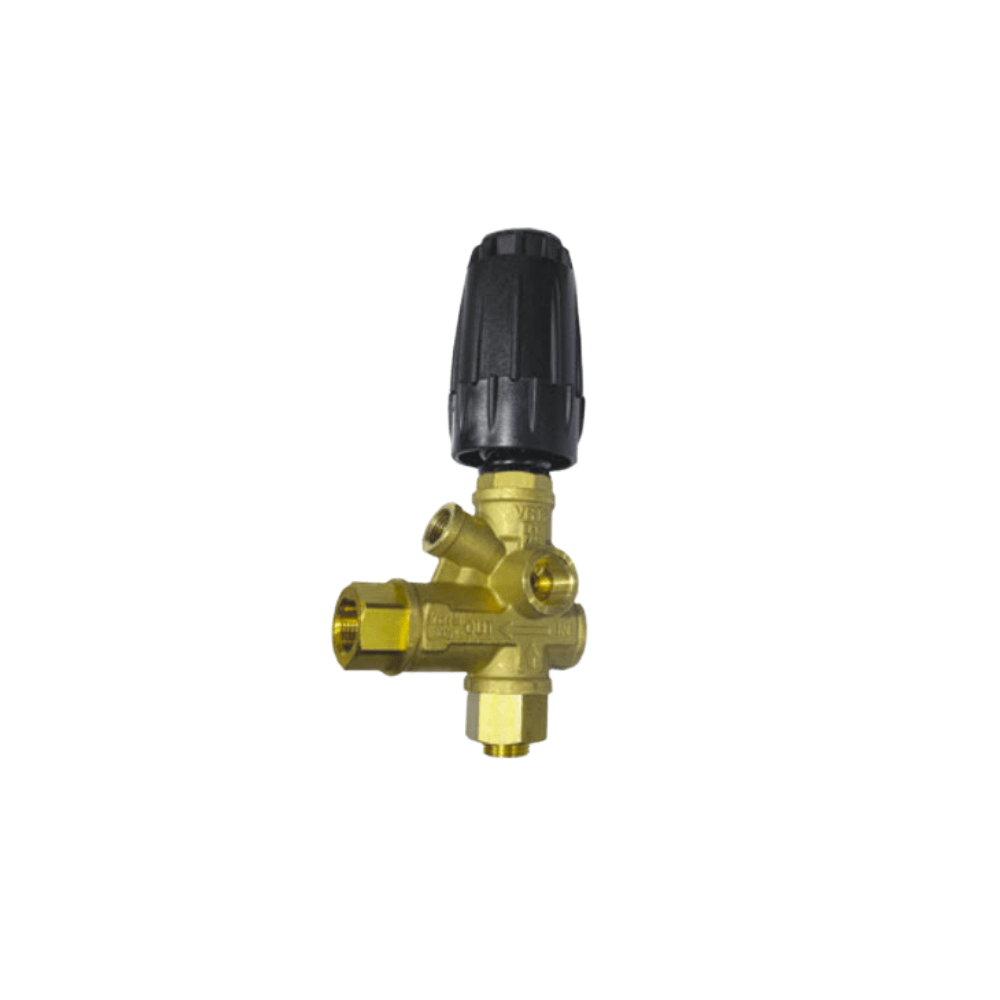
Most models come as bare pumps or as boxed packages with the unloader, fittings and hardware matched. The suffix says which regulator: RKV4G40-VRT-PKG and RKV4G37-VRT-PKG ship with a VRT, RKV55G40-VRT3PKG with a VRT3, and RKV5G32D-VRT3PKG covers 5.0 GPM at 3,200 PSI.
Buy the package unless you already have a matched unloader. An unloader sized for the wrong flow is the single most common reason a home-built rig never holds its rated pressure, and it is difficult to diagnose after the fact.
Sizing an engine for RKV pumps
EBHP is GPM times PSI divided by 1,460. Published small-engine horsepower is measured under conditions your job site does not reproduce, so add 20 percent and round up.
4 GPM at 4,000 PSI needs 11 HP at the pump, which means a 420cc class engine. 5.5 GPM at 4,000 PSI needs 15.1, which is at the top of what a single-cylinder gas engine will deliver honestly.
Check the shaft before ordering: 1 in, hollow, horizontal. Displacement does not reliably predict shaft size across model years and markets.
Match it to your water too
This is the constraint people hit after they solve the engine one. A domestic hose bib supplies roughly 4 to 6 GPM and less through a long hose. A 5.5 GPM pump on a garden hose cavitates, which sounds like gravel and destroys valve seats.
Above 4 GPM you want a tank and a proper feed line, sized generously and short.
What direct drive costs you
Direct drive means the pump turns at engine speed, 3,400 RPM, which is more than twice the speed of a belt-driven industrial pump.
More cycles per hour means more wear, more heat and more vibration transmitted straight into the crankcase. That is the trade for the compact, simple, inexpensive build. It is the right trade for a mobile contractor rig and the wrong one for a machine that runs eight hours a day in a fixed installation, where a belt-driven 1,450 RPM pump will outlive it several times over.
Where RKV pumps are used
Mobile contractor rigs on skids and trailers, which is the core market
Fleet washing for trucks, buses and heavy equipment
Agriculture: barn washdown, tractors, implements
Concrete and masonry: driveways, sidewalks, job site prep
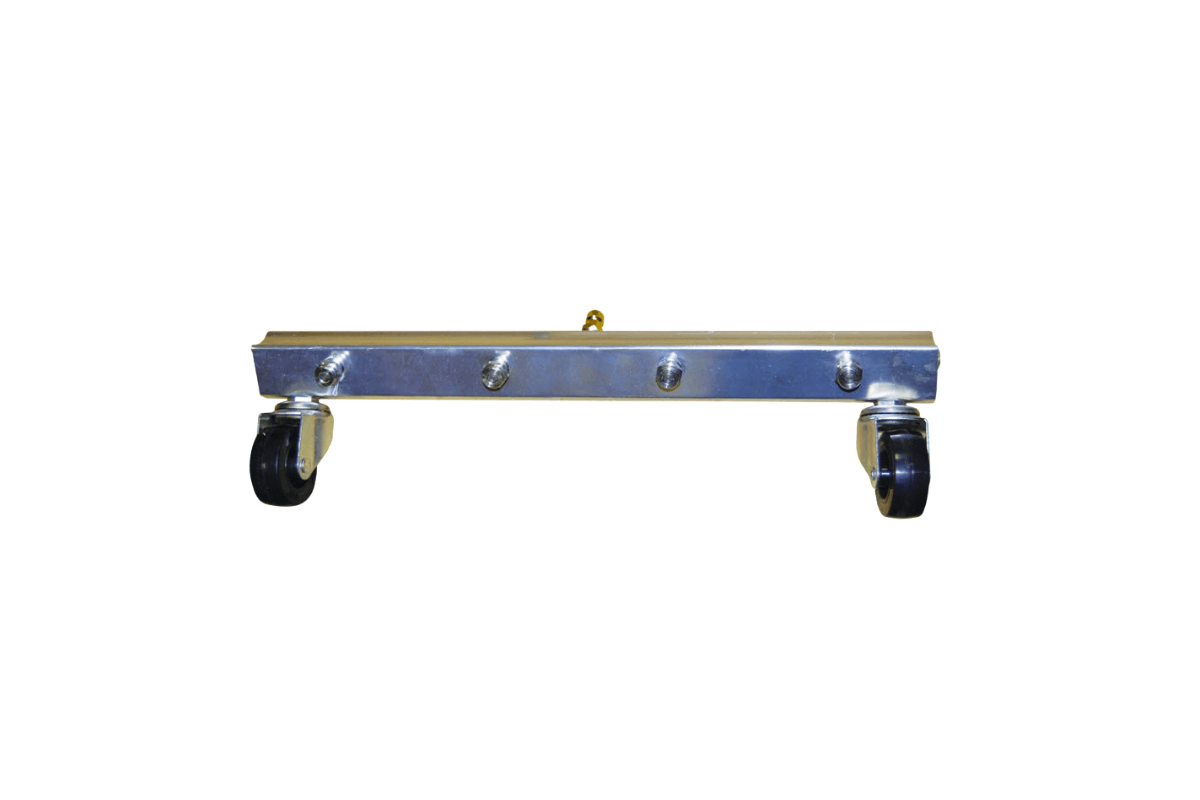
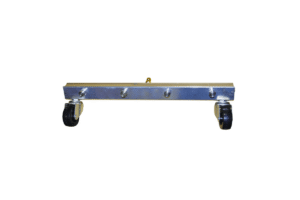
Surface cleaners in the 16 to 24 in range, where the 4 to 5.5 GPM output is exactly what those tools want
Keeping an RKV pump working
At 3,400 RPM maintenance matters more, not less. Oil change at 50 hours and then every 300 or three months. Never run dry. Keep the inlet filtered. Fit and use the thermal relief valve, because direct-drive rigs spend real time in bypass while the operator moves a ladder.
And run pump saver before any storage below freezing. A cracked head is the most common end for a contractor pump, and it happens overnight.
The Honda GX200 is a small engine, and the mistake people make with Honda GX200 pump packages is buying a
Manage Consent
To provide the best experiences, we use technologies like cookies to store and/or access device information. Consenting to these technologies will allow us to process data such as browsing behavior or unique IDs on this site. Not consenting or withdrawing consent, may adversely affect certain features and functions.
Functional
Always active
The technical storage or access is strictly necessary for the legitimate purpose of enabling the use of a specific service explicitly requested by the subscriber or user, or for the sole purpose of carrying out the transmission of a communication over an electronic communications network.
Preferences
The technical storage or access is necessary for the legitimate purpose of storing preferences that are not requested by the subscriber or user.
Statistics
The technical storage or access that is used exclusively for statistical purposes.The technical storage or access that is used exclusively for anonymous statistical purposes. Without a subpoena, voluntary compliance on the part of your Internet Service Provider, or additional records from a third party, information stored or retrieved for this purpose alone cannot usually be used to identify you.
Marketing
The technical storage or access is required to create user profiles to send advertising, or to track the user on a website or across several websites for similar marketing purposes.