Every pressure system has one connection where the hose meets the pump, and a garden hose adapter is usually what sits in it. It is also where most leaks start. Garden hose threads, NPT threads and metric threads all look similar and none of them seal against each other.
The right adapter fixes that permanently. The wrong one weeps, and a weep on the suction side draws air, which causes cavitation, which damages the pump.
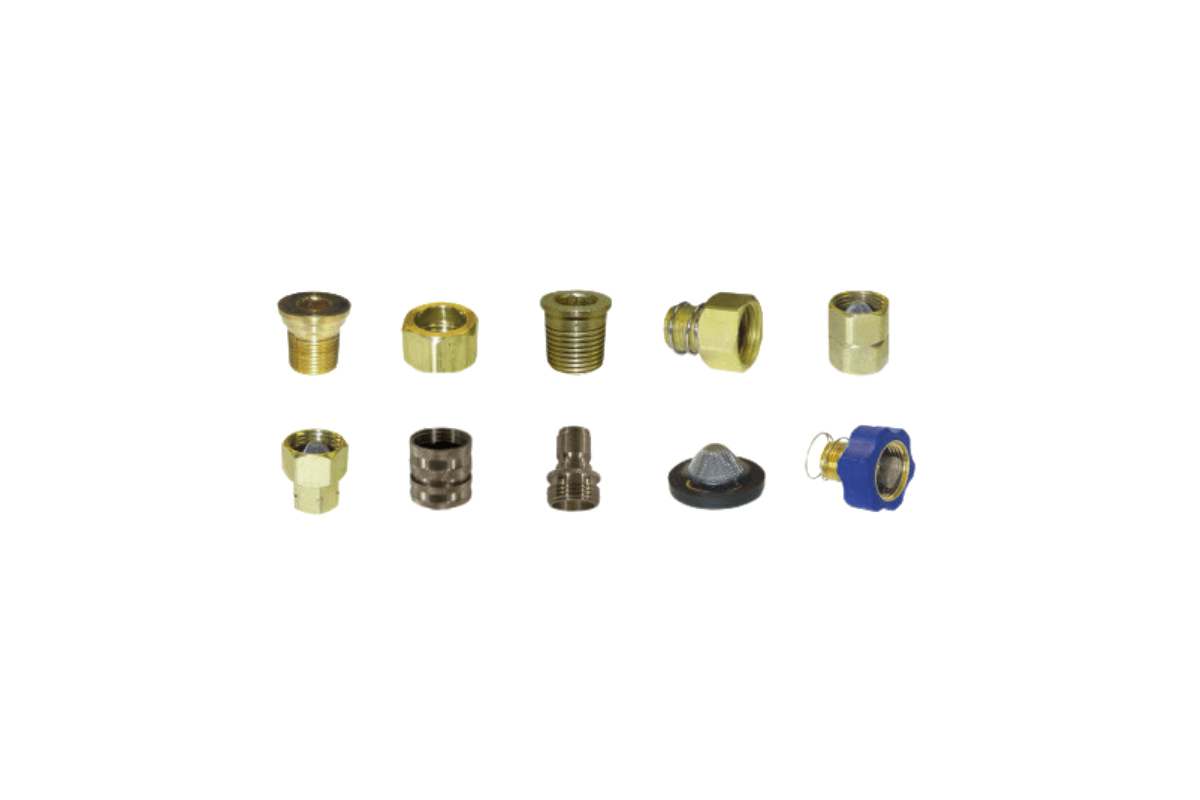
Adapters with filters
These do two jobs at once, and on any machine drawing from a hose or tank they are the ones to fit.
- AR2605B, 3/4 in brass garden hose adapter with screen
- AR7300, 1/2 in adapter with spring and filter, which is the one that ships with many AR packages
- AR40774, a complete garden hose filter set
The screen is what keeps sand and rust flakes out of the valve seats. It is also the part people forget to clean, and a blocked screen starves the pump, so check it before each shift.
Plain garden hose adapters
- PW1264750, brass garden hose adapter
- AR4221570, aluminium GHA inlet fitting
- 5331-BLK, garden hose adapter, GHA to male
- 5332, 3/4 GH to 3/8 in male
Moving between thread standards
Garden hose thread is not NPT and neither is M22. Going between them needs a purpose-made reducer rather than force:
- AL557-B, M22 to a 3/8 quick connect plug
- AL456-B, 3/8 in F to M22
- AL455-B, 1/4 in M to M22
- AL457-B, M22 to 3/8 in M NPT
One thing to watch on M22: fittings come with either a 14 mm or 15 mm nipple, they thread together, and they do not seal properly. AL458-B-15 is the adapter between the two.
Why brass
- Corrosion resistance. These fittings sit wet permanently.
- Strength under pressure. Plastic adapters are fine on a garden hose and not on a pump inlet.
- Thread accuracy. Machined brass threads seal without being forced, which is what prevents the stripping that turns a leak into a replacement.
Aluminium is lighter and cheaper and fine on cold clean water. In salt or chemical service go stainless throughout, and do not mix brass into a stainless system, because the brass corrodes galvanically.
Choosing a garden hose adapter
Three questions, in order:
- Thread standard. Garden hose, NPT or M22. This is the one that decides whether a fitting will work at all.
- Size and gender. 3/8, 1/2 or 3/4 in, male or female, both ends.
- Do you need a filter? On the pump inlet, almost always yes.
Measure rather than eyeball. Garden hose thread and 3/4 in NPT are close enough in appearance to fool anyone and different enough to leak.
Where they matter
- Agriculture: linking irrigation pumps to hose for crop watering
- Commercial cleaning: connecting high-pressure pumps for fleet and facility work
- Construction: dust suppression and job-site wash stations
- Food processing: filtered adapters as part of contamination control
- Municipal: parks, fire and maintenance crews needing fast, leak-free setups
Garden hose adapter maintenance
- Inspect threads. Worn or cross-threaded fittings leak and will not reseal.
- Replace cone washers when they flatten. They are consumables.
- Clean the filter screens before every shift.
- Do not overtighten. A brass fitting that needs force to seal is already damaged, and forcing it strips the thread.
Keep a few spares in the truck. The failure is never convenient and the part is never expensive.
Browse the full adapters and fittings range, or tell me what you are connecting to what and you will get the part number.