Understanding Pump Cavitation
Understanding the mechanics behind Pump Cavitation can aid in prevention strategies.
Controlling Pump Cavitation is crucial for the reliability of your entire system.
Awareness of Pump Cavitation can prevent operational headaches down the line.
Effective management of Pump Cavitation leads to longer service life for your equipment.
Mitigating risks associated with Pump Cavitation ensures higher efficiency in operations.
Exploring how Pump Cavitation affects your system can lead to better maintenance practices.
Identifying the root causes of Pump Cavitation is vital for effective solutions.
If a pump sounds like it is chewing gravel, it is cavitating, and it is destroying itself while you listen. Cavitation is not a pressure problem or a pump-quality problem. It is almost always an inlet problem, and the inlet is the part of the system nobody specs.
What happens during pump cavitation
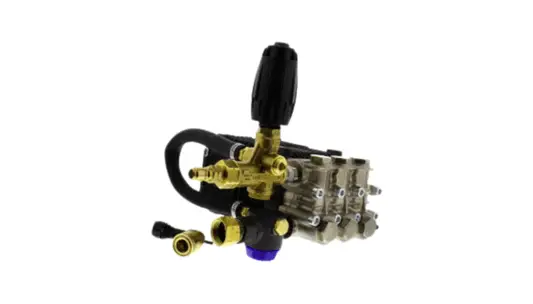
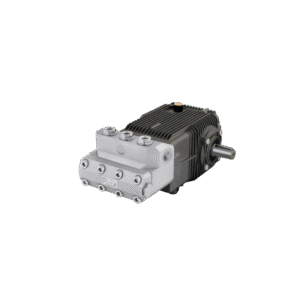
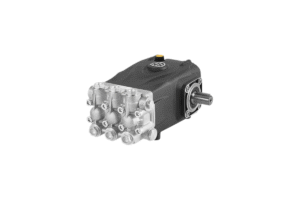
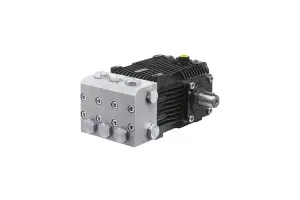
A triplex pump displaces a fixed volume per revolution. If the supply cannot deliver that volume, the pump pulls a partial vacuum on the intake stroke, and water at low enough pressure boils at ambient temperature. Vapour bubbles form.
On the pressure stroke those bubbles collapse. Each collapse is a microscopic implosion against the valve seat or the plunger face, and they happen thousands of times a minute. Over weeks they pit hardened steel and ceramic.
What you notice:
- A rattling, gravelly noise from the pump head
- Pressure that wanders instead of holding steady
- Valves, seals and plungers wearing out far sooner than they should
- Eventually a failure that looks sudden but was not
What causes pump cavitation
Every restriction between the water source and the pump head. The usual culprits, in roughly the order they show up:
- Undersized garden hose fittings. A standard 5/8 in hose and a 3/4 in bib will supply about 4 to 6 GPM at best, and less through 100 ft. A 5 GPM pump is already at the edge.
- Sharp elbows and kinks in the inlet line, which cost far more head than people expect.
- Hardware-store adapters with abrupt internal steps instead of a smooth bore.
- A clogged inlet filter, which is the single most common cause and the easiest to fix.
- Air leaks. A loose clamp on the suction side draws air rather than leaking water, so there is nothing visible to find.
- A tank below pump level, forcing the pump to lift rather than being fed.
Fixing the inlet to stop cavitation
Filter it, and keep the filter clean
An inlet filter protects the valves and seats from grit. A dirty one causes the exact problem it was fitted to prevent, so it needs checking on a schedule rather than when something goes wrong.
- MV19 suction filter and strainer, 3/4 F x 3/4 M, sized for the pump inlet
- LS125-80, 1-1/4 in brass inline strainer at 80 mesh, for larger systems
- AR40774 garden hose filter set, an inlet protection kit for smaller rigs
Connect it properly
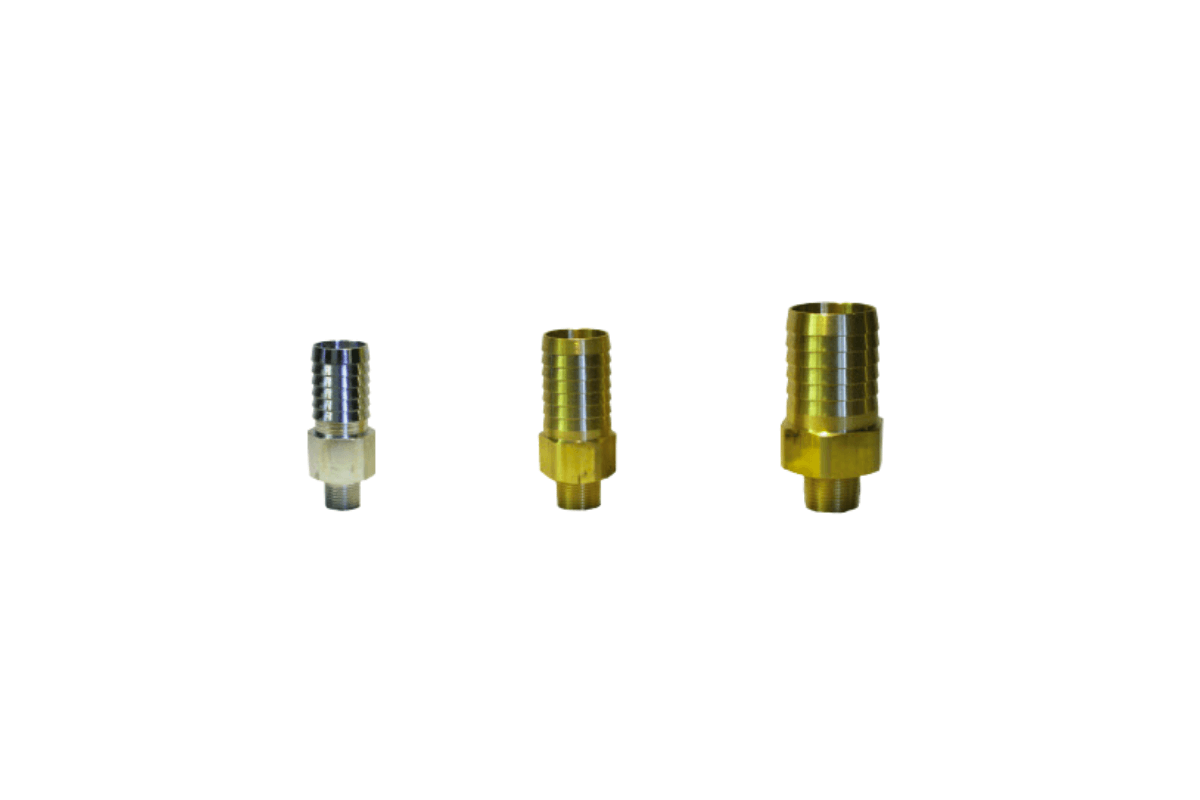
The adapter between the hose and the pump matters more than it looks, because an abrupt internal step generates turbulence right where the pump is trying to draw a solid column of water.
- AR2605B, 3/4 in brass garden hose adapter with screen
- AR7300, 1/2 in garden hose adapter with spring and filter
- PW1264750, brass garden hose adapter
- AR4221570, aluminium GHA inlet fitting
Brass over plastic, and a barb long enough to take two clamps on a suction hose.
Six rules for an inlet that never cavitates
- Oversize everything. Size the hose and fittings one step above the pump’s inlet port. There is no downside.
- Short and straight. Minimise length, use sweeping bends, use full-flow ball valves rather than gate valves.
- Double clamp the suction side. Air leaks on the inlet cause cavitation and leave no puddle to find them by.
- Clean the filter before every shift. Thirty seconds.
- Feed, do not lift. Keep the tank above the pump so the inlet sees positive pressure. A gravity-fed system is more forgiving than any fitting you can buy.
- Check supply against demand. Time how long your source takes to fill a five gallon bucket. That is your real GPM, and it has to exceed the pump’s rating with room to spare.
Why preventing cavitation is worth doing
Inlet parts are the cheapest components on a wash rig and they protect the most expensive one. A filter and a decent adapter cost a fraction of a valve and seal kit, and a small fraction of the pump.
On continuous-duty rigs the math is starker still, because the loss is not the parts but the shift. Fleet washing, food processing, municipal work and construction cleaning all run pumps hard enough that a cavitation failure costs a day before anyone touches a wrench.
Take care of the inlet and the pump takes care of itself.
Browse fluid handling and inlet components, or send your pump model and water source and you will get the right filter and adapter for it.
Regular checks can help in diagnosing potential Pump Cavitation issues before they escalate.
Preventing Pump Cavitation should be a priority for anyone operating pumps in various applications.
Understanding Pump Cavitation is essential for recognizing the signs before they lead to costly repairs.
Understanding Pump Cavitation is crucial for maintaining your pump’s performance and longevity.
For additional industry standards and technical resources, visit: https://www.pumps.org/