In-Line Water Filters
When you invest in a high-pressure pump or pressure washer system, you expect reliable performance, consistent water flow, and years of service. Yet one of the most common — and most preventable — causes of premature pump failure is debris and sediment entering from the water supply. The solution is straightforward: in-line water filters, sometimes called inlet strainers.
These small, often overlooked components serve as the first line of defense against contaminants that can damage your pump’s internal components. By trapping dirt, rust particles, sand, and other impurities before they reach the pump, in-line filters extend service life, reduce repair costs, and ensure optimal performance.
In this blog, we’ll explore the importance of in-line water filters, how they impact pump longevity, and why routine preventative maintenance — particularly cleaning stainless steel screens before every work shift — is essential for any operator or contractor.
Why In-Line Water Filters Matter
High-pressure pumps are precision-engineered machines designed to handle exact flows (GPM) and pressures (PSI). Even minor debris can cause:
- Abrasive wear: Sand, grit, and rust act like sandpaper on pump seals, plungers, and valves.
- Clogs: Small particles can block nozzles or unloader valves, reducing flow and increasing heat.
- Cavitation: Restriction in the water supply from clogged filters or sediment can cause pump cavitation, leading to pitted plungers and catastrophic damage.
- Seal damage: Fibers, wood chips, or organic matter can lodge in seals, causing leaks.
By installing the proper in-line filter — whether a mesh cone filter, a Y-filter, or a clear-bowl strainer — operators add a protective barrier that keeps impurities out of the pump. In fact, many pump manufacturers specify inlet filtration as a requirement for warranty coverage.
How Filters Impact Pump Longevity
The difference between a pump that lasts one season and one that lasts five often comes down to water quality. Clean water allows seals to seat properly, plungers to move smoothly, and valves to open and close without obstruction.
For example:
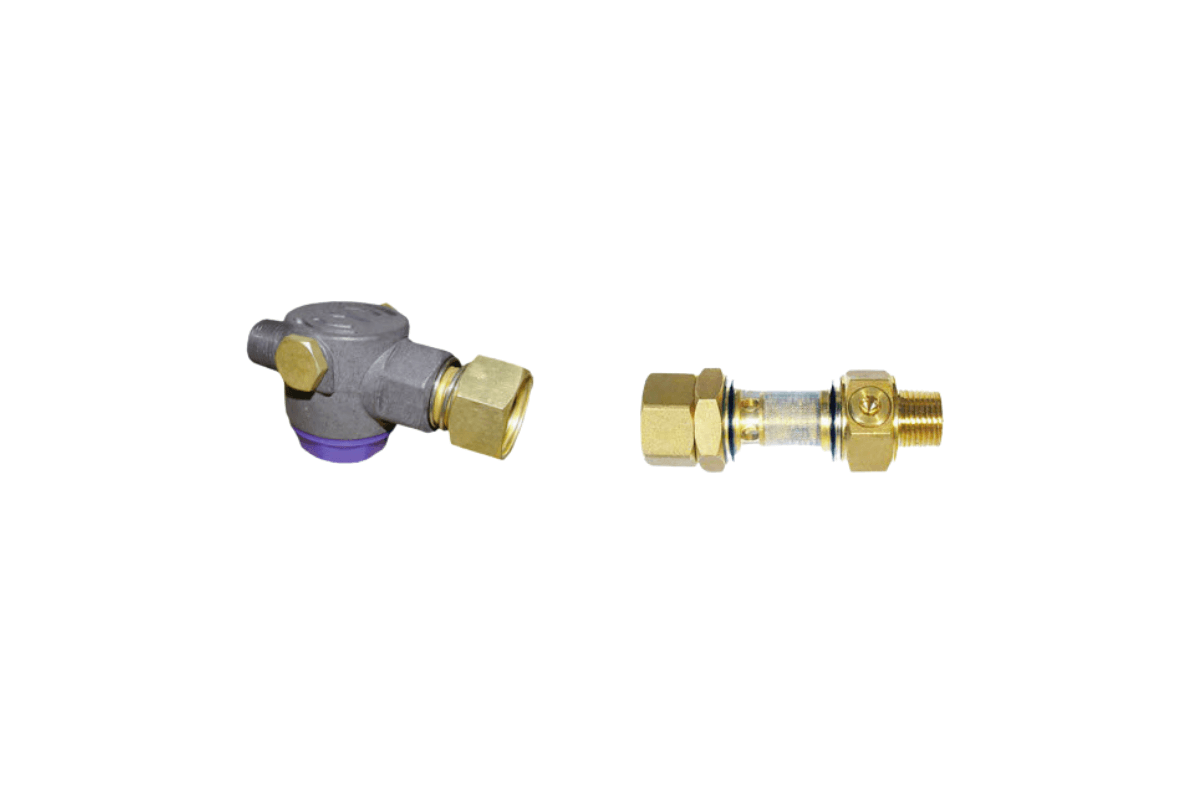
- Mesh cone filters like the AR3000-2 provide simple, low-cost protection with brass housings and replaceable screens.
- Clear bowl filters such as the AR3600 allow visual inspection, making it easy to see when cleaning is required.
- High-mesh options like the MV19 (290 mesh) catch even finer particles for demanding applications.
- Y-filters (MVYF1/2 and MVYF3/4) are designed for durability and higher flow, handling water up to 210°F.
By choosing the right filter for the application, operators reduce downtime and extend pump life significantly. Without filtration, one piece of grit can tear a seal or scratch a plunger, leading to costly repairs that could have been prevented.
Preventative Maintenance: Cleaning the Stainless Steel Screens
Even the best filter won’t help if it’s neglected. A clogged filter reduces water flow, starving the pump and creating cavitation. That’s why preventative maintenance is critical.
The golden rule: clean the filter screen before every work shift.
Stainless steel screens are designed for repeated use, but they need to be rinsed free of debris regularly. Here’s how to keep them in top shape:
- Shut off water supply before removing the filter.
- Disassemble the filter housing (clear bowls and Y-filters make this simple).
- Remove the stainless steel screen and inspect for sediment, buildup, or damage.
- Rinse with clean water, using a soft brush if necessary to clear fine particles.
- Reassemble and reinstall, ensuring all seals are seated properly.
This process takes only a few minutes but prevents hours of downtime and expensive repairs. For contractors running multiple shifts, filters may need inspection more than once a day, especially in environments with dirty water sources like construction sites, agriculture, or municipal supply lines.
Best Practices for Maximizing Filter Effectiveness
To get the most out of your in-line filters, follow these best practices:
- Size correctly: Match the filter’s GPM and PSI ratings to your pump’s requirements. A filter too small will restrict flow.
- Inspect regularly: Clear bowl filters make inspection easy. If the bowl is cloudy or debris is visible, it’s time to clean.
- Replace damaged screens: Bent or torn mesh cannot protect your pump. Always use OEM-quality replacements.
- Consider water source: For well water or reclaimed water systems, a higher-mesh filter may be necessary to trap fine particles.
- Keep spares on hand: Extra screens or replacement filters ensure you’re never forced to operate without one.
Real-World Applications
Across industries, in-line filters prove their value every day:
- Agriculture: Preventing sediment from irrigation lines from entering pumps during crop spraying.
- Construction: Protecting pumps from debris in portable water tanks or job site hoses.
- Fleet washing: Catching rust flakes or scale from municipal hydrant connections.
- Industrial cleaning: Filtering recycled wash water used in closed-loop systems.
In each of these applications, operators rely on filters not just for protection but also for consistent performance. A clogged or dirty filter translates to lost productivity, customer dissatisfaction, and unexpected repair costs.
The Bottom Line
In-line water filters may seem like small accessories, but their impact on pump longevity is massive. By removing sediment and debris before it reaches the pump, they prevent wear, reduce downtime, and extend equipment life.
Just as important, preventative maintenance — especially cleaning stainless steel screens before every shift — ensures these filters perform at their best. It’s a simple, inexpensive step that pays dividends in performance, reliability, and long-term savings.
Whether you’re a contractor, farmer, fleet operator, or industrial cleaner, protecting your pump starts with clean water. And clean water starts with the right in-line filter.
For additional industry standards and technical resources, visit the hydraulic institute