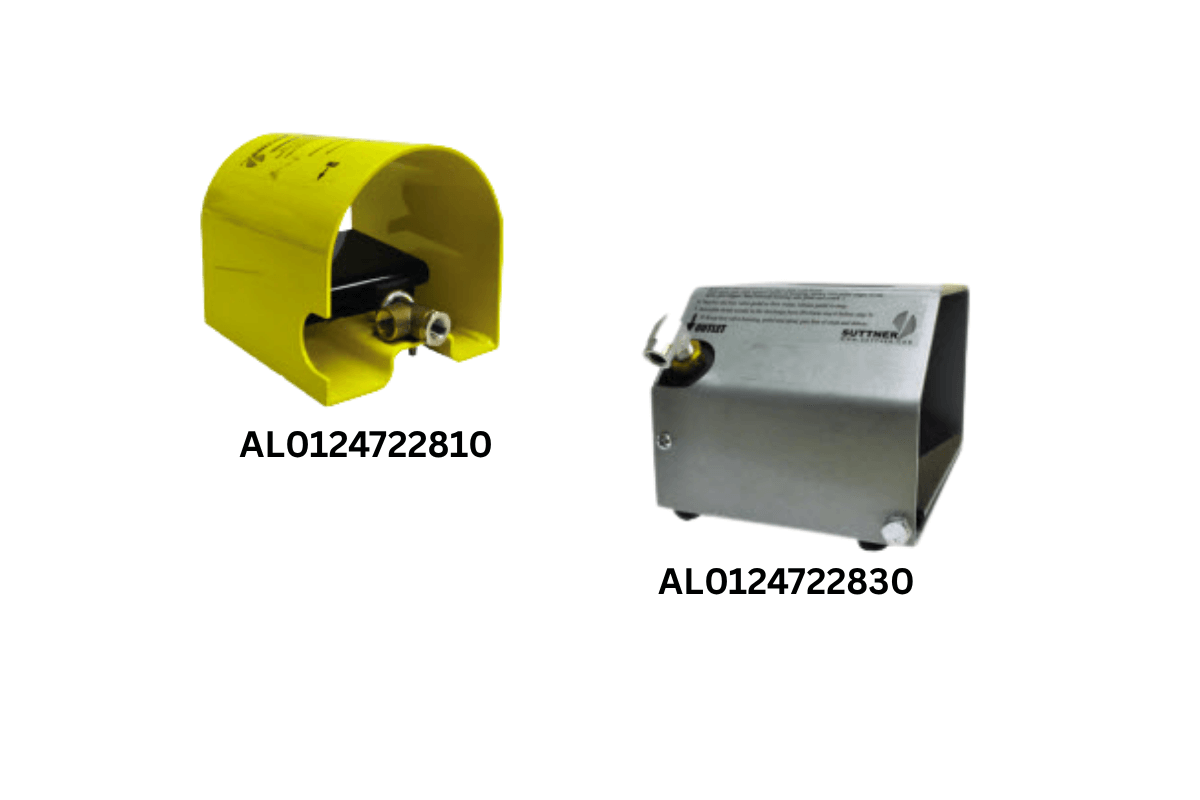
Feeding jetter hose into a line takes both hands. So does steadying a lance in a tank, or guiding a nozzle into a duct. A trigger gun assumes you have a spare hand, and in most sewer and pipe work you do not. A high pressure foot valve moves the control to your foot.
A foot control puts the valve on the floor. The operator keeps both hands on the hose and controls flow with a pedal, and lifting the foot shuts it off instantly.
Flow and temperature ratings are not published for these valves. Tell us your machine’s GPM and whether you are running hot water, and we will confirm the valve fits before you order. Hot water matters on grease lines, where heat does more of the work than pressure does.
Size by your jetter, and leave margin. A valve rated 3,000 PSI on a 4,000 PSI machine is the weakest point in a system where the weakest point fails at your feet.
How high-pressure foot valves work
The valve mounts on the ground, plumbed inline between the high-pressure source and the tool. Stepping on the pedal opens flow; releasing it closes and depressurises the line downstream.
Three consequences:
Both hands stay on the hose. On a jetter that matters more than convenience, because a hose that gets away from you at 3,000 PSI is dangerous.
Shutoff is immediate and does not require reaching for anything or walking back to the machine.
Less water hammer. Clean open and close cycles are easier on pumps, hoses and nozzles than repeatedly starting and stopping the machine.
Sewer and pipe work
This is the core use. Jetting a line means feeding hose in, adjusting position, changing nozzles and watching the return. Without hands-free control the operator either shuts the machine down at the pump every time or needs a second person.
With a foot valve, one operator controls the whole process: better control of jetting speed and direction, less risk from sudden hose movement, faster completion.
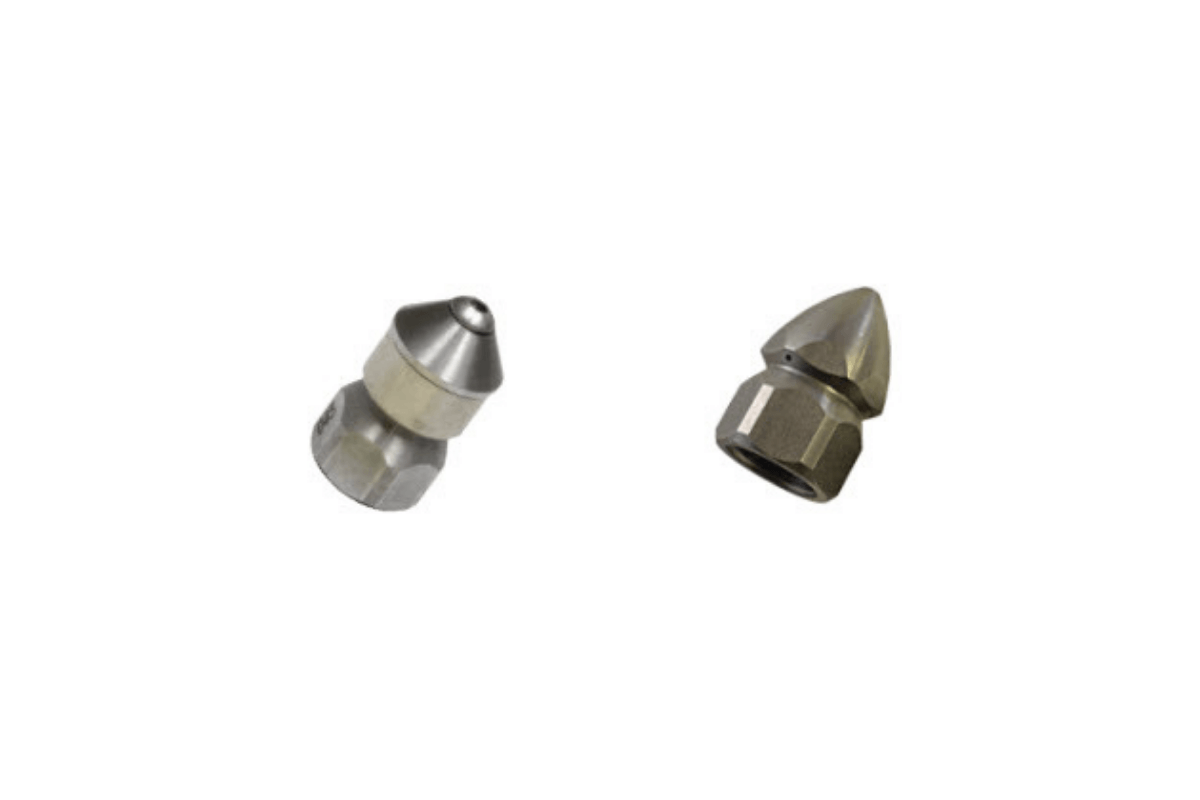
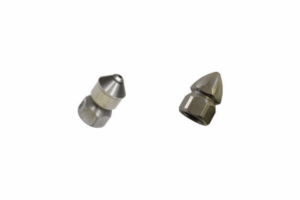
Pair it with the right nozzle from the sewer and drain cleaning range, matched to your jetter’s flow and the pipe diameter.
Where else they earn their keep
Industrial plant maintenance. Pipe descaling, tank cleaning and duct flushing with a lance. Both hands on the lance, flow under the foot.
Food processing. Sanitation crews working around delicate equipment, often with hot water. Hands-free control means the operator can position carefully rather than fighting a trigger.
Marine and ship maintenance. Bilges, ballast tanks and engine rooms, where the spaces are confined and the hoses are heavy.
HVAC duct cleaning. Controlled bursts rather than continuous spray, which is what keeps you from soaking duct linings.
Construction. Dust suppression and concrete cleaning where the operator is bracing a hose against rough ground.
Storm drain and catch basin work. Manoeuvring hose through complex drain systems with precise flow control.
Fleet maintenance. Radiators, undercarriages and clogged lines, in tight and greasy positions.
The safety argument
At 3,000 to 5,000 PSI a loose hose or an unintended discharge causes real injury. A foot valve means the operator never has to let go of the hose to stop the water, and the system depressurises the moment the foot lifts.
That is a meaningful difference from a trigger gun, where stopping the water and controlling the hose compete for the same hands.
And the productivity one
Start and stop without leaving the work area or shutting down at the pump
Less wear on pumps and nozzles from clean cycling
Operators who are not gripping a trigger all day last longer and work more accurately at the end of a shift
Across a crew and a full shift those add up to more than they look like on paper.
The Honda GX200 is a small engine, and the mistake people make with Honda GX200 pump packages is buying a
Manage Consent
To provide the best experiences, we use technologies like cookies to store and/or access device information. Consenting to these technologies will allow us to process data such as browsing behavior or unique IDs on this site. Not consenting or withdrawing consent, may adversely affect certain features and functions.
Functional
Always active
The technical storage or access is strictly necessary for the legitimate purpose of enabling the use of a specific service explicitly requested by the subscriber or user, or for the sole purpose of carrying out the transmission of a communication over an electronic communications network.
Preferences
The technical storage or access is necessary for the legitimate purpose of storing preferences that are not requested by the subscriber or user.
Statistics
The technical storage or access that is used exclusively for statistical purposes.The technical storage or access that is used exclusively for anonymous statistical purposes. Without a subpoena, voluntary compliance on the part of your Internet Service Provider, or additional records from a third party, information stored or retrieved for this purpose alone cannot usually be used to identify you.
Marketing
The technical storage or access is required to create user profiles to send advertising, or to track the user on a website or across several websites for similar marketing purposes.