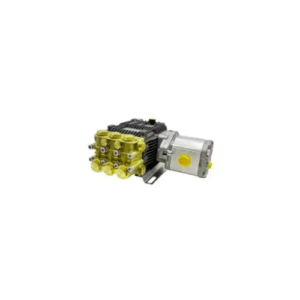
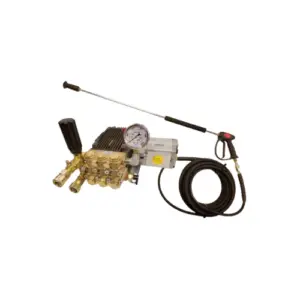
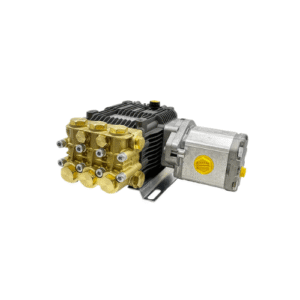
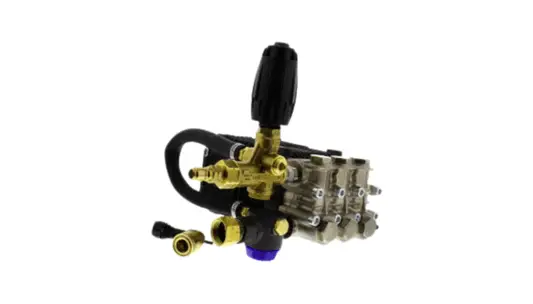
HYD3525 Hydraulic Drive Kit | Triplex Pump
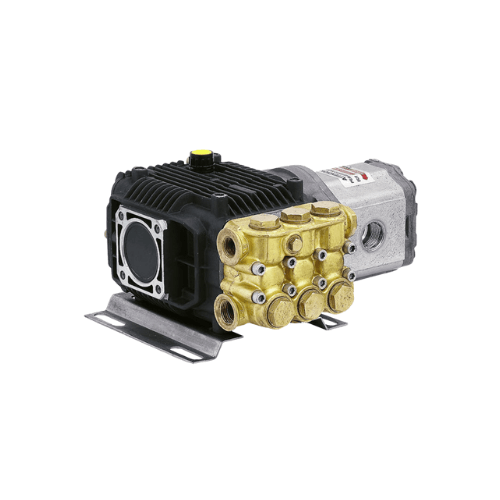
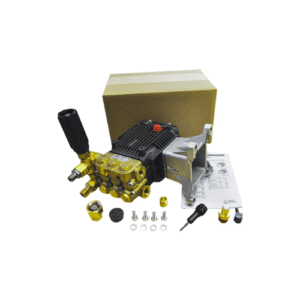
- HYD3525 is a hydraulic drive kit that directly couples an LSHT (gerotor/geroler-type) hydraulic motor to an Annovi Reverberi triplex plunger pump on a rigid, alignment-stable mount.
- Close-coupled geometry keeps both shafts on the same centerline so torque transfers through the intended faces, reducing side-loads on bearings and seal packs versus belt drives.
- Compact, service-friendly layout preserves clear access to the coupling, oil sight glass, vented dipstick, and fasteners for single-technician maintenance.
- Designed for clean packaging in skids, trailers, service bodies, enclosed vans, and plant carts where footprint and repeatability matter.
Pump & Drive Benefits
- Rigid mount and matched coupling support smooth, efficient torque transfer with less vibration than belt-driven layouts.
- Alignment-stable architecture helps protect seals, bearings, and crankcase components by minimizing radial loading from misalignment.
- Compact footprint supports tidy hose routing and guard placement without burying service points.
- Pump manufactured by Annovi Reverberi, producing triplex plunger pumps in Modena, Italy since 1958.
- AR pumps ship with crankcase oil installed and include a vented dipstick to support proper crankcase breathing under thermal expansion.
- Pump carries a 5-year limited, conditional warranty (proper hydraulic/water installation, filtration, lubrication, and operation within published limits required; seals/valves are normal wear items).
Alignment & Installation
- Rigid base geometry helps installers square the motor to the pump and set coupling engagement quickly for repeatable builds across fleets.
- Centerline alignment reduces bearing load and wasted power that otherwise shows up as vibration and heat.
- Open access to coupling and fasteners supports fast inspection, torque checks, and pump swaps without tearing down plumbing.
- Layout is intended to keep critical service points visible: coupling hardware, sight glass, vented dipstick, and mounting bolts.
Hydraulic Power Matching
- Start at the nozzle and duty point: determine target pump flow and pressure for the cleaning task.
- Estimate water horsepower: HP ≈ GPM × PSI ÷ 1714, then add realistic margin for system inefficiency.
- Confirm the host machine can supply sufficient hydraulic flow and pressure to deliver required shaft power at the motor.
- Select motor displacement so pump speed lands at the target RPM under load: RPM ≈ 231 × hydraulic GPM ÷ displacement (in³).
- Estimate torque: Torque (lb-in) ≈ displacement (in³) × PSI ÷ 6.283 and verify motor and pump limits at all operating points.
HYD3525 Pump & Water-Side Best Practices
- Keep suction short, straight, and oversize from a flooded source; use anti-collapse suction hose and a coarse inlet strainer to protect volumetric efficiency and reduce cavitation risk.
- Install an adjustable unloader matched to the chosen AR duty class and include a correctly sized high-pressure relief valve.
- Add a glycerin-filled gauge for commissioning and diagnostics so settings can be verified and documented.
- Include a thermal relief valve on the bypass loop to protect seals during extended gun-closed operation.
- Use appropriate water filtration when solids are present and observe AR limits for inlet pressure, temperature, and chemistry.
Hydraulic Circuit Guidelines
- LSHT motor brand may vary by build; typical porting is SAE-12 ORB pressure/return (3/4″) with an auxiliary SAE-8 ORB case drain (1/2″)—verify the supplied motor.
- Observe A/B port orientation so rotation matches the pump and intended plumbing layout.
- Route any case drain back to the reservoir above the oil level to reduce aeration risk.
- Size hose IDs generously and respect minimum bend radii to avoid restriction and excess pressure drop.
- Protect the circuit with upstream relief valves set to working pressure and coordinated with pump/unloader settings.
- Specify return filtration in the 10–25 µm range with an adequate β-rating and pressure-drop margin.
- Size reservoir volume for heat rejection (practical rule: 2–3× total system GPM) and add an oil cooler for hot climates, prolonged bypass, or continuous duty.
Pump Porting & Layout
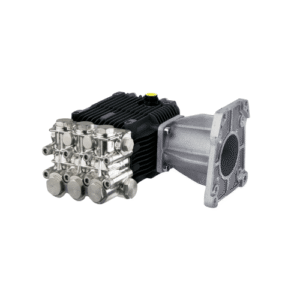
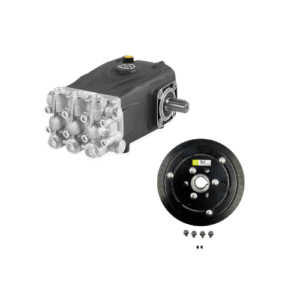
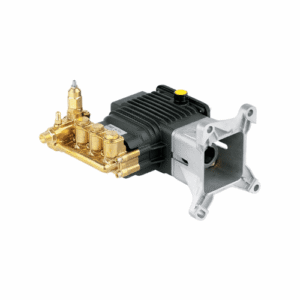
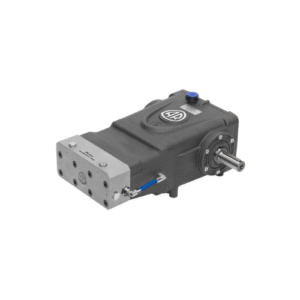
- HYD3525 accepts a range of AR pumps; confirm wet-end porting on the selected pump before plumbing and ordering adapters.
- Common small-frame AR heads: 1/2″ F-BSPP inlet with 3/8″ F-BSPP discharge.
- Typical mid-frame RTX heads: 1″ F-BSPP inlet with 1/2″ F-BSPP discharge (adapters to NPT are readily available).
- Base geometry reserves perimeter space for an unloader block and clean sweeps for suction, pressure, and bypass lines to avoid tight bends and guard conflicts.
- Designed to support professional-looking installs that remain accessible for service.
HYD3525 Typical Applications
- Tug and work-boat washdown and dock cleaning.
- Agriculture and ranch equipment wash and yard sanitation.
- Food & beverage sanitation and process rinse (observe local hygienic and materials standards).
- Municipal and DOT fleets, sanitation vehicles, and maintenance yards.
- Equipment-rental turn-back stations and general yard rinse bays.
- Conveyor and parts-cleaning cells and general plant maintenance.
- Construction, contractor, and utility rigs that already carry hydraulic power on board.
Key Details at a Glance
- Pump manufacturer: Annovi Reverberi — pumps built in Modena, Italy; brand established in 1958.
- Pump ships with: factory oil fill, sight glass, and vented dipstick in the crankcase.
- Warranty: 5-year limited, conditional (correct install/operation required; normal wear exclusions apply).
- Hydraulic motor: LSHT gerotor/geroler type; brand varies by build; typical ports SAE-12 P/T and SAE-8 case drain (verify on actual unit).
- Pump ports (typical): small frame 1/2″ F-BSPP inlet & 3/8″ outlet; mid frame 1″ inlet & 1/2″ outlet.
HYD3525 Hydraulic Drive Kit | Triplex Pump Integration Checklist
- Match motor displacement to target pump RPM using published formulas and available system flow/pressure.
- Verify hydraulic relief settings, filtration spec, reservoir volume, and cooling capacity for the duty cycle.
- Route case drain above reservoir oil level and prevent hose kinks, rubbing, or excessive restriction.
- Keep pump suction short, oversize, and well supported; never run the pump dry or overspeed the pump.
- Document alignment, torque settings, and commissioning pressures to support repeatable future builds.


Reviews
There are no reviews yet.