Washdown in a food plant is not really a cleaning problem, it is a scheduling problem. You have a fixed window between the end of one run and the start of the next, and everything the sanitation crew has to do has to fit inside it. If the equipment cannot move enough water, the window stretches, and stretching the window costs production hours.
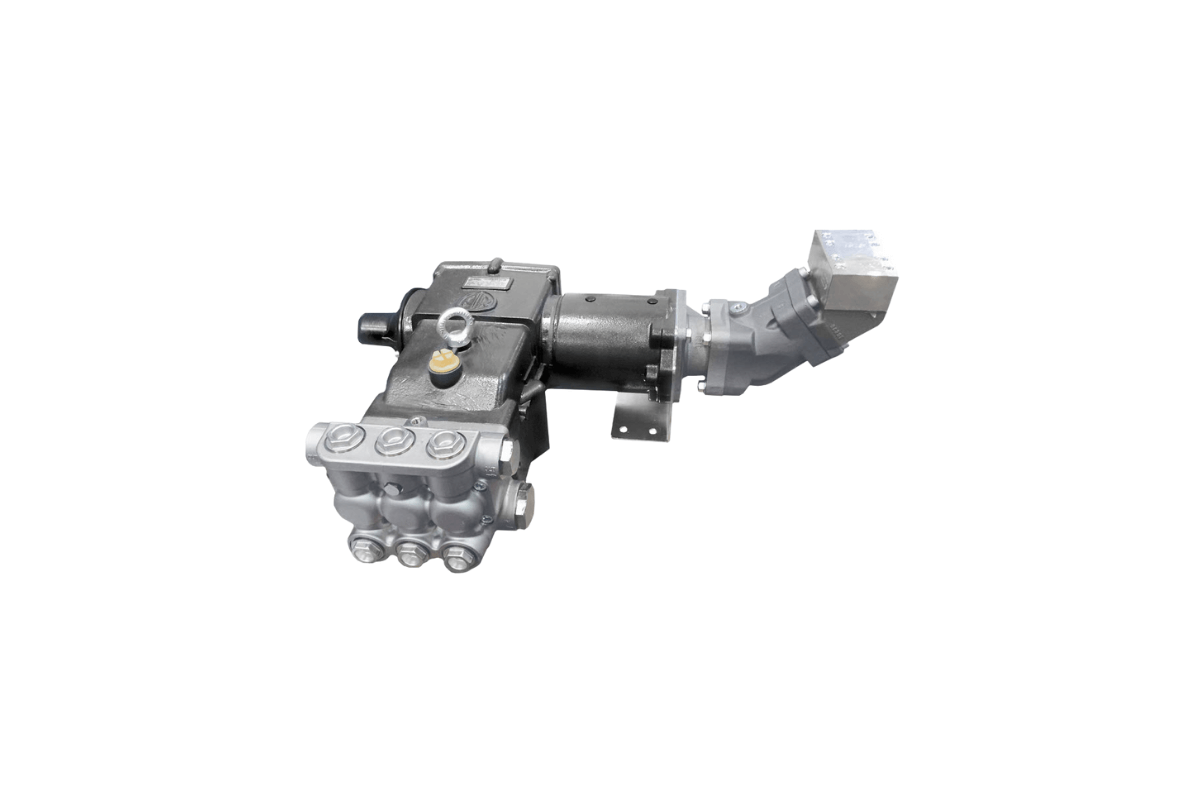
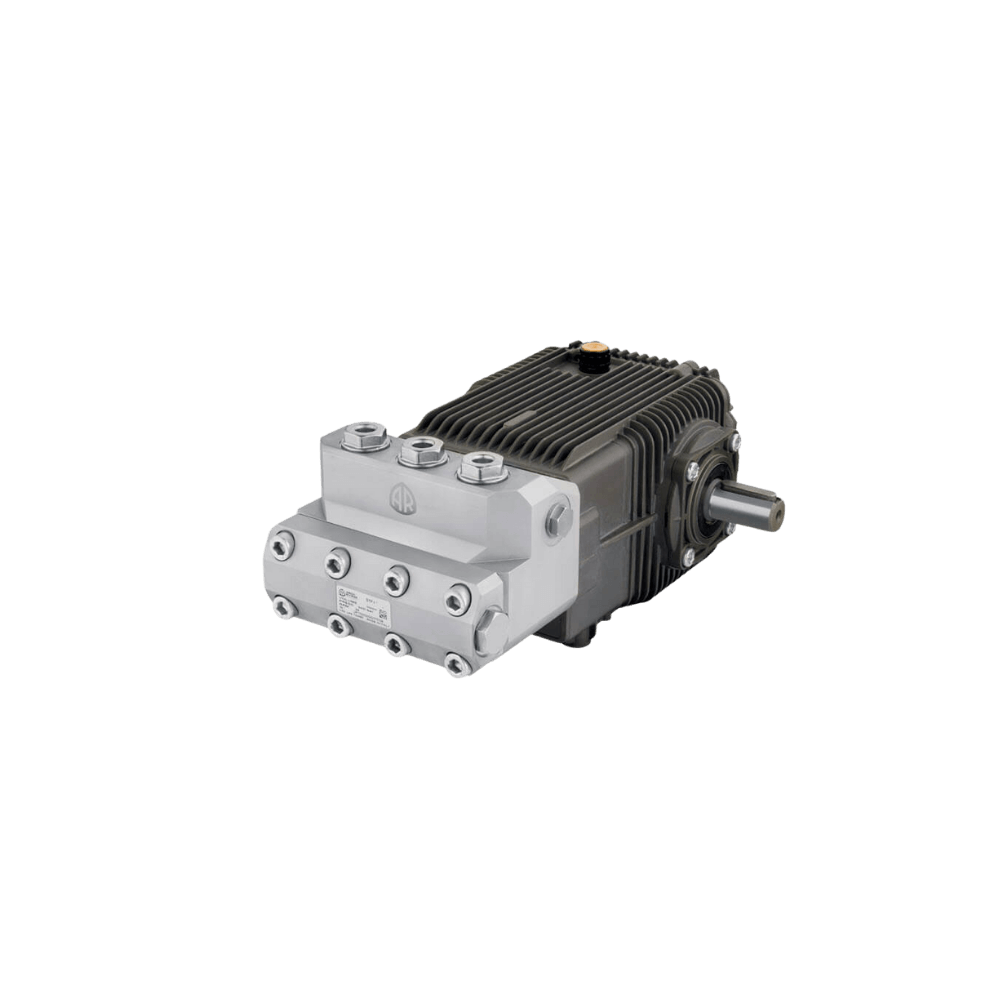
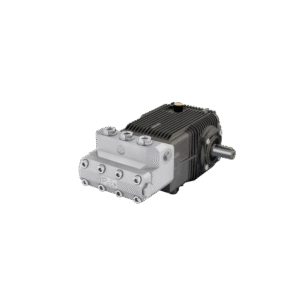
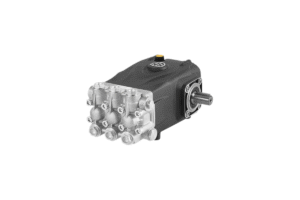
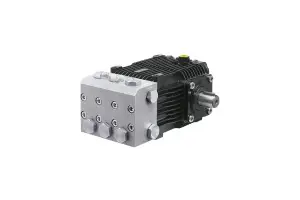
That is the frame I would use when looking at the HYD-RTF135N. It is not a high pressure pump. It is a high volume one, and in this application volume is the spec that buys you time.
The RTF135N numbers that matter
Flow
36 GPM
Max pressure
1,500 PSI
Pump type
Triplex plunger
Drive
Hydraulic motor
Weight
128 lbs
Brand
Annovi Reverberi
Thirty-six gallons a minute is a lot. For comparison, a typical contractor-grade unit puts out 4 to 5 GPM. One RTF135N can feed several guns at once without any of them losing pressure when another operator pulls a trigger, which is the usual complaint about undersized central systems.
Why 1,500 PSI is the right number here, not a compromise
People see 1,500 PSI next to a 4,000 PSI contractor pump and assume the food plant pump is the weaker machine. It is the opposite, and it is deliberate.
High pressure on a wet food surface aerosolizes what you are trying to remove. A tight, fast jet lifts bacteria off a drain or a floor seam and puts it into the air, where it settles on a clean conveyor twenty feet away. This is a documented and well understood problem in wet processing environments, and it is why sanitation protocols in a lot of plants cap washdown pressure rather than maximize it.
What you want instead is volume and detergent contact time. Foam it, let the chemistry work, then flush it away with enough water to carry the soil to the drain in one pass. 1,500 PSI is plenty to break up baked-on protein and grease films once they have been chemically loosened, without turning the room into an aerosol.
What hydraulic drive gets you
This pump comes as a hydraulic motor and pump assembly rather than an electric or engine driven unit. That matters for three reasons in a wet room.
No electric motor at the washdown point. In a room that gets hosed down daily, keeping high voltage out of the wet zone removes a whole category of problem.
No engine, so no exhaust. Combustion engines are a non-starter indoors around food.
The power unit sits somewhere dry and remote. You run hydraulic hose to the pump instead of running conduit and drain lines to a motor.
The catch, and it is a real one, is that you need a hydraulic power unit big enough to drive it. Rough math on the pump’s requirement:
36 GPM × 1,500 PSI ÷ 1460 = about 37 brake horsepower at the pump shaft
Add hydraulic system losses and you are looking for a HPU in the 45 HP range, plus the flow and pressure to match the motor. If your plant already runs a central hydraulic system with capacity, this is easy. If it does not, the HPU is the larger part of the project, and you should price it before you price the pump.
One thing this article is not going to tell you
A pump does not make you compliant. No equipment does. HACCP compliance comes from a written plan, validated procedures, verification records and people following them. What good equipment does is make the validated procedure achievable inside the time you actually have, consistently, every shift. That is a real contribution and it is worth paying for, but it is a different claim than “buy this and you are compliant.”
The related question is materials. The RTF135N has a standard pump head. If your sanitation chemistry runs heavy on chlorides or caustics, or if your plant specifies stainless in the wetted path, that is a separate specification and a different model. We carry stainless head pumps for exactly that reason. Ask before you assume, because retrofitting the answer later is expensive.
Where the RTF135N fits
Good fit: large floor areas, multiple simultaneous wash stations, centralized washdown systems, plants with existing hydraulic capacity, daily full-facility sanitation on a clock.
Poor fit: single-operator cleanup, small facilities, anywhere without a hydraulic power unit, and applications that genuinely need high pressure such as scale removal or surface prep. Those are different pumps.
If you want help sizing the hydraulic side or working out whether 36 GPM is more than you need, send us your setup and we will go through it.
The Honda GX200 is a small engine, and the mistake people make with Honda GX200 pump packages is buying a
Manage Consent
To provide the best experiences, we use technologies like cookies to store and/or access device information. Consenting to these technologies will allow us to process data such as browsing behavior or unique IDs on this site. Not consenting or withdrawing consent, may adversely affect certain features and functions.
Functional
Always active
The technical storage or access is strictly necessary for the legitimate purpose of enabling the use of a specific service explicitly requested by the subscriber or user, or for the sole purpose of carrying out the transmission of a communication over an electronic communications network.
Preferences
The technical storage or access is necessary for the legitimate purpose of storing preferences that are not requested by the subscriber or user.
Statistics
The technical storage or access that is used exclusively for statistical purposes.The technical storage or access that is used exclusively for anonymous statistical purposes. Without a subpoena, voluntary compliance on the part of your Internet Service Provider, or additional records from a third party, information stored or retrieved for this purpose alone cannot usually be used to identify you.
Marketing
The technical storage or access is required to create user profiles to send advertising, or to track the user on a website or across several websites for similar marketing purposes.