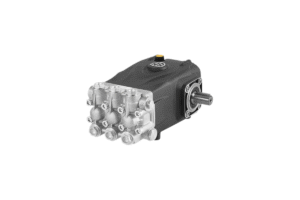
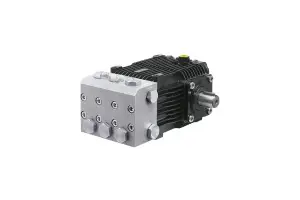
Above about 10,000 PSI, water stops being a cleaning agent and becomes a cutting tool. Different physics, different equipment, different safety rules, and a different conversation with whoever signs off on the purchase.
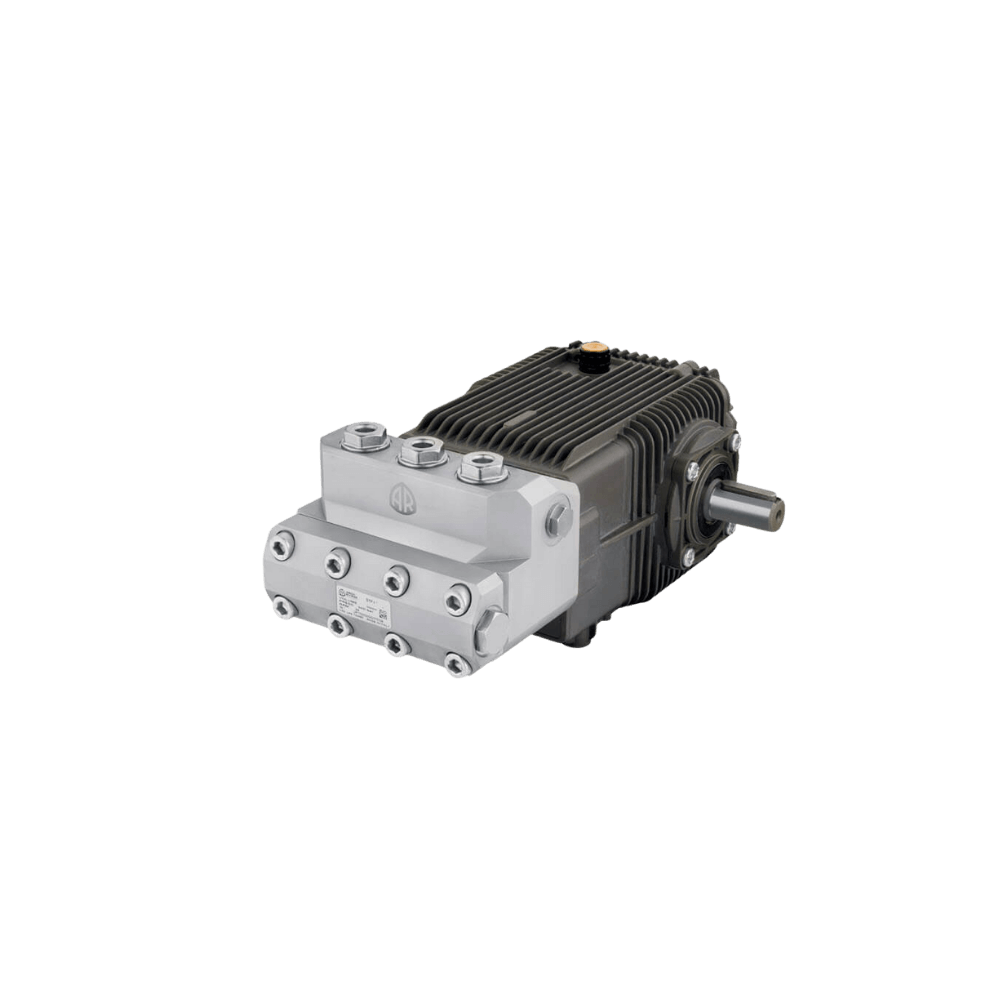
Our ultra high pressure line tops out at 14,500 PSI. Here is what that buys and what it demands.
BHP is GPM × PSI ÷ 1460. Note that they all land in roughly the same power band. You are not choosing more or less capability, you are choosing what shape your 40 to 50 horsepower takes: concentrated into pressure, or spread into flow.
That also tells you what kind of purchase this is. A 50 HP drive means a purpose-built skid with a serious engine or three-phase power. None of this bolts onto an existing trailer.
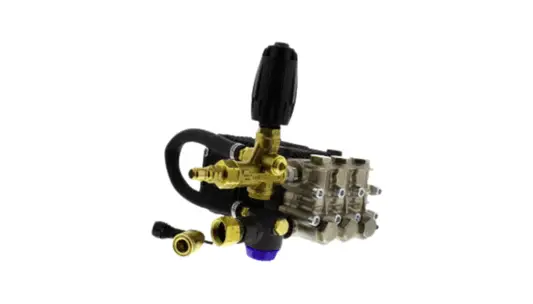
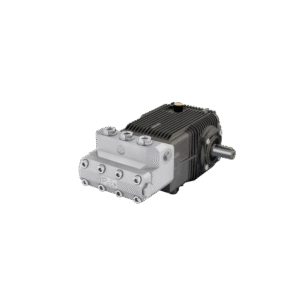
One note on the RTP30.60N. The figure above, 9,000 PSI, is the bare pump. The hydraulic drive kit built around the same pump is rated 8,700, because driving it off a hydraulic motor derates it. Both numbers are correct for their own product, so quote whichever matches what you are buying rather than treating one as a misprint.
What UHP does well
Coating removal. Epoxy, paint and industrial coatings come off steel without abrasive media and without touching the substrate underneath, when the operator knows what they are doing.
Descaling. Hardened scale inside pipe, tanks, boilers and heat exchangers. Restores flow and thermal efficiency.
Hydro-demolition. Selective removal of degraded concrete that leaves the reinforcing steel intact and clean. This is a genuine advantage over mechanical breaking, which damages rebar and micro-fractures the concrete you are keeping.
Surface preparation. Water-based prep generates no airborne silica or spent abrasive, which changes the containment and respiratory protection requirements on the job substantially.
What it does not do
A correction worth making, because this gets overstated constantly.
Pure water at 14,500 PSI does not cut metal, stone or glass. Those materials need abrasive waterjet, where garnet is entrained into the stream, typically at 40,000 to 90,000 PSI. That is a different machine with a different pump architecture and a different price.
Pure UHP water at this range cuts soft materials, removes coatings, and breaks up concrete. Those are real and valuable jobs. But if someone has shown you a waterjet slicing a steel plate and quoted you a 14,500 PSI pump, the two are not the same thing, and you should sort that out before you buy.
Safety is the specification
At these pressures safety stops being a section at the end of the manual.
Injection injuries. Water at 14,500 PSI penetrates skin and tissue. The entry wound frequently looks trivial, which is precisely what makes these injuries so dangerous, because they get underestimated in the first hour and treated late. Any skin penetration is an immediate emergency room visit, and the treating physician needs to be told the pressure involved.
Training is not optional. UHP operation is a trained discipline with established industry practice around exclusion zones, dump guns, two-person operation and PPE. If your crew has not been trained on it, that comes before the equipment arrives.
Inlet conditions for ultra high pressure pumps
One technical note that catches people. At 14,500 PSI the pump’s limiting factor is filling the chamber completely on every intake stroke. If it cannot, you get cavitation, and cavitation destroys UHP pumps faster than anything else.
That means flooded suction, generously sized supply lines, and filtration you actually maintain. Inlet conditions that a 3,000 PSI pump would shrug off will wreck a 14,500 PSI one.
Where ultra high pressure pumps fit
Oil and gas maintenance, refinery and plant shutdowns, marine and shipyard restoration, hydro-demolition, infrastructure repair, and manufacturing surface prep. All of these share the same profile: the work is hard enough that the alternative methods are slower, dirtier or more damaging.
If you need 7,250 PSI rather than 14,500, the SHP series covers that at lower cost and with a smaller drive requirement.
Specifying a UHP system is not a catalog purchase. Tell us what you are removing, what you have for power, and what the site requires, and we will work through it with you. Contact us here.
The Honda GX200 is a small engine, and the mistake people make with Honda GX200 pump packages is buying a
Manage Consent
To provide the best experiences, we use technologies like cookies to store and/or access device information. Consenting to these technologies will allow us to process data such as browsing behavior or unique IDs on this site. Not consenting or withdrawing consent, may adversely affect certain features and functions.
Functional
Always active
The technical storage or access is strictly necessary for the legitimate purpose of enabling the use of a specific service explicitly requested by the subscriber or user, or for the sole purpose of carrying out the transmission of a communication over an electronic communications network.
Preferences
The technical storage or access is necessary for the legitimate purpose of storing preferences that are not requested by the subscriber or user.
Statistics
The technical storage or access that is used exclusively for statistical purposes.The technical storage or access that is used exclusively for anonymous statistical purposes. Without a subpoena, voluntary compliance on the part of your Internet Service Provider, or additional records from a third party, information stored or retrieved for this purpose alone cannot usually be used to identify you.
Marketing
The technical storage or access is required to create user profiles to send advertising, or to track the user on a website or across several websites for similar marketing purposes.