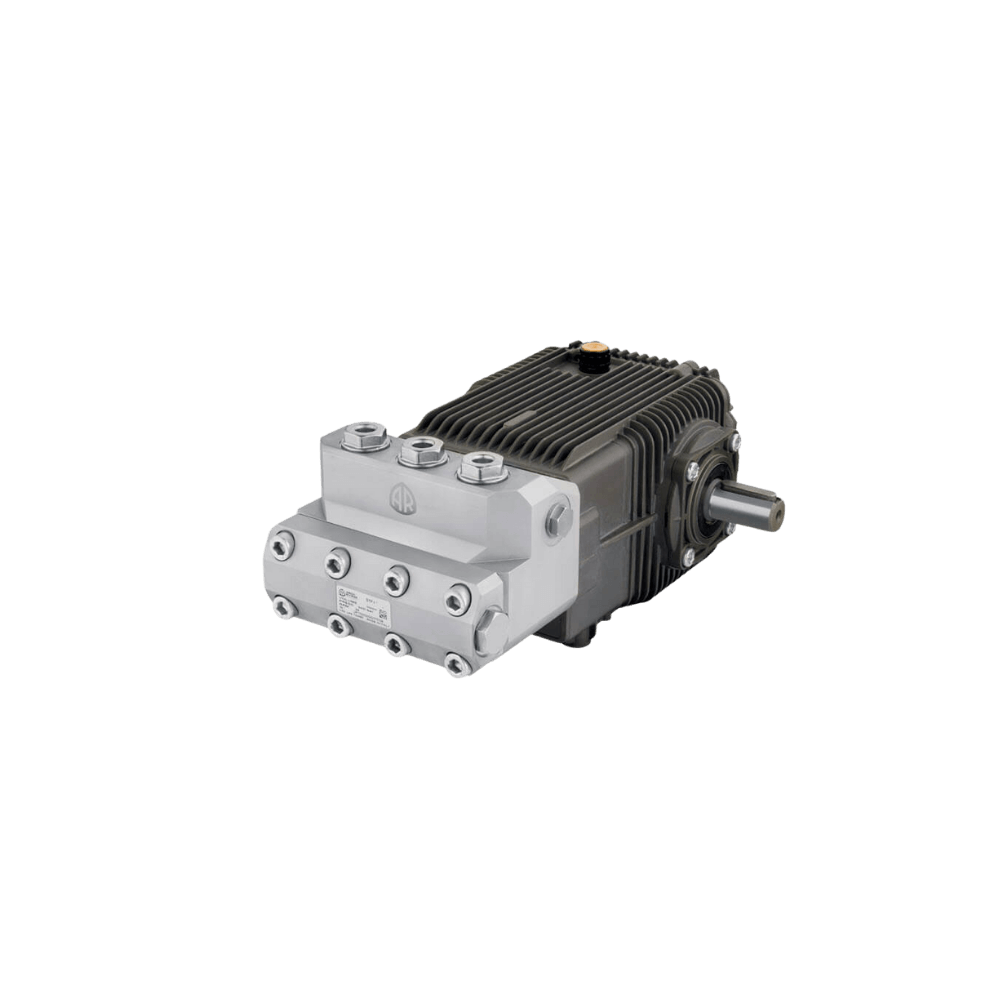
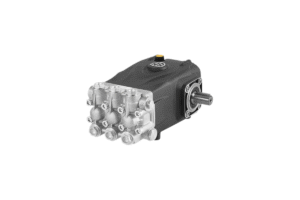
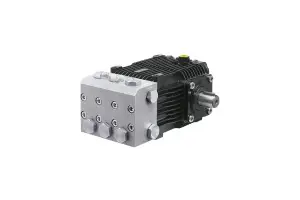
A triplex pump that gets looked after runs for thousands of hours. One that does not usually dies from something preventable, and in our experience it is nearly always one of five things.
1. Never let it run dry
Plunger seals are lubricated by the water going through them. Run the pump without water and they overheat and glaze, and that happens in well under a minute with no warning noise.
The startup order that prevents it:
Open the water supply fully.
Hold the trigger open with no nozzle installed and let water flow through until the stream is steady and free of bubbles. You are purging air.
Start the motor or engine.
Run at low pressure for a minute, then fit the nozzle.
Most people do this in the opposite order. That order is where a lot of seal kits come from.
2. Do not idle in bypass
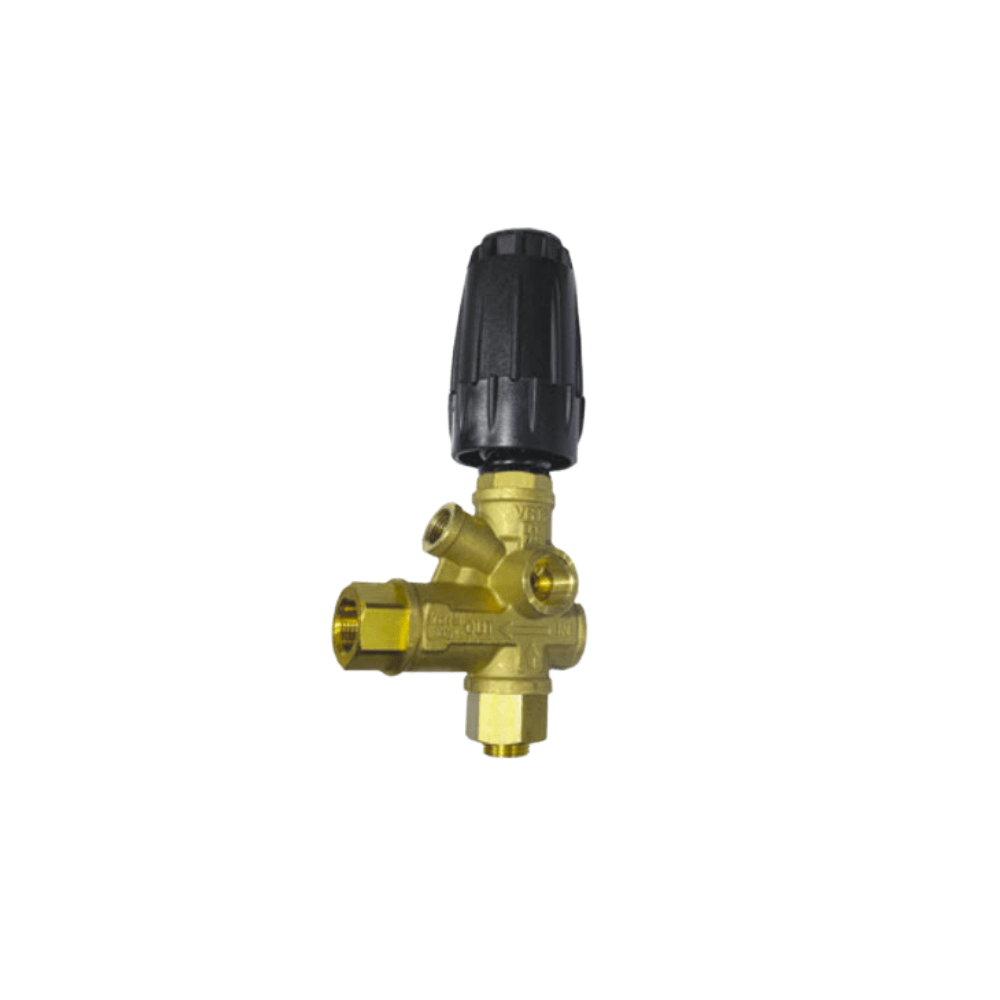
With the trigger closed, the unloader recirculates water back through the pump. It has nowhere to lose heat, so it warms up continuously. Two minutes is about the limit. Past that you are cooking the seals.
The rule is simple: if you are putting the gun down for more than a minute or two, shut the machine off. Restarting is free. Seals are not.
This is worse on small direct-drive pumps, where there is less water and less metal to absorb the heat, and worse again on hot water systems where the water is already at 185°F.
3. Protect the inlet
Cavitation is water vapor bubbles forming in the pump and collapsing against metal and ceramic. It happens when the inlet cannot supply what the pump is trying to draw. It pits valve seats and cracks ceramic plungers, and it does that damage while the pump still appears to be working.
What prevents it:
Full-bore supply hose, kept short
Tap fully open, no kinks anywhere in the run
Inlet filter checked and cleaned on a schedule, not when you remember
Flooded suction, meaning a supply tank above the pump rather than below it
No air leaks at inlet fittings
The warning sign is a rattling or knocking sound from the pump, or a pulsing jet at the gun. If you hear it, stop and fix the supply. Do not work through it.
While you are at it: grit is the other inlet problem. A torn or missing screen lets sand into the valves, where it holds them off their seats and scores plungers.
4. Oil, and reading what it tells you
Use pump crankcase oil, not motor oil. Pump oil is non-detergent for a reason: detergent oils hold water in suspension, and in a pump crankcase you want water to separate out where you can see it rather than emulsify invisibly.
On intervals, check your manual rather than a generic number, because the industrial pumps and the small direct-drive pumps are not on the same schedule. What is consistent is the break-in change: most AR pumps want their first oil change early, around 50 hours, because break-in puts metal into the oil. After that it is typically a few hundred hours.
If the machine runs seasonally and never reaches the interval, change it annually anyway. Oil absorbs moisture sitting still.
The oil is also your diagnostic. Look at it through the sight glass before every start:
What you see
What it means
Clear amber
Normal
Milky or coffee-colored
Water past the plunger seals. This is a seal kit, not an oil change
Dark with metal glitter
Bearing or rod wear. Stop and investigate
Low level
Find the leak before you top it up
Milky oil is the one people get wrong. Changing the oil and carrying on just gets you milky oil again in a week, and meanwhile water is in your bearings.
5. Winterize properly
Water expands about nine percent when it freezes, and a pump head is a sealed cavity with nowhere for that to go. Brass cracks and ceramic plungers shatter. You find out in the spring.
Draining is not sufficient on its own, because water stays in the valve pockets and behind the seals however you tip it. Feed pump saver into the inlet and run the pump until you see it come out the discharge. That is your confirmation. Then cap the ports so the film does not dry out over the winter.
Do not use automotive antifreeze. Ethylene glycol is toxic and whatever is in the pump in October comes out of the nozzle in April. Propylene glycol RV antifreeze is the acceptable substitute if pump saver is not available.
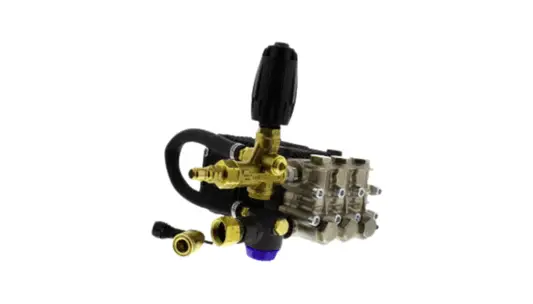
Triplex pump parts
Use pump-specific seals, valves and oil rather than generic substitutes. The seal compounds are matched to temperature and chemistry, and a generic o-ring that looks identical may not be. Keep a seal kit on the shelf if the machine is on a schedule you cannot miss.
The Honda GX200 is a small engine, and the mistake people make with Honda GX200 pump packages is buying a
Manage Consent
To provide the best experiences, we use technologies like cookies to store and/or access device information. Consenting to these technologies will allow us to process data such as browsing behavior or unique IDs on this site. Not consenting or withdrawing consent, may adversely affect certain features and functions.
Functional
Always active
The technical storage or access is strictly necessary for the legitimate purpose of enabling the use of a specific service explicitly requested by the subscriber or user, or for the sole purpose of carrying out the transmission of a communication over an electronic communications network.
Preferences
The technical storage or access is necessary for the legitimate purpose of storing preferences that are not requested by the subscriber or user.
Statistics
The technical storage or access that is used exclusively for statistical purposes.The technical storage or access that is used exclusively for anonymous statistical purposes. Without a subpoena, voluntary compliance on the part of your Internet Service Provider, or additional records from a third party, information stored or retrieved for this purpose alone cannot usually be used to identify you.
Marketing
The technical storage or access is required to create user profiles to send advertising, or to track the user on a website or across several websites for similar marketing purposes.