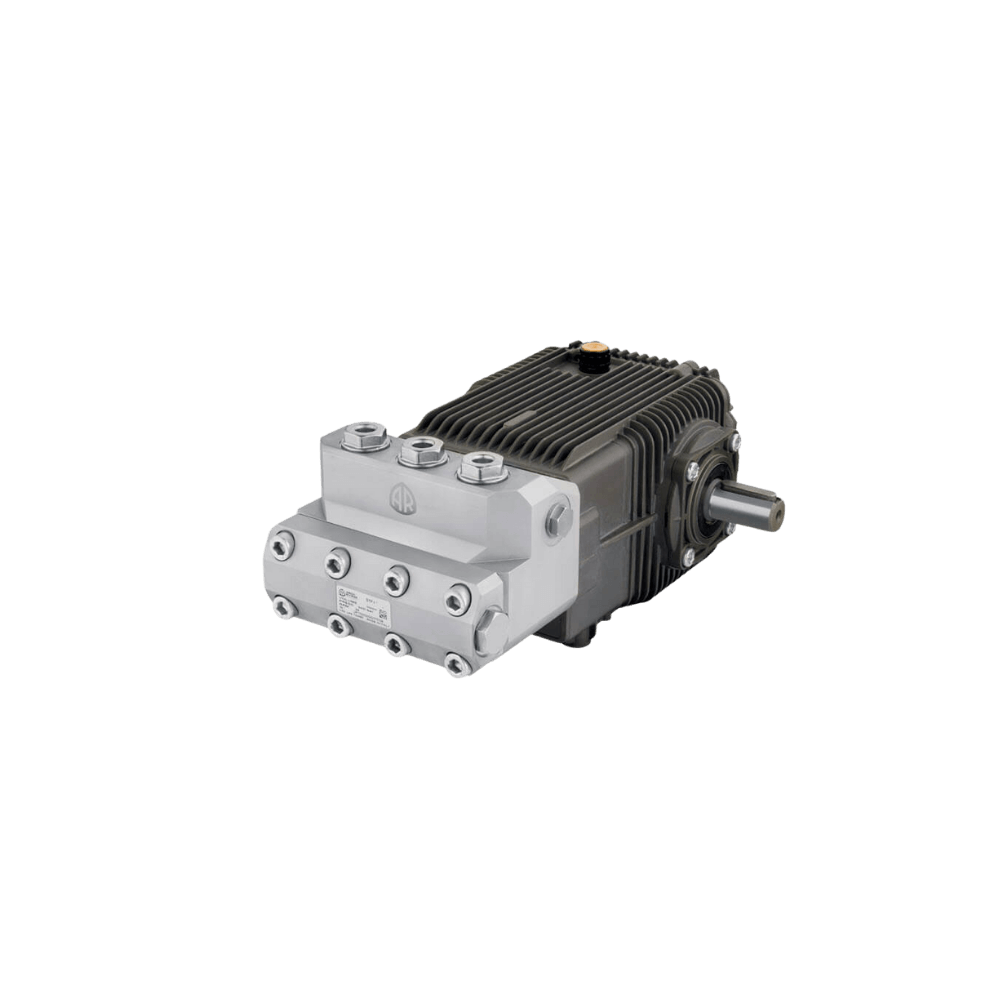
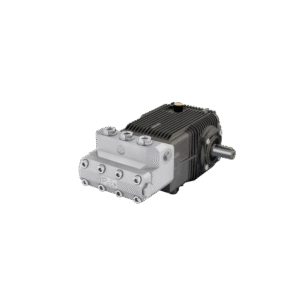
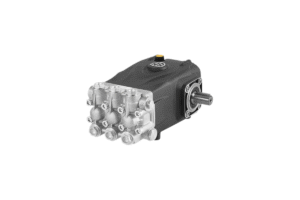
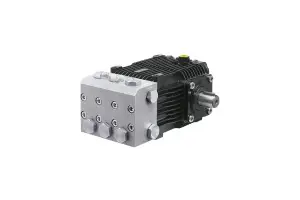
Building a pressure washer only makes sense if the pump is worth keeping. The SJV25G27-PKG is: 2.5 GPM at 2,700 PSI, on a 3/4 in hollow shaft with an F7 gas engine flange, boxed with the parts that otherwise turn a build into three trips to the hardware store.
What ships with the SJV25G27-PKG
- SJV25G27 pump, 2.5 GPM at 2,700 PSI, 3,400 RPM
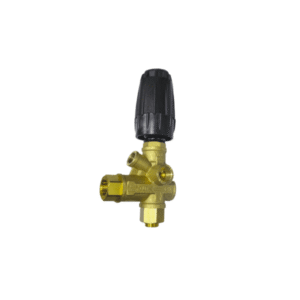
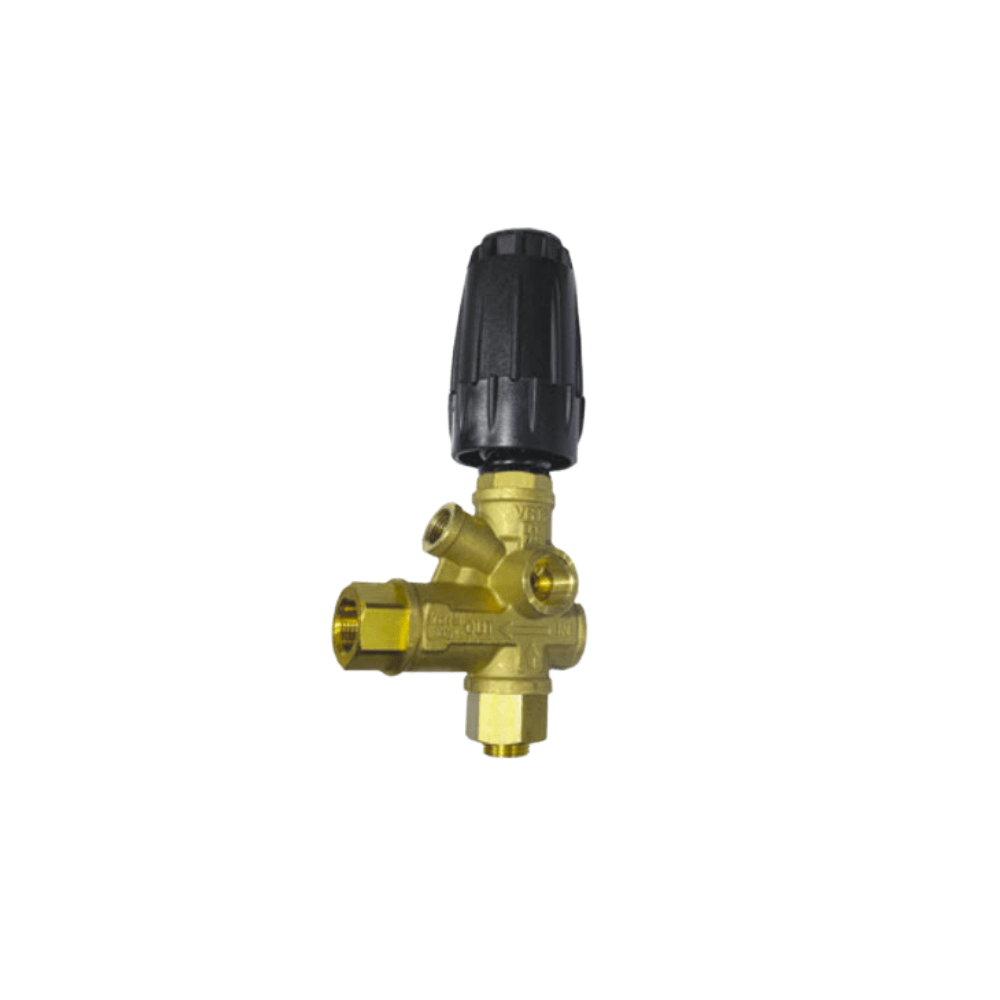
- TPP140-1/4A thermal relief valve
- AR1269120 detergent hose with filter
- AR1264750 garden hose adapter
- AL-QC3/8B quick connect coupler
Buying those separately costs more than the difference and takes longer than the build.
Sizing an engine for the SJV25G27-PKG
2.5 GPM at 2,700 PSI works out to 4.6 EBHP. Published small-engine horsepower is measured under favourable conditions, so you want 6 to 7 HP at the crank, which is the 200 to 212cc class.
Be careful going lower. An engine rated 4.8 HP is below what this pump needs once you allow for heat and altitude, and it will not hold 2,700 PSI under load whatever the compatibility chart says.
What actually has to match is the shaft: 3/4 in hollow, horizontal. Measure it. Displacement does not reliably predict shaft size across model years and markets, and this is the single most common reason a pump arrives and does not fit.
Why 2,700 PSI is the right target for most builds
- It does not damage things. Siding, fencing, painted wood and older mortar survive 2,700 PSI. They do not reliably survive 4,000.
- Your water supply can feed it. A domestic hose bib delivers roughly 4 to 6 GPM. At 2.5 GPM you are well inside that, with margin for a long hose.
- The engine is cheap and everywhere. A 212cc engine costs a fraction of the 420cc you need for 4 GPM at 4,000 PSI.
- It is a triplex. Replaceable valves, seals and plungers, rather than the sealed axial cam pump in a consumer machine.
How the SJV25G27-PKG is built
- Confirm the shaft is 3/4 in hollow, horizontal, and the engine is 6 HP or more.
- Slide the pump on and bolt it to the flange. It should go without force; forcing it damages the shaft seal.
- Fit the accessories: thermal relief valve, detergent siphon, garden hose adapter, quick connect.
- Add pump oil before the first start. Running dry for a few seconds costs seals.
- Fit an inlet filter if you are drawing from anything other than clean municipal water.
- Start, set the unloader with the trigger open, then close it and confirm clean bypass.
Budget an hour, not an afternoon.
The thermal relief valve is not optional
Home and light commercial use means long pauses with the trigger released: moving a ladder, answering the door, repositioning a hose. That is exactly when bypass water heats up, and the small crankcase on a pump this size has little thermal mass to absorb it.
The TPP140 in the package dumps water once it passes a set temperature. Fit it, and do not leave the machine running unattended anyway.
Where the SJV25G27-PKG fits
Residential: driveways, sidewalks, patios and decks; vinyl siding, brick and fencing; outdoor furniture and pool areas; cars, trucks, RVs and boats.
Light commercial: mobile detailing, small property maintenance, building maintenance crews, light graffiti and paint prep, farm and agricultural cleaning.
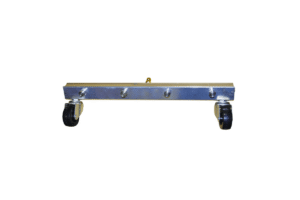
Not for: heavy grease, coating removal, or driving a surface cleaner much beyond 15 in. If those are your jobs, step up to 4.0 GPM at 3,700 PSI and a bigger engine.
Keeping the SJV25G27-PKG working
Change the oil at 50 hours then every 300, flush after detergent, replace O-rings at the first weep, and run pump saver before any storage below freezing. Do that and the pump outlasts the engine, which is the entire reason to build rather than buy.
Not sure your engine matches? Send the shaft diameter and engine size and you will get a yes or a better-fitting package.