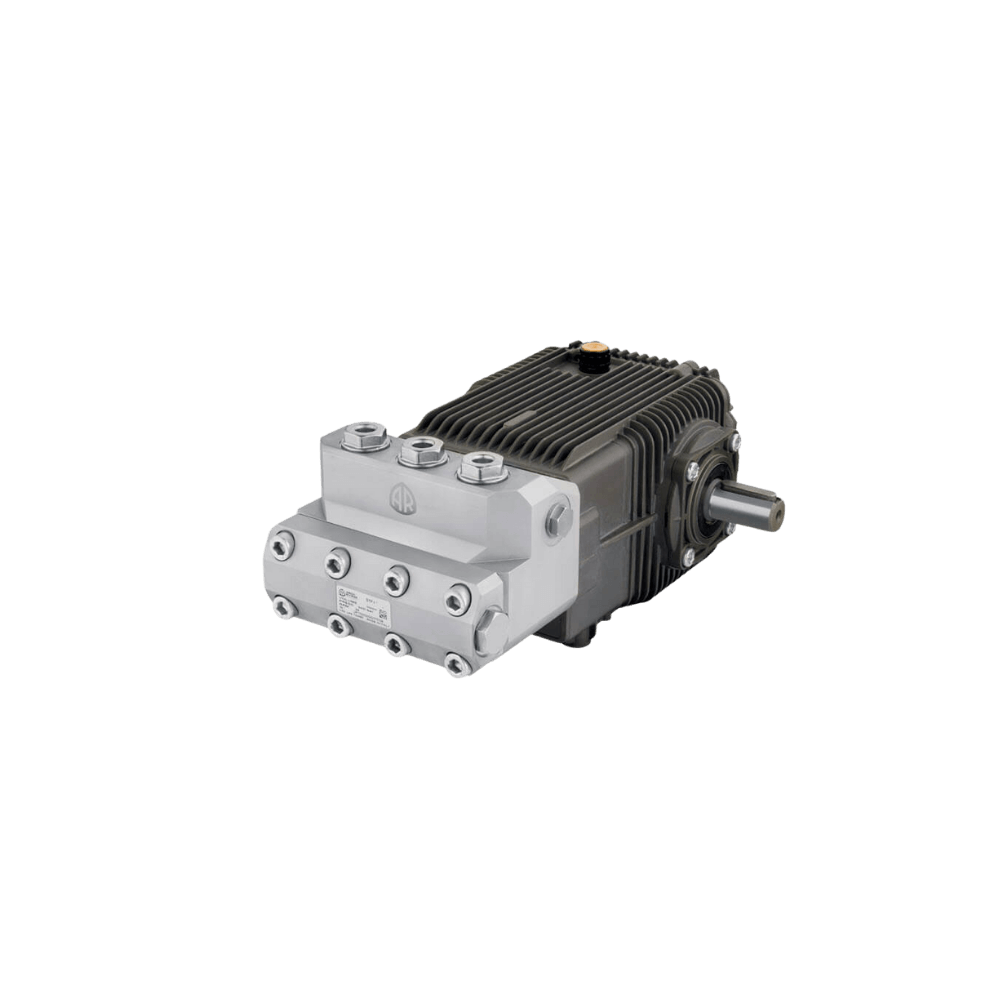
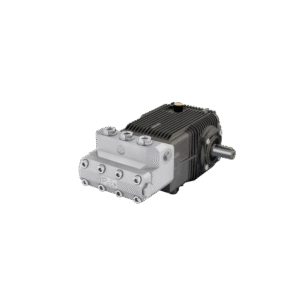
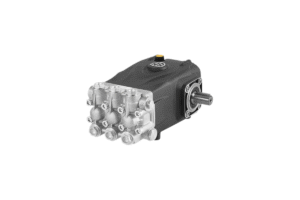
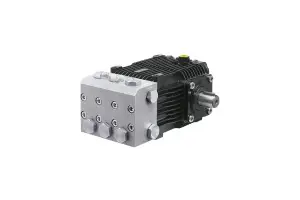
The SHP series occupies one corner of the industrial range: low flow, extreme pressure. Four to 5.8 GPM at 7,250 PSI, at 1,450 RPM on a 24 mm solid shaft.
That is the opposite trade from the high-volume families. You are not covering ground, you are concentrating energy into a small stream that removes material.
All three run the same pressure. The only choice is flow, and flow at 7,250 PSI is expensive: going from 4 to 5.8 GPM adds 9 HP at the shaft and pushes you up a motor frame.
Construction is the same across the family: nickel-plated brass head, ceramic plungers, stainless valves, aluminium connecting rods, oversized bearings and a 32 oz crankcase.
Why nickel-plated
At this pressure the head sees stresses that make small corrosion pits into starting points for real problems. Nickel plating resists the oxidation and chemical attack that pit plain brass, which matters in humid, chemical or marine environments where these pumps usually live.
Why 1,450 RPM
Every component is already working near its limit at 7,250 PSI. Running slowly reduces the cycle count on the plungers, seats and seals, cuts friction heat, and softens pulsation on a system where pressure spikes are genuinely dangerous.
The 32 oz crankcase is part of the same design. On continuous duty at this load, the oil is carrying heat as much as it is lubricating, and capacity is what keeps its temperature down.
Working at 7,250 PSI
This is a different class of equipment, and treating it as a bigger pressure washer is how people get hurt.
Every component downstream must carry the rating with margin, including the quick couplers. The ARF070 series at 10,150 PSI is the correct choice.
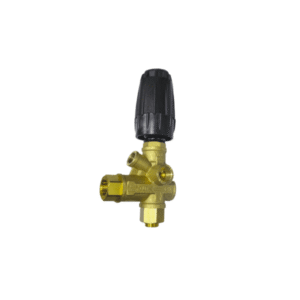
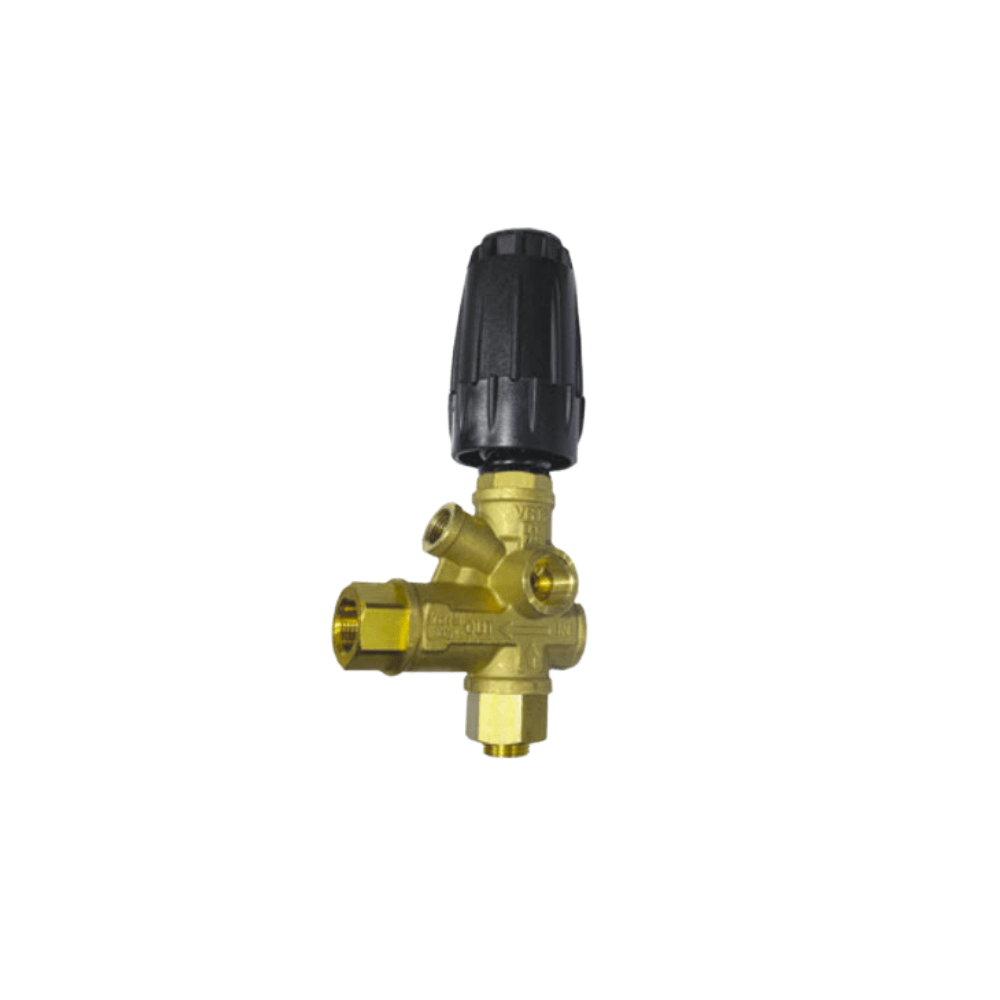
Fit a primary relief valve, plus a burst disc as a secondary on ultra high pressure builds.
Operators need training for this pressure class. Injection injuries at 7,250 PSI look minor and require immediate surgical attention.
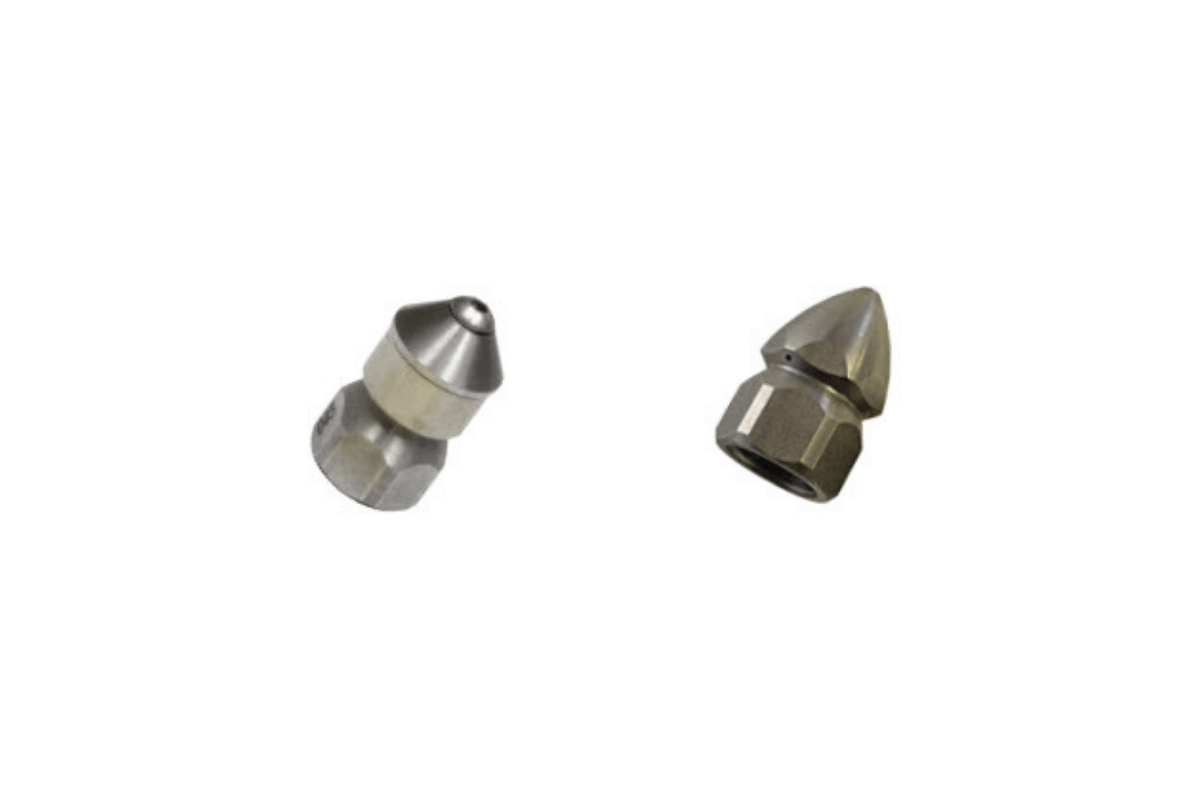
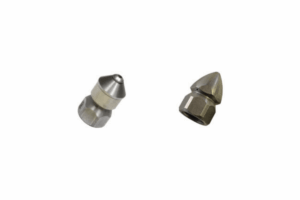
Watch nozzle wear. A worn orifice drops pressure and passes more water, so the machine feels weak while working harder, and the temptation is to turn the unloader up.
Where the SHP goes
Industrial surface preparation: rust, paint, coatings and scale, without chemicals or abrasives
Waterjet-assisted cutting of concrete and steel
Shipyards and marine: hull stripping, barnacle removal, steel prep
Oil and gas: pipeline cleaning, rig maintenance, hydrostatic testing
Mining: equipment washdown, scale removal, rock surface prep
What these have in common is that 3,000 PSI will not do the job at all, rather than doing it more slowly.
SHP or SHPA
The SHPA covers similar pressure at 4 GPM on an 18 mm shaft. It is the smaller-frame option where space is the constraint. The SHP is the choice when you need more flow or a 24 mm shaft to match existing drive hardware.
Servicing SHP pumps
Fully rebuildable, with valve kits, piston kits, water seals, oil seals and piston guides available, plus rail kits for mounting. These are designed to be rebuilt repeatedly, which is the entire economic case at this price point.
Two things shorten SHP life more than anything else: unfiltered inlet water, and running against a worn nozzle so the pump never reaches pressure and nobody notices.
The Honda GX200 is a small engine, and the mistake people make with Honda GX200 pump packages is buying a
Manage Consent
To provide the best experiences, we use technologies like cookies to store and/or access device information. Consenting to these technologies will allow us to process data such as browsing behavior or unique IDs on this site. Not consenting or withdrawing consent, may adversely affect certain features and functions.
Functional
Always active
The technical storage or access is strictly necessary for the legitimate purpose of enabling the use of a specific service explicitly requested by the subscriber or user, or for the sole purpose of carrying out the transmission of a communication over an electronic communications network.
Preferences
The technical storage or access is necessary for the legitimate purpose of storing preferences that are not requested by the subscriber or user.
Statistics
The technical storage or access that is used exclusively for statistical purposes.The technical storage or access that is used exclusively for anonymous statistical purposes. Without a subpoena, voluntary compliance on the part of your Internet Service Provider, or additional records from a third party, information stored or retrieved for this purpose alone cannot usually be used to identify you.
Marketing
The technical storage or access is required to create user profiles to send advertising, or to track the user on a website or across several websites for similar marketing purposes.