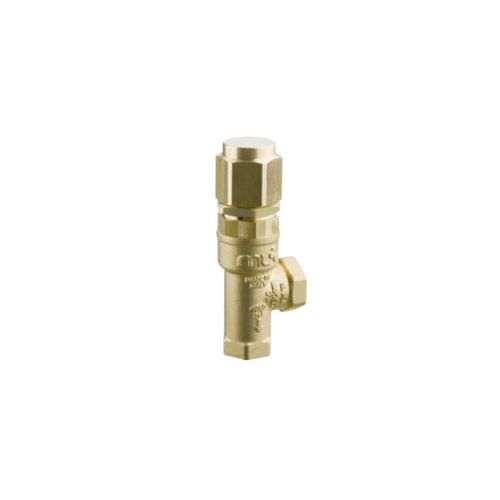
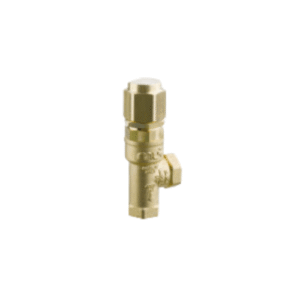
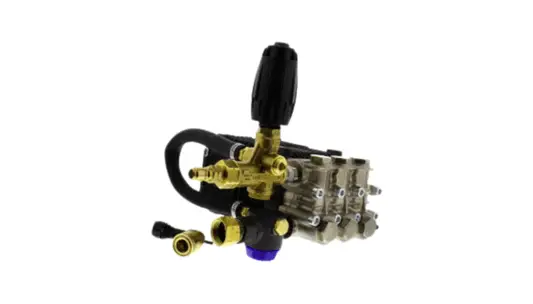
SVL17 Safety Valve — Role in High-Pressure Systems
Primary protection function
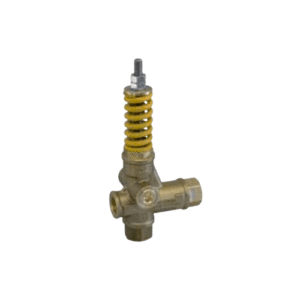
- The Annovi Reverberi SVL17 Safety Valve is a dedicated mechanical backstop designed to protect high-pressure wash systems from overpressure events.
- Opens automatically when system pressure exceeds its calibrated 2,400 PSI setting, providing a controlled relief path for trapped water.
- Works in parallel with unloaders and regulators, stepping in only when something in the primary control loop fails or is misadjusted.
- Helps prevent catastrophic failures such as hose rupture, manifold cracking, pump damage, or accessory blowout.
- Acts as a passive, always-on safety device that does not require power, sensors, or control logic to function.
Key Specifications & Operating Range
Critical data for system designers
- Calibrated to open at approximately 2,400 PSI, providing a defined ceiling for system pressure.
- Compatible with commercial and light industrial cold- and many hot-water pressure washer circuits within its material limits.
- Designed for use in systems built around triplex plunger pumps, rotary pumps, or similar positive-displacement units.
- Uses standardized threaded connections to integrate with manifolds, discharge blocks, or dedicated relief tees.
- Engineered to reseat once pressure falls back into the normal operating band, minimizing unwanted leakage or nuisance discharge.
Construction & Internal Design
Materials and build choices
- Precision-machined brass or stainless-steel body provides corrosion resistance in detergent and washdown environments.
- Hardened internal seat and guided poppet maintain alignment and sealing integrity across thousands of open/close cycles.
- Calibrated compression spring is selected to hold a stable cracking pressure near 2,400 PSI without drift under normal service.
- Compact envelope allows mounting in crowded frames, enclosed cabinets, or small OEM manifolds.
- Simplified internal geometry limits flow turbulence while still venting pressure rapidly when required.
Functional Advantages in the Circuit
How the SVL17 protects equipment
- Provides a dedicated relief path if the unloader is stuck, misadjusted, or blocked by contamination.
- Helps protect pump crankshafts, plungers, manifolds, hoses, and guns from short-duration pressure spikes.
- Reduces the likelihood of unplanned downtime, emergency repairs, and warranty claims tied to overpressure events.
- Supports safer operator conditions by lowering the risk of sudden line failures or component separation at the gun or lance.
- Acts as a low-maintenance safety layer that continues to function even if controls, switches, or sensors fail.
System Integration & Piping Practices
Where and how to install
- Typically installed on or near the pump discharge manifold so it can “see” true system pressure common to downstream components.
- Relief outlet should be routed to a low-pressure return line, drain, or tank where discharged water cannot endanger personnel.
- Best practice is to avoid dead-ends or shut-off valves between the pump discharge and the SVL17 inlet.
- Can be used on standalone washers, centralized manifolds, cabinet washers, and fixed wash bays.
- Integrates easily into WSHPWR-grade systems using standard high-pressure fittings, tees, or relief blocks.
Typical Applications & Use Cases
Where the SVL17 adds value
- Commercial and industrial pressure washer skids used for fleet, equipment, or facility maintenance.
- Fixed wash bays in trucking terminals, bus garages, municipal yards, and rental depots.
- Food, beverage, and light industrial washdown systems where unplanned downtime is expensive.
- Maintenance shops running parts washers, degreasing stations, or surface prep equipment at elevated pressure.
- High-output prosumer and contractor rigs where additional mechanical safety is desired beyond standard unloaders.
Installation Guidelines
Good engineering practice in the field
- Install using thread sealant approved for high-pressure water; avoid excessive torque that could distort the body or seat.
- Position the valve so that the relief discharge path is short, direct, and protected from accidental blockage.
- Label or document the relief line so future technicians understand its purpose and do not cap or re-route it incorrectly.
- Ensure connected piping or hose on the outlet is rated for the full pressure and temperature of the discharge event.
- Include the SVL17 in commissioning checks, verifying correct orientation, leak-free joints, and unobstructed outlet.
Inspection, Maintenance & Replacement
Keeping the safety valve ready to react
- Incorporate visual inspection of the SVL17 into routine service intervals alongside pump oil checks and filter changes.
- Look for external leakage, corrosion, mechanical damage, or evidence that the discharge line has been modified or obstructed.
- Replace the valve immediately if it fails a controlled overpressure test or shows signs of sticking or incomplete reseating.
- Maintain clean inlet water and adequate filtration upstream to reduce the risk of debris reaching the valve seat.
- Record installation date, inspection notes, and any replacement actions as part of the site’s maintenance log.
Safety & Compliance Considerations
Using the SVL17 in a complete protection strategy
- Treat the SVL17 as one component in a layered protection scheme that also includes unloaders, regulators, gauges, and proper hose selection.
- Verify that the valve’s pressure rating and materials match or exceed the pump and accessory ratings in the system.
- Ensure discharge routing complies with site safety rules and any applicable mechanical or plumbing codes.
- Train operators and maintenance staff to recognize the SVL17 as a safety device that must not be plugged, bypassed, or misadjusted.
- Adopt conservative replacement intervals for safety-critical hardware rather than running components to failure.
Why Specify the SVL17 on WSHPWR-Grade Systems
Selection rationale for integrators and operators
- Adds a dedicated overpressure safeguard to high-value pump and motor packages, reducing risk over the life of the asset.
- Supports WSHPWR-style system design that prioritizes uptime, controlled performance, and operator safety.
- Compact, serviceable construction makes it practical for OEM frames, retrofit upgrades, and field-built contractor rigs.
- Provides a clear, defined relief point that simplifies troubleshooting and system documentation.
- When combined with proper component matching and preventative maintenance, contributes to lower total cost of ownership for industrial cleaning equipment.


Reviews
There are no reviews yet.