Most pressure washer pump failures we see are not wear. They are freeze cracks and dry starts, and both of them happen on a predictable calendar. Here is what actually needs doing and when.
Fall: freeze protection is the only thing that matters
Water expands about nine percent when it freezes. A pump head is a closed cavity full of water with nowhere for that expansion to go, so it goes into the casting. Brass cracks. Ceramic plungers, which are hard and therefore brittle, shatter. You will not see it until spring, when you start the machine and it sprays out the side.
Draining is not enough on its own. Water sits in the valve pockets and behind the seals no matter how you tip it. The procedure that works:
- Disconnect the water supply and run the pump briefly to push out the bulk of it. Do not run it dry for more than a few seconds.
- Feed pump saver into the inlet and run the pump until you see it coming out the discharge. That is the confirmation you need. It displaces the remaining water and leaves an anti-corrosion film on the seals and plungers.
- Cap or plug the inlet and discharge so the film does not dry out over four months.
- Drain the hose and the gun separately. They freeze too, and a frozen hose usually fails at the crimp.
If you winterize more than a couple of machines, the case of twelve works out better than buying bottles one at a time.
Do not use automotive antifreeze. Ethylene glycol is toxic, and whatever is in that pump in October is going to come out of the nozzle in April, onto a driveway, a deck or a building. If pump saver is not available, propylene glycol RV and marine antifreeze is the acceptable substitute. It is the pink stuff, not the green stuff.
Fall: the checks worth doing while it is apart
- Hoses. Flex each one and look for cracking at the fittings. Cold makes existing cracks propagate. A hose that looks marginal in October will fail in February.
- Oil. Look at the color through the sight glass. Clear amber is fine. Milky or coffee-colored means water is getting into the crankcase past the plunger seals, and that is a seal kit, not an oil change. Changing the oil and ignoring the cause just gets you milky oil again.
- Inlet screen. Pull it, rinse it, look for damage. A torn screen lets grit into the valves all season.
- Hot water units. Descale the coil before storage. Scale left sitting all winter bonds harder.
Spring: how you start it matters more than you think
The single most common way to destroy a pump on the first day of the season is to start it dry. Plunger seals are water-lubricated. Run them without water and they overheat and glaze in well under a minute. There is no warning noise.
Sequence:
- Check the oil level and color before you start anything. If it is milky from last fall, fix that first.
- Connect water and open the supply fully. Let it flow through the pump and out the gun with the trigger held open and no nozzle installed. You are purging air.
- Once you have a steady, bubble-free stream, start the motor or engine. Still no nozzle.
- Let it run at low pressure for a minute, then install the nozzle.
That last order is backwards from how most people do it, and it is the part that saves seals.
Spring: the rest of the list
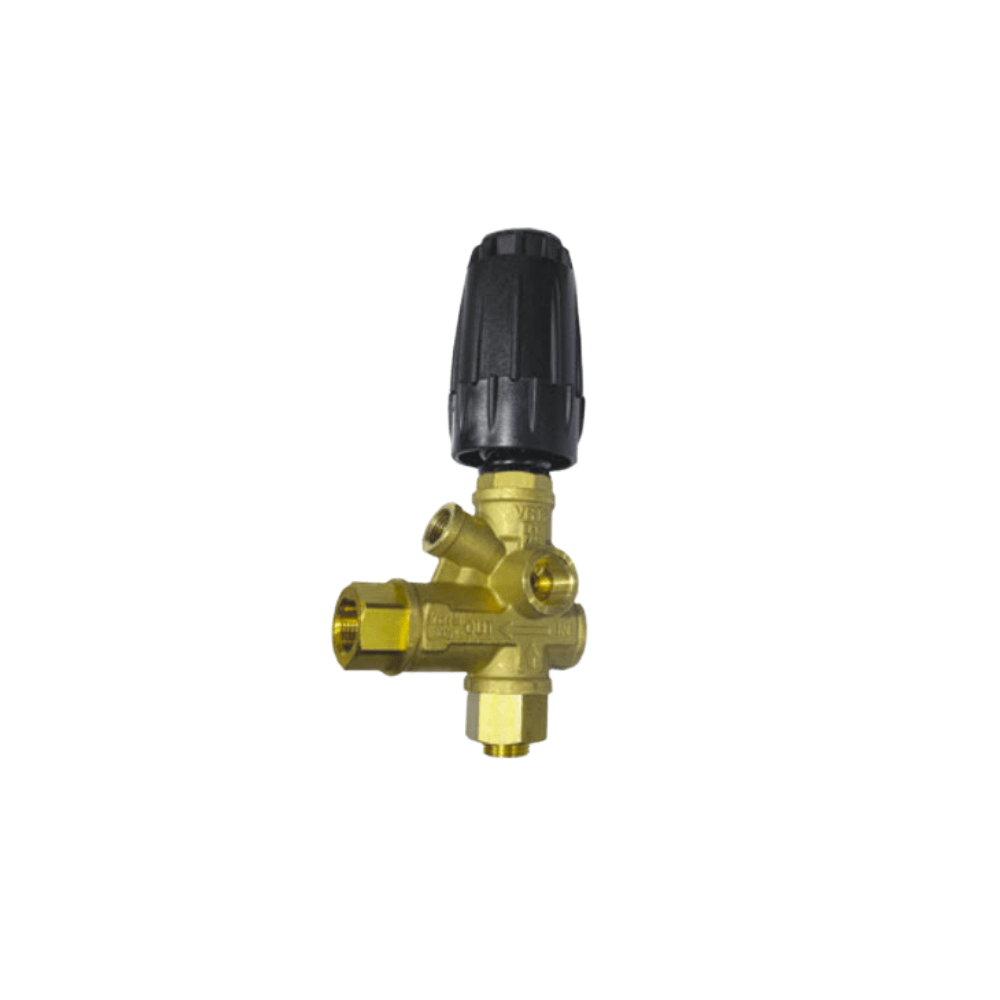
- Exercise the unloader. Unloaders seize during storage. A stuck unloader means the pump has no bypass path, and pressure goes straight to the relief valve or the weakest fitting. Work it by hand before the first job.
- Change the oil if you did not in the fall. Pump crankcase oil is not motor oil. Use what the manufacturer specifies: AR64516 in a 16 oz bottle covers most single pumps, and the AR645107 gallon makes sense for a fleet or the larger RT series crankcases.
- Belt drive units: check tension and pulley alignment. A belt that sat tensioned all winter takes a set.
- Gas engines: old fuel is the problem, not the engine. Drain and refill rather than trying to start on last year’s gas.
Pressure washer oil change intervals
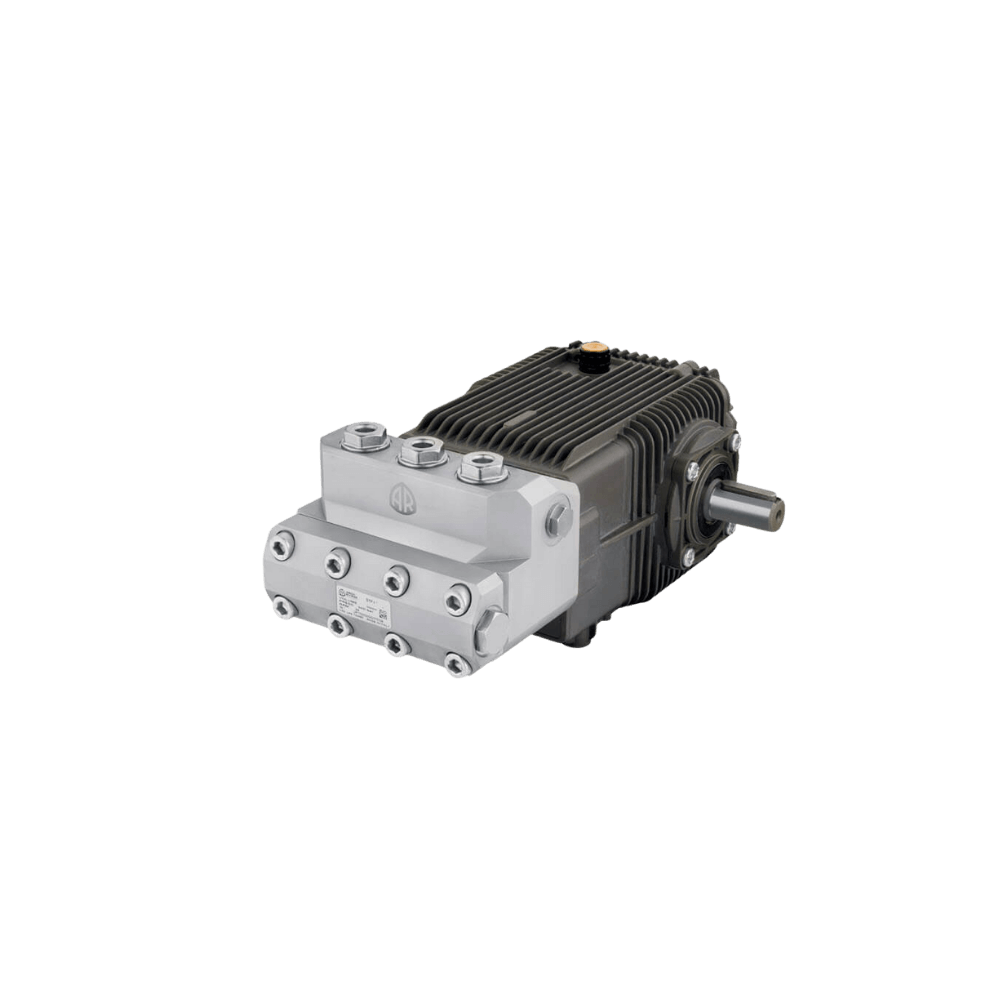
Break-in first, then routine. Most AR triplex pumps want the first oil change at around 50 hours, because break-in puts metal in the oil, and then every 300 to 500 hours after that depending on the model. Check your specific manual, because the industrial pumps and the small direct-drive pumps are not on the same schedule.
If the machine only runs seasonally and never accumulates those hours, change it once a year anyway. Oil absorbs moisture sitting still.
Used pump oil goes to a recycling center, not a drain. Most auto parts stores and quick-lube shops take small quantities free. Call first.
Storing pressure washers
Indoors and dry if you can. If not, at least out of direct sun. UV is what kills hoses and o-rings, and a machine parked in the open for a season ages more than one that worked all year under cover.
Keep a simple log. Date, hours, what you did. When a pump starts having problems, the log is how you tell the difference between a bad part and a recurring cause.
If you are not sure which oil or which pump saver your pump takes, tell us the model number and we will look it up. Contact us here.